

Reviewed · 5-DAY EXPERIENCES
5 Days – 4 Nights Private Roundtrip Tours – Fatimah Tours
Oman packs an astonishing range of scenery into five days: clear mountain pools, desert dunes, and old forts all fit into one private loop from Muscat. You will hike through Wadi Shab, watch the sun set at Wahiba Sands, and reach the high villages and cliffs around Jebel Shams.
I like the freedom of a private vehicle, especially on a route with long drives and several rougher mountain roads. I also like the human side of the trip: guides including Hamood, Khalil, Mohammed, and Ahmed Khamis are described as safe drivers who explain Omani culture and history in clear, friendly fashion.
The main catch is the pace. Five days covers a lot of ground, so several places are short photo stops rather than long visits. Wadi Shab also requires a moderate level of fitness, and lunch, camel rides, and some optional desert activities cost extra.
Key points at a glance
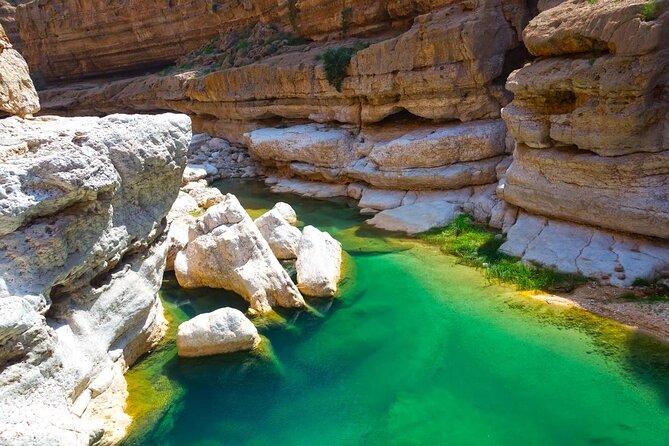
- Wadi Shab takes the most effort: Plan for a roughly 35-minute hike through a canyon before reaching the swimming pools.
- Wahiba Sands is the classic desert night: You can watch sunset from a dune, eat dinner at camp, and rise early for sunrise.
- The route mixes nature and culture well: Nizwa Fort, Jibreen Castle, old villages, a dhow workshop, and Bait Al Safah balance the outdoor stops.
- Private touring makes the long route easier: Your group travels alone in a comfortable 4WD with an English-speaking Omani guide.
- The package covers useful basics: Four breakfasts, four dinners, water, rooms, entrance fees, transport, and guiding are included.
- The schedule favors highlights over slow travel: Sur, Wadi Tiwi, Jebel Akhdar, and Wadi Ghul receive limited time.
A five-day Oman circuit with plenty of variety
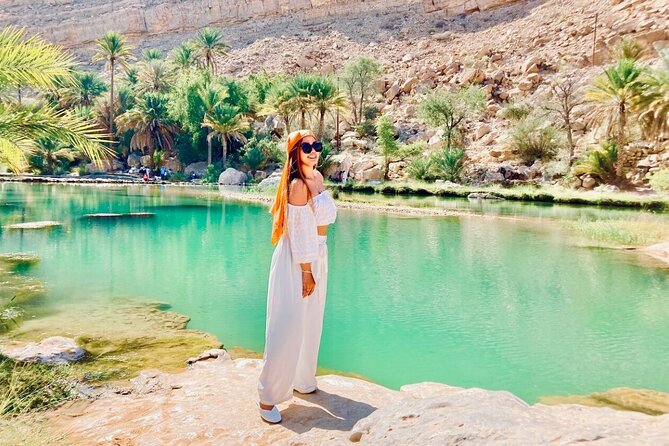
This is not a gentle Muscat sightseeing package. It is a full circuit through northeastern and interior Oman, with long drives linking beaches, wadis, desert, mountains, villages, and historic buildings.
The price is listed at $1,595 per person. That is a serious sum, but it includes a private 4WD, an English-speaking guide, four nights of rooms, four breakfasts, four dinners, water, and entrance fees. You are also paying for route planning and the ability to adjust the experience to your own group, rather than joining a large coach.
The room setup is based on group size. One person receives a single standard room. Two people share a standard double room, three people receive a double room plus an extra bed, and four people receive two double rooms.
The strongest part of the arrangement is convenience. You do not need to work out how to reach Wadi Shab, find a desert camp, arrange a mountain vehicle, and connect the interior forts on your own. The tradeoff is that you have less control over where to linger unless you discuss your priorities with the guide before setting out.
A few more Muscat trips to weigh up
- 5 Days 6 Nights Private Tour in Oman
★ 5.0 · 29 reviews - 5 Days 4 Nights Oman Package Tour Mohammed
★ 5.0 · 23 reviews - 5 Days Package TOUR DINA
★ 5.0 · 6 reviews
Day one: Bimmah Sinkhole and the pools of Wadi Shab
The first day moves south from Muscat toward the coast and the dramatic canyon country around Wadi Shab. Bimmah Sinkhole is a quick stop, with about an hour set aside for photographs and a look at the water-filled depression.
This is a useful early pause, but do not expect a long swim or a full guided visit. The main event is Wadi Shab, where the canyon narrows between steep rock walls and palms grow along the water. The route includes a hike of about 35 minutes before you reach the pools.
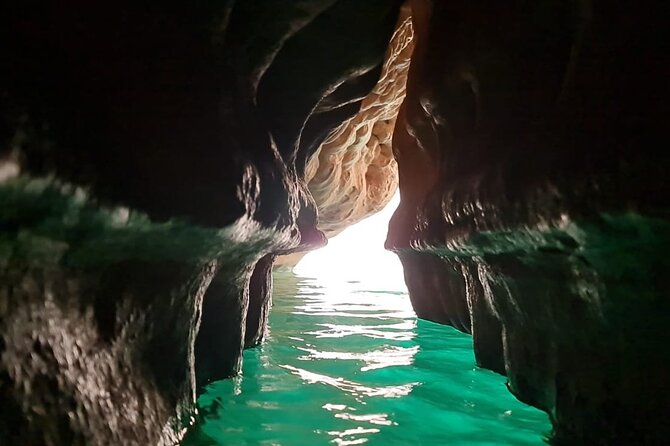
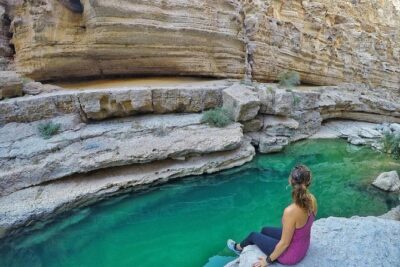
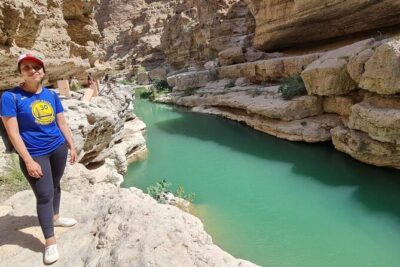
At the pools, you can swim from one clear section to another. The final pool has an opening between large rocks, giving the outing a more adventurous finish. This is the most physically demanding stop on the first day, so wear shoes suited to uneven ground and bring clothing you can swim in. The tour includes admission, but the supplied details do not state whether personal equipment is provided.
Wadi Shab receives four hours, which is sensible given the hike and swimming time. Still, your actual time in the water will depend on walking speed and conditions. If you prefer sightseeing without much exertion, tell the guide early. This is not a stop to treat as a quick roadside view.
Wadi Tiwi follows as a 45-minute photo stop. Its plantations give it a greener appearance than many Omani wadis, and the contrast with the bare rock around it is part of the appeal. The short visit makes it a scenic pause rather than a full walk through the valley.
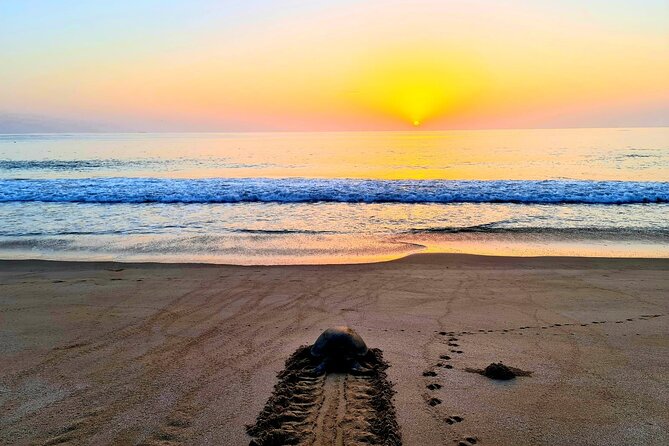
The day finishes at Ras Al Jinz Turtle Reserve, with four hours scheduled. This is one of the tour’s most distinctive additions because it brings wildlife into a route otherwise dominated by geology, architecture, and scenery. The supplied details do not specify the exact viewing arrangement or guarantee turtle sightings, so you should treat it as a reserve visit rather than a promise of a close encounter.
Day two: Sur, traditional boats, and a night in Wahiba Sands
Sur is a compact but meaningful stop on Oman’s eastern coast. The city is tied to maritime traditions, and the itinerary includes a visit to a dhow factory where traditional wooden vessels are built.
I like this part of the route because it connects Oman to the sea in a direct, practical way. You are not only looking at an old fort or a museum display. You get a chance to see the craft associated with the country’s trading and seafaring past.
Only 20 minutes is assigned to Sur itself, followed by 45 minutes at the dhow factory. That is enough for an introduction, not a deep examination of the city. If old boats interest you, ask your guide to give this stop as much attention as the schedule allows.
The drive continues to Al Kamil Wal Wafi and an Omani ghazal farm. The visit lasts about 30 minutes and offers a change of pace from forts and wadis. It is a brief stop, so think of it as a chance to see the animals and learn a little about the farm rather than a large wildlife park.
Wadi Bani Khalid gets three hours. Compared with Wadi Shab, it is easier to approach the large emerald pools, and you can swim, sit in the sun, relax, or have a picnic. The schedule leaves enough room to enjoy the water without racing through the visit.
The final stop is Wahiba Sands, where you reach the desert camp and have time to rest or take part in a 4WD drive over the dunes. The package does not include a camel ride, and the details do not state that the dune drive is included, so ask about the cost of each optional activity before you commit.
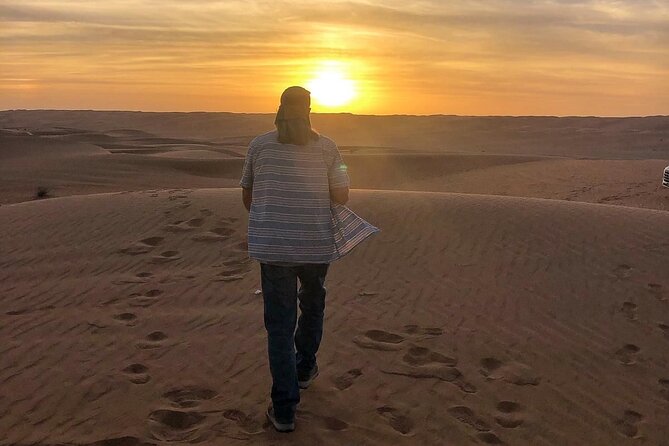
Sunset on a large dune is the highlight here. Dinner and a campfire follow, giving the day a clear finish after several hours on the road. The camp is included as part of the room and dinner arrangement, though the exact camp standard is not described. Pack a warm layer for the evening, since desert temperatures can change quickly, but do not assume any particular camp facilities beyond what is confirmed.
Day three: Desert sunrise, ancient tombs, and Nizwa
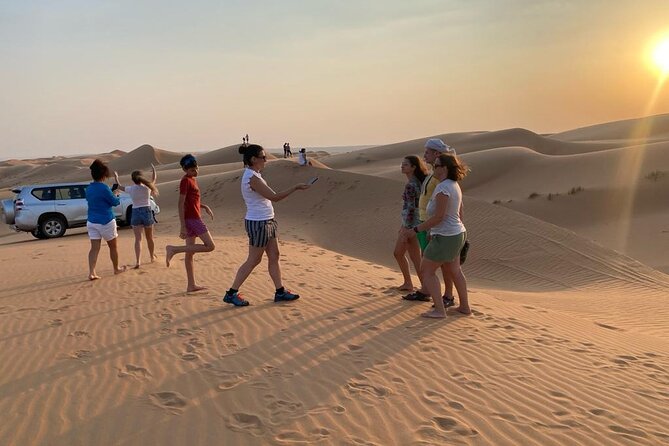
The morning starts early with a 30-minute sunrise view from the Wahiba dunes. This is worth protecting from a rushed departure. Desert light changes quickly, and the short stop is designed for a quiet look before breakfast and the next drive.
Zukait Tombs near Izki provide the day’s oldest-looking sight. The beehive-shaped Bronze Age tombs sit in an open setting and offer a strong sense of Oman’s distant past. The visit lasts about an hour and is more about seeing the site and understanding its setting than entering a large monument.
The route then climbs toward Jebel Akhdar, the Green Mountain, part of the Al Hajar range. The high plateau reaches about 2,000 meters in the area described, while the mountain range rises higher. Even with only two hours here, you will notice the shift from desert and lowland rock to cooler high-country scenery.
The itinerary does not promise a particular village walk, garden visit, or viewpoint on Jebel Akhdar. Your guide’s choices matter here, so explain whether you want photographs, mountain views, or a slower stop before the day begins.
Birkat Al Mouz is next, with 30 minutes at a village known for banana plantations. The name translates as Banana Pool, and the greenery makes this a pleasant contrast to the dry mountains. The brief timing means you will mainly see the ruins and agricultural setting.
Nizwa receives two hours before the overnight arrangements continue. It is one of Oman’s key inland cities, surrounded by palm plantations and seasonal watercourses. The short preview prepares you for the longer Nizwa visit on day four, but it will not give you much time for aimless wandering.
Same coast and mountains, a completely different day out:
- Muscat: Daymaniat Islands Snorkeling Trip with Brunch
★ 4.7 · 2,317 reviews - From Muscat: Wadi Shab & Bimmah Sinkhole Full-Day Tour
★ 4.8 · 1,862 reviews - Muscat: Wahiba Desert and Wadi Bani Khalid Guided Group Tour
★ 4.8 · 820 reviews - Muscat: Half-Day Sightseeing Essentials Tour and Audio Guide
★ 4.2 · 598 reviews
Day four: Nizwa Fort, Al Hamra, and the high Hajar villages
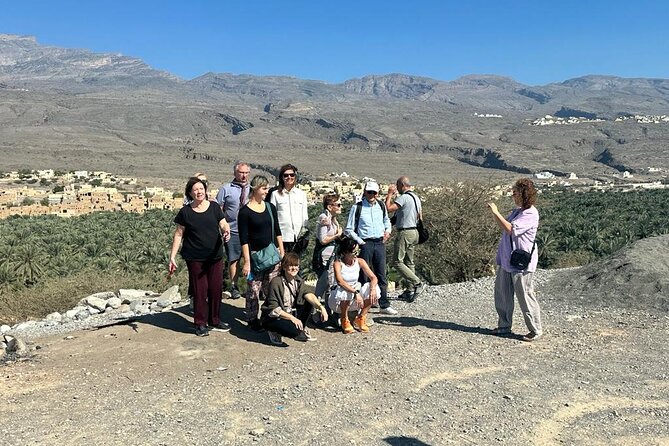
Day four opens with Nizwa Fort, a seventeenth-century stronghold and one of the most important buildings on the route. Its massive construction and defensive design help explain how authority and daily life were organized in old Oman.
The included one-hour visit is enough to see the main structure, but you may want more time if you read every display or photograph architectural details. The fort works best when your guide explains what you are seeing, since the building alone cannot tell the whole story.
Next comes Nizwa Souq, with another hour for browsing. The market includes Omani silver craft and handmade goods, along with separate sections for produce, meat, and fish. This is a practical market, not simply a display built for sightseeing.
I would save some energy for this stop. The souq is one of the better places on the route to buy a small, useful reminder of Oman, but the package does not include shopping costs. Ask about prices and quality before buying silver or handicrafts.
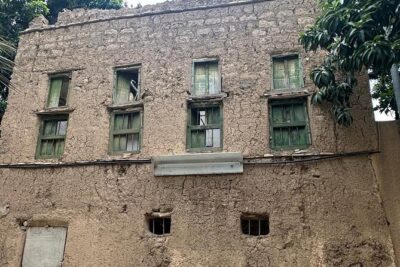
Al Hamra is a 400-year-old town with an older abandoned village nearby. The hour here gives you a look at traditional homes and weathered ruins. The contrast between the active town and the untouched older settlement is more interesting than a polished historic district would be.
Misfah Al Abriyeen sits around 1,000 meters above sea level on the mountain foothills. Its position and traditional village form make it one of the most atmospheric stops, though steep paths and uneven surfaces are part of the experience. The allotted hour is enough for a concise walk and photographs, not a long exploration.
Jebel Shams closes the day. It is the highest mountain in Oman and is known for broad views over the surrounding rock country. Only one hour is scheduled, so expect a focused viewpoint visit rather than a full mountain outing.
This is a demanding day, with architecture, souq walking, old villages, and mountain roads packed together. It is also one of the most rewarding days for anyone who wants more than beaches and desert.
Day five: Oman’s Grand Canyon and two remarkable forts
The final day begins at Wadi Ghul, often called Oman’s Grand Canyon or the Grand Canyon of Arabia. The stop is explicitly a photo visit, lasting about 45 minutes. That detail matters: you are going for the view, not a canyon hike.
The setting near Jebel Shams gives the morning a strong visual finish, but avoid expecting a long walk or a full canyon excursion. A camera and sturdy shoes for the viewpoint area are the practical choices.
Back in Al Hamra, Bait Al Safah offers a more personal look at Omani life. The museum occupies an old Omani house and presents traditional daily life as a living museum. One hour is enough to see the main rooms and absorb the setting.
Bahla Fort follows. It is Oman’s only fort listed by UNESCO, and the complex has undergone major restoration. The visit is included and lasts about an hour.
One caution is useful here: visitor information at Bahla is limited. Your English-speaking guide becomes especially valuable because context may not be supplied at every turn. Ask questions about the fort’s layout, defensive purpose, and restoration as you walk.
Jibreen Castle is the final scheduled stop. Built in 1675, it is well preserved, with two towers, rooms with painted ceilings, and audio tours. The castle feels more intimate than a huge fortress complex, and its decorative details reward a slower look.
The two final forts work well together. Bahla gives you scale and a sense of fortified power, while Jibreen adds domestic rooms and decoration. With one hour at each, you can enjoy both without turning the last day into a blur.
What the private 4WD arrangement adds
The private format matters on this route. Your group travels alone, so the guide can answer questions, explain local customs, and manage the pace without coordinating a busload of people.
The 4WD vehicle is also important for the desert and mountain sections. The package describes it as comfortable, but it does not give a vehicle model or seating layout. If you have a large group, confirm the exact arrangement before booking.
Several guides are associated with this experience, including Hamood, Khalil, Mohammed, Ahmed Khamis, and Kalfan. The feedback consistently highlights safe driving, kindness, cultural explanations, and help with hotel arrangements. You should not assume you will receive a particular guide unless the operator confirms one by name, but you can request your preference.
Breakfast and dinner are included for all four nights. Lunch is not included, so budget separately for midday meals. Water is supplied, which is handy on hikes, at forts, and during long drives.
Is $1,595 per person good value?
The price makes the most sense for people who want a ready-made private circuit rather than a self-drive trip. You receive transport, guiding, rooms, four breakfasts, four dinners, entrance fees, and water. Hotel arrangements are also handled, according to the tour details.
The value drops if you want a slow holiday with long stays in each town. The route includes many short stops, and several days involve substantial driving. You are paying for breadth and convenience, not for extended time at every site.
Group discounts are available, which could improve the per-person cost for families or friends traveling together. Since the tour is private, splitting the vehicle and guide cost across more people may make the package more appealing, provided the room setup suits your group.
Remember to add lunch, personal purchases, and any camel ride or optional desert activity. The cancellation terms allow a full refund when you cancel at least 24 hours before the start time. Poor weather can also lead to a different date or a full refund.
Who should book this Oman tour?
I would choose this trip if you have five days and want to see the country’s major natural and cultural highlights in one organized loop. It suits first-time visitors, families comfortable with a moderate amount of walking, couples who want a private desert night, and small groups who value a dedicated driver.
It is less suitable if you dislike early mornings, long road journeys, swimming, uneven paths, or changing hotels. Wadi Shab requires real effort, and the mountain and desert sections can feel full after several packed days.
The strongest match is an active sightseeing group that wants variety. You get wadis, wildlife, traditional boats, market life, old villages, Bronze Age tombs, desert dunes, and forts without having to solve the transport puzzle yourself.
Should you book it?
Book this tour if your goal is to see a broad slice of Oman with a private guide and minimal planning. The route is ambitious but logical, and the mix of Wadi Shab, Wahiba Sands, Nizwa, Al Hamra, and Jebel Shams gives you a memorable first look at the country.
Before paying, confirm the exact hotels, desert camp, optional dune-drive charges, guide assignment, and how much time can be adjusted at the short stops. If you are happy with a brisk pace and moderate activity, the package offers a strong five-day introduction. If you want lingering meals, long village walks, or several free afternoons, build a slower trip instead.
FAQ
How long is the tour?
The experience lasts approximately five days and includes four nights.
Is this a private tour?
Yes. Only your group participates in the activity.
What type of vehicle is used?
The tour includes a comfortable 4WD vehicle.
Is an English-speaking guide included?
Yes. An English-speaking Omani tour guide is included.
Are accommodation and meals included?
Yes. Standard rooms are included, along with four breakfasts and four dinners. Lunch is not included.
Is the camel ride included?
No. Camel rides are not included.
Does the tour include entrance fees?
Yes. Entrance fees for the included attractions are covered.
What is the cancellation policy?
You can receive a full refund if you cancel at least 24 hours before the experience starts. Cancellations within 24 hours are not refunded. If poor weather causes the tour to be canceled, you will be offered another date or a full refund.
Just added around Muscat
- Wadi Shab &Bimmah Sinkhole &Heart shaped Cave &Pebble Beach★ 5.0 · 5 reviews
- Wahiba Sands and Wadi Bani Khalid Full-Day Tour from Muscat★ 4.6 · 3 reviews
- Try scuba Diving Tours To Daymaniyat Islands.★ 5.0 · 12 reviews
- Watching Sunrise in Wahiba Sand Desert – Early Morning Tour★ 5.0 · 7 reviews
- Wahiba Sands&Wadi Bani Khalid desert Safari(Muscat tours)★ 4.5 · 6 reviews
- From Muscat Wadi Shab and Bimmah Sinkhole Tour★ 5.0 · 6 reviews
- Wahiba Sands and Desert Safari from Muscat★ 5.0 · 3 reviews
- Wahiba Sands&Wadi Bani Khalid desert Safari(Muscat tours) : Private tours★ 4.5 · 6 reviews
5-Day Experiences, compared.


Oman Explorer: City, Wadis, and Desert 5-Day Adventure
Read our review →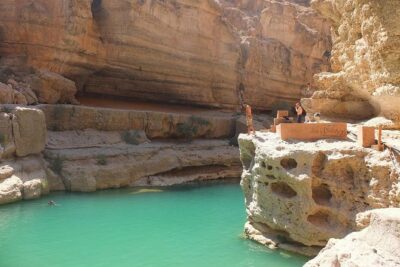
Browse the lists this tour appears in