
Reviewed · 5-DAY EXPERIENCES
5 Days 6 Nights Private Tour in Oman
Oman reveals itself best when the road leaves Muscat. This six-day private tour links grand mosques and old souqs with swimming wadis, nesting turtles, desert dunes, mountain farms, and ancient forts. You move through several very different parts of the country without spending your holiday managing drivers, route planning, or separate admissions.
I like the mix of famous sights and ordinary local life, especially the Mutrah fish market, dhow factory, and old mountain villages. I also like the flexible private format, with guides such as Issam, Abdullah, and Ahmed able to work in several languages, including Italian, French, Russian, Spanish, and Arabic.
The main caution is the pace. You cover a large portion of Oman in six days, and Wadi Shab requires a demanding walk and swim. The advertised duration also says five days and six nights, while the detailed plan runs from Day 1 through Day 6, so confirm the exact dates and overnight arrangements before paying.
Key points to know before booking
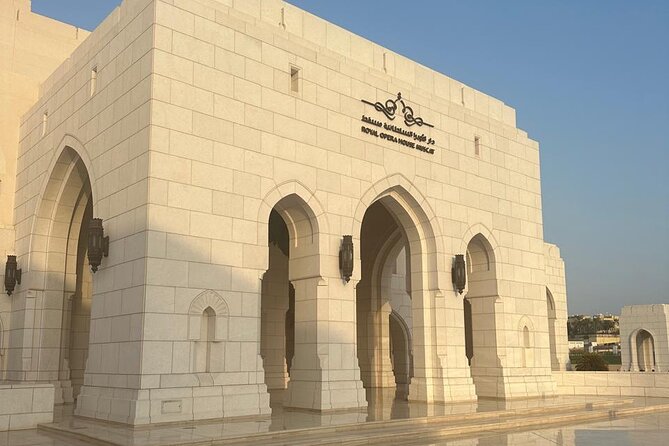
- Muscat begins with grand sights: See Sultan Qaboos Grand Mosque, the Royal Opera House, Bait Al Zubair, Mutrah Souq, and Al Alam Palace.
- Wadi Shab is the physical test: Allow about three hours, including roughly one hour walking each way and swimming toward the cave.
- The desert night changes the mood: Wahiba Sands brings open dunes, quiet, and an overnight away from city lights.
- Jebel Akhdar offers a cooler break: Terraced farms, mountain views, and a change of climate follow the desert.
- The final days are strong on heritage: Nizwa Fort, Jabreen Castle, Bahla, Misfat al Abreyeen, and Oman Across Ages Museum give the route historical depth.
- Private guiding is the product’s real value: Your group travels alone, with pickup offered, multilingual support, water, and three lunches included.
Why this route gives you a broad view of Oman
This is not a single-theme excursion. It is a cross-country introduction to Oman, combining architecture, religion, trade, farming, geology, wildlife, and food culture.
The route begins in Muscat, then follows the coast toward Sur and Ras Al Jinz. From there it turns inland to Wadi Bani Khalid and Wahiba Sands before climbing toward Jebel Akhdar and the old towns around Nizwa.
That variety is the strongest reason to consider it. In one trip, you see a modern capital, traditional markets, palm-lined watercourses, a desert, a cool mountain area, and several major historic buildings.
You also have a private guide rather than a fixed group. That matters in Oman, where the experience often improves when you can stop for a photograph, ask about village life, or spend less time at a sight that does not suit you. The itinerary is still busy, but the private setup gives it more breathing room than a large coach tour.
A few more Muscat trips to weigh up
- 5 Days – 4 Nights Private Roundtrip Tours – Fatimah Tours
★ 5.0 · 43 reviews - 5 Days 4 Nights Oman Package Tour Mohammed
★ 5.0 · 23 reviews - 5 Days Package TOUR DINA
★ 5.0 · 6 reviews
Muscat, from the Grand Mosque to Mutrah harbor
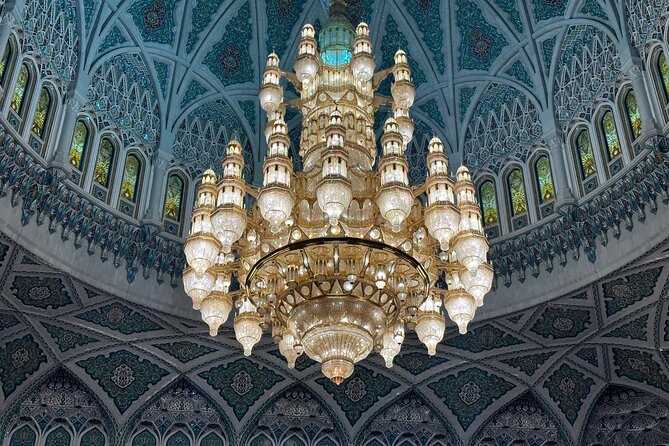
Day 1 starts with Sultan Qaboos Grand Mosque, one of Muscat’s major landmarks. You have about 50 minutes with the guide, who explains the mosque’s design and history while you take photographs.
The visit is short, so treat it as an introduction rather than a slow architectural study. The building is described as a masterpiece in the center of Muscat, and the guide’s explanations add context to what you are seeing. Dress and visit rules can matter at mosques, so ask your guide what is suitable before arrival.
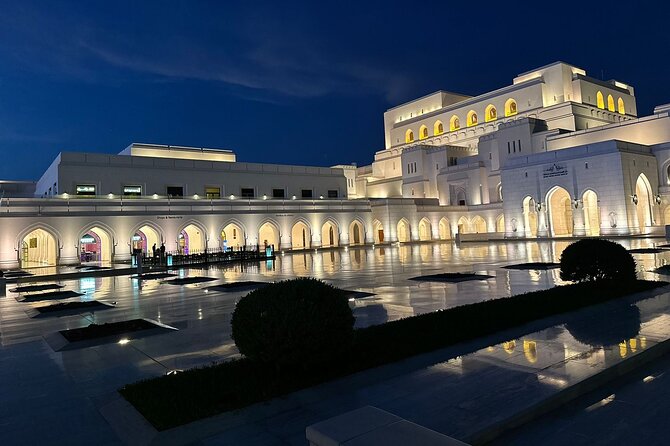
The Royal Opera House follows, also with about 50 minutes. This is another polished expression of modern Omani culture, and the visit helps balance the older sights later in the day. Admission is included.
At Bait Al Zubair, you spend around 30 minutes viewing traditional Omani objects and displays from the country’s past. It is a compact stop, but a useful one. Without this context, old houses, forts, clothing, and market customs can feel like disconnected sights. Here, you begin to see how they fit together.
Mutrah gives you more time, about an hour. Its old market runs through narrow lanes lined with traditional shops. This is the place to slow down, browse, and watch commerce rather than simply photograph an attractive street.
The nearby fish market takes another 20 minutes. It is a practical working market where local buyers and sellers negotiate. I particularly like its place in the itinerary because it shows daily life, not just restored monuments. Expect a quick visit, not a full meal or shopping session.
Al Alam Palace is a photo stop in the old Portuguese area of Muscat. You do not have a listed internal visit, so keep your expectations clear. It is a visual pause between the museum and market visits, not a major guided tour.
Wadi Tiwi and the long approach to Wadi Shab
Day 2 turns toward Oman’s coast and its famous watercourses. Wadi Tiwi combines a village setting, palm trees, and flowing water. The planned walk is slight, making it a gentler stop before Wadi Shab.
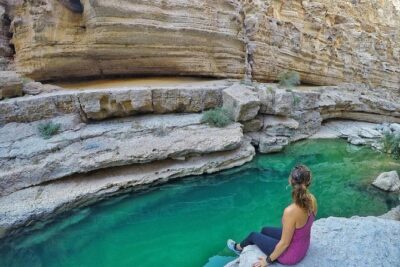
Wadi Shab is the day’s centerpiece. The visit lasts about three hours and includes a walk of roughly one hour to reach the wadi, followed by about one hour back. Once there, you can swim toward the cave.
This is where the moderate fitness warning becomes important. The route involves walking through changing conditions and swimming, so it is intended for people comfortable with both. If Wadi Shab is not suitable for you, the guide can discuss an alternative, but the specific alternative is not named in the tour details.
Do not treat Wadi Shab as a quick viewpoint. Much of the reward comes from the route in and the chance to reach the water and cave. At the same time, the physical effort can be tiring in warm weather, especially after an early start and before more driving.
In Sur, the dhow factory offers a brief look at traditional boatbuilding. You have about 30 minutes to see the workshop and take photographs. This is a small stop, but it connects Oman’s coastal towns with seafaring and trade.
The evening is reserved for Ras Al Jinz Turtle Reserve. After an early dinner, you are picked up for a short walk and an organised viewing of turtles laying eggs. The visit lasts about 90 minutes.
This is one of the route’s most distinctive experiences, but wildlife never follows a script. The important point is that you attend an evening turtle observation rather than simply visiting a beach. Keep your expectations focused on the chance to see the process, not on a guaranteed close encounter.
Wadi Bani Khalid and a night among the Wahiba dunes
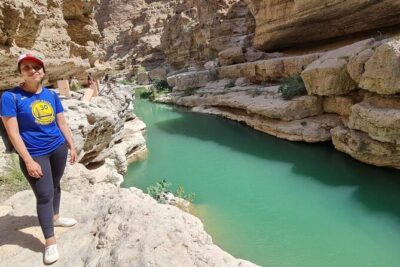
Day 3 replaces the coast with inland water and desert. Wadi Bani Khalid is described through its contrast: palm trees, mountain cliffs, and turquoise pools. You have about 90 minutes here.
Compared with Wadi Shab, this is a shorter and less demanding stop in the schedule. It gives you time to see the pools and surroundings without another long approach walk listed. The combination of water and bare rock makes it one of the trip’s strongest scenic changes.
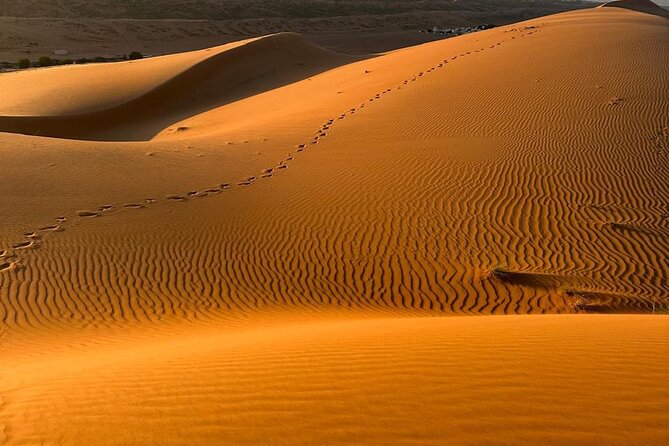
Then comes Wahiba Sands, with about three hours devoted to the desert and an overnight there. The dunes are noted for their color and distinctive shapes, and the appeal is simple: broad views, silence, and a night far from the city.
The desert stop is not only a photograph break. Sleeping in Wahiba Sands changes the rhythm of the tour. After several days of urban sights, coastal roads, and active walks, you get an evening built around open space and stillness.
The information provided does not specify the camp standard, room type, meals, or desert activities. Ask about those details before booking, especially if accommodation quality matters to you. The emotional appeal of a desert night is clear, but the practical value depends partly on what kind of camp is included.
Same coast and mountains, a completely different day out:
- Muscat: Daymaniat Islands Snorkeling Trip with Brunch
★ 4.7 · 2,317 reviews - From Muscat: Wadi Shab & Bimmah Sinkhole Full-Day Tour
★ 4.8 · 1,862 reviews - Muscat: Wahiba Desert and Wadi Bani Khalid Guided Group Tour
★ 4.8 · 820 reviews - Muscat: Half-Day Sightseeing Essentials Tour and Audio Guide
★ 4.2 · 598 reviews
Birkat Al Mouz and the cooler heights of Jebel Akhdar
Day 4 begins at the old village of Birkat Al Mouz. The ruins sit against the mountains and reflect an earlier way of life, when people built around limited water and local materials.
The visit lasts about 25 minutes, followed by a 10-minute stop at Falaj Al Khatmain. A falaj is an irrigation system, and here it remains an important part of the village’s farms and homes. The site is identified as part of UNESCO, giving this small stop added importance.
The timing is brief, but the subject is not. Water management explains much about settlement in Oman. A village, palm grove, and mountain farm are not random pieces of scenery. They depend on systems such as the falaj.
Jebel Akhdar, or Green Mountain, receives about three hours and an overnight. Its cooler climate is a welcome change after the lower, warmer areas and the desert. The route includes a short visit to the mountain, with time to appreciate the views and terraced farms.
The tour description does not specify the exact accommodation or activities on Jebel Akhdar. Still, this overnight is well placed. It breaks up the journey and gives you a chance to experience a different side of Oman, one shaped by altitude, agriculture, and mountain air.
Misfat, Al Hamra, Bahla, and Jabreen Castle
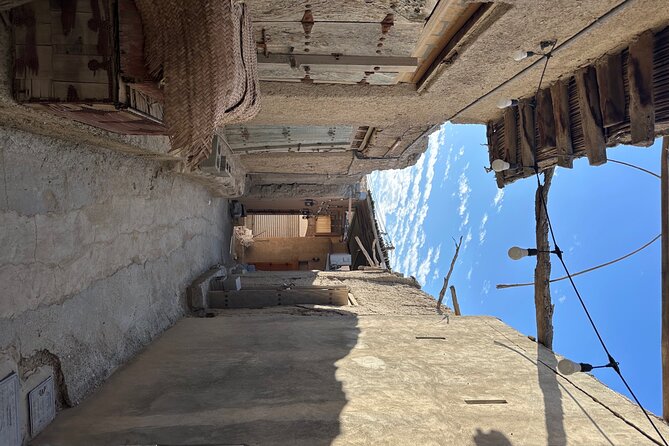
Day 5 concentrates on old settlements and defensive buildings. Misfat al Abreyeen is a small mountain village with houses built high above the surrounding area. You have about 30 minutes to explore.
The appeal is the way the village fits together. The buildings appear to flow into one another, making it difficult to tell where one house ends and the next begins. This is a place for looking closely at lanes, walls, and construction rather than rushing through for a single view.
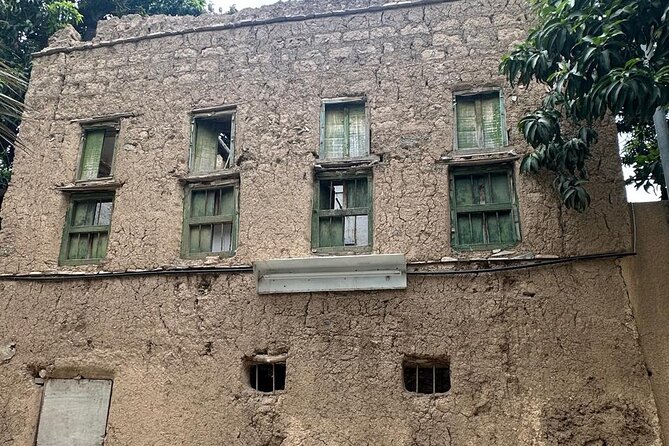
Al Hamra offers another look at traditional building, this time with clay houses designed to endure Oman’s natural conditions. The stop is only about 20 minutes, so the guide’s explanation is useful. Ask about how the houses were made and why the village developed in this form.
Bahla Fort is a photo stop rather than an internal visit. It is described as Oman’s oldest fort and as a UNESCO site, so the exterior still carries weight even with limited time. If you want to study the structure closely, the short stop may feel too brief.
Jabreen Castle receives a full hour and an included admission. Unlike a purely defensive fort, it also served as a residence. That combination makes it especially rewarding because you can consider both military needs and domestic life.
The guide’s historical explanation matters here. A castle is much easier to appreciate when you understand why it was built, how it was used, and how it differs from a fort. Jabreen is one of the day’s more substantial historic visits.
Nizwa Fort, the souq, and Oman Across Ages Museum
Day 6 finishes in Nizwa, an old capital and one of Oman’s key historic cities. Nizwa Fort includes an internal visit of about 50 minutes. Its unusual shape and past importance make it a fitting final fort after Bahla and Jabreen.
Nizwa Souq follows, with about an hour to explore. The market is presented as a place to learn about Omani commerce and culture, with traders arriving from different Arab countries. You can use the time to browse traditional goods and observe how the market functions.
The route ends at Oman Across Ages Museum, opened in 2023. You have about an hour inside. This is the most modern museum on the itinerary, and its purpose is to explain Oman’s different eras through contemporary displays.
The final pairing works well. Nizwa Souq shows living commerce, while the museum offers a broad national account. You finish not only with old stone buildings, but with a modern explanation of how Oman presents its past and present.
What the $2,090.62 price means
At $2,090.62 per person, this is a substantial purchase. The value depends heavily on the size of your private group, the accommodation included, and the vehicle arrangements, which are not fully specified in the information provided.
You are paying for more than admission tickets. The package includes professional local guiding, pickup, water, three lunches, and a private format for your own group. English, Spanish, French, German, Italian, Russian, Portuguese, and Arabic guiding is offered, which can be a major advantage for families or mixed-language groups.
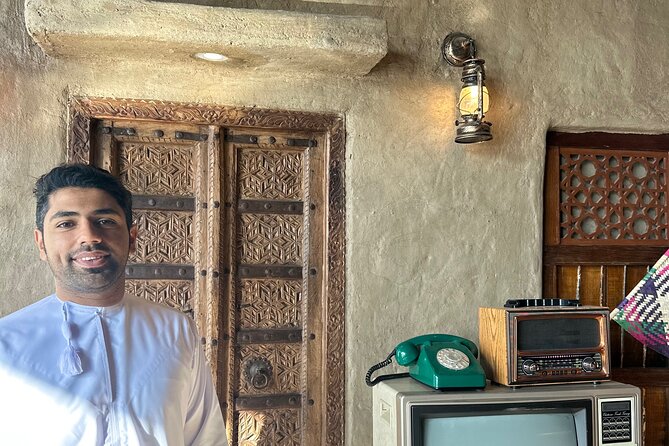
The guide is the heart of the experience. Issam is specifically associated with fluent Italian and a remarkable range of languages, including reports of twelve languages and even Catalan. Abdullah is described as punctual and helpful on a private route, while Ahmed is associated with professional, empathetic guiding. Confirm who will lead your dates and which language is guaranteed.
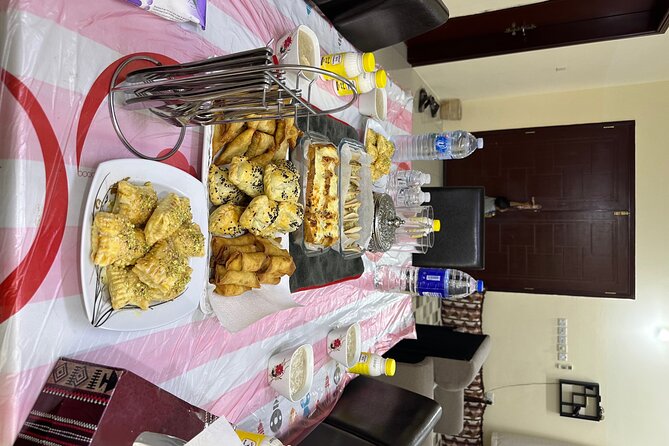
Three lunches are included, but brunch is not. Other meals and the exact accommodation arrangements are not detailed here. Ask for a written breakdown of lodging, dinners, desert camp standards, transfers, and any extra entrance costs before comparing this price with a self-drive plan.
A private tour can be good value for a family or small group that wants one vehicle and one guide. For a solo visitor, the per-person rate may feel harder to justify.
Who will enjoy this tour most
I would recommend this route to you if you want Oman’s major sights but also care about village life, working markets, traditional irrigation, and local food stops.
It suits families and friends who value a private schedule. It also works well for culture-focused visitors who want explanations in their own language. Adventure seekers will appreciate Wadi Shab, the desert, and the mountain roads, provided everyone in the group has moderate fitness.
You should think twice if you dislike long drives, early dinners, changing accommodation, or tightly packed sightseeing days. Wadi Shab is not suitable for everyone, and the trip includes several short visits where you will need to accept an overview rather than a detailed exploration.
The tour can also suit repeat visitors to Oman. One review described a fourth visit to the country and singled out Jebel Akhdar as a new and rewarding addition. That is a useful clue: the route is not only for first-time sightseers, especially if the guide adjusts the plan and adds local stops.
Final booking advice
Book this tour if you want a private, guide-led sweep through Oman and place a high value on personal explanations, multilingual service, and a route that mixes famous sights with everyday culture.
Before booking, confirm the six-day versus five-day wording, the six-night arrangement, your named guide, accommodation, meals, and the exact transport plan. If you are fit enough for Wadi Shab and comfortable with a busy schedule, this is a strong way to connect Muscat, the coast, desert, mountains, and Nizwa in one trip. If you prefer slow mornings and long stays in each town, choose a shorter route with fewer regions.
FAQ
How long does the tour last?
The detailed schedule runs for six days, from Day 1 through Day 6. The title also refers to five days and six nights, so confirm the exact duration and overnight plan before booking.
Is this a private tour?
Yes. Only your group participates in the activity.
Is pickup available?
Yes. Pickup is offered, though the provided details do not specify the pickup location or time.
Which languages can the guides speak?
Professional local guides are offered in English, Spanish, French, German, Italian, Russian, Portuguese, and Arabic. The information also describes Issam as speaking twelve languages, including Catalan, but confirm the language for your specific booking.
How difficult is Wadi Shab?
Wadi Shab requires about one hour of walking to reach the wadi and about one hour to return. You can also swim toward the cave, so the stop is intended for people with moderate physical fitness.
What meals are included?
Water and three lunches are included. Brunch is not included. The supplied details do not specify all other meals.
Is admission included at the main sights?
Included admissions are listed for the Royal Opera House, Bait Al Zubair, Wadi Shab, Ras Al Jinz Turtle Reserve, Misfat al Abreyeen, Jabreen Castle, Nizwa Fort, and Oman Across Ages Museum. Several other stops are free or photo stops.
Can I cancel for a full refund?
You can cancel at least 24 hours before the experience start time for a full refund. Cancellations or changes made less than 24 hours before the start time are not accepted for a refund.
Just added around Muscat
- Wadi Shab &Bimmah Sinkhole &Heart shaped Cave &Pebble Beach★ 5.0 · 5 reviews
- Wahiba Sands and Wadi Bani Khalid Full-Day Tour from Muscat★ 4.6 · 3 reviews
- Try scuba Diving Tours To Daymaniyat Islands.★ 5.0 · 12 reviews
- From Muscat Wadi Shab and Bimmah Sinkhole Tour★ 5.0 · 6 reviews
- Watching Sunrise in Wahiba Sand Desert – Early Morning Tour★ 5.0 · 7 reviews
- Wahiba Sands&Wadi Bani Khalid desert Safari(Muscat tours)★ 4.5 · 6 reviews
- Wahiba Sands and Desert Safari from Muscat★ 5.0 · 3 reviews
- Wahiba Sands&Wadi Bani Khalid desert Safari(Muscat tours) : Private tours★ 4.5 · 6 reviews
5-Day Experiences, compared.

5 Days – 4 Nights Private Roundtrip Tours – Fatimah Tours
Read our review →

Oman Explorer: City, Wadis, and Desert 5-Day Adventure
Read our review →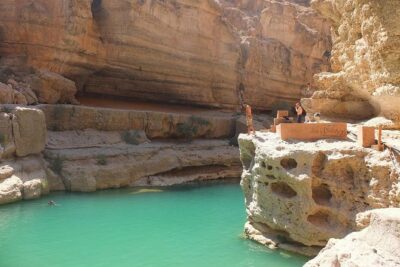
Browse the lists this tour appears in