
Reviewed · 3-DAY EXPERIENCES
Private 3 days 2 nights Roundtrip Tour in Oman
Wadi Shab’s clear pools, a swim-through cave, green palms, and a small waterfall make it the star of this fast-moving Oman circuit. You also get a very different kind of thrill at Wahiba Sands, where sunset, a campfire dinner, and an early dune sunrise break up the sightseeing.
I like the private 4WD transport, which lets your guide adjust stops to your pace, and I like the mix of nature and culture: a dhow workshop, turtle watching, Bronze Age tombs, old villages, and mountain orchards. The main catch is the pace. Three days covers a great deal of ground, but you should be ready for long road sections and a moderate hike at Wadi Shab.
Key points at a glance
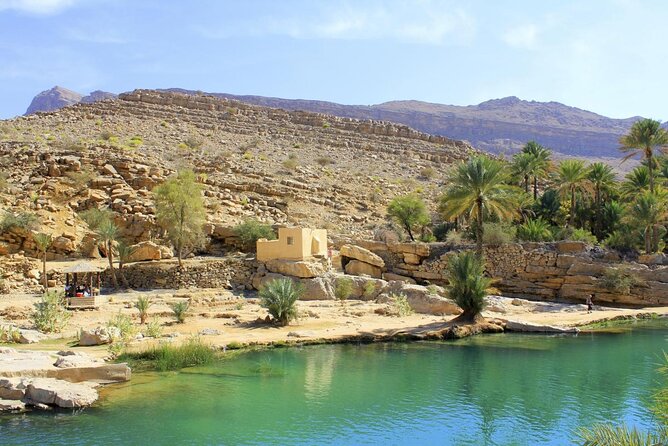
- Wadi Shab is the physical centerpiece: Allow four hours for the boat crossing, canyon walk, pools, and optional swim into the cave.
- Ras Al Jinz adds a rare wildlife stop: Turtle watching is included, with two hours set aside for the reserve.
- Wahiba Sands brings the overnight adventure: Expect a desert camp, sunset from a dune, dinner, campfire time, and sunrise before breakfast.
- The guide shapes the experience: Guides named in the feedback include Mohammed, Khalid, Waleed, Yahya, Hussein, Amer, Said Al-Kiyumi, and Khalil Al Jabri.
- The price covers the expensive basics: At $887 per person, you receive private transport, guide service, two nights of rooms, two breakfasts, two dinners, bottled water, and listed entry fees.
- You need reasonable stamina: Wadi Shab includes a 35-minute walk through the canyon, and the schedule has several active outdoor stops.
Why this three-day route works
Oman is spread out, and this trip gives you a useful first look without asking you to arrange several separate excursions. Starting in Muscat, you head along the coast, cut inland through wadis and desert, then finish among mountain villages and old irrigation works.
That range is the real strength. In three days, you see water-carved gorges, palm plantations, a working craft tradition, desert dunes, old tombs, and high mountain terraces. You are not simply checking off forts and viewpoints. You get several ways to understand Oman: through its water, trade, farming, seafaring, and desert life.
The private format matters here. Only your own group participates, and an English-speaking Omani guide accompanies you. The feedback repeatedly singles out guides by name, including Mohammed, Khalid, Waleed, Hussein, Yahya, and Khalil Al Jabri, with particular praise for their punctuality, flexibility, cultural explanations, and care with different ability levels. Guide assignments can vary, so you should not assume a particular person is guaranteed unless the operator confirms it.
Pickup and drop-off are offered within the Muscat area, including hotels, the port, and the airport. The scheduled start is 8:30 am. Bottled water and a comfortable 4WD vehicle are supplied, both useful in a tour with this much time outdoors and on the road.
A few more Muscat trips to weigh up
- 3 Days – 2 Nights Private Roundtrip Tours – Ahmed Tours
★ 5.0 · 28 reviews - 3 Day Package TOUR JASMIN
★ 5.0 · 11 reviews - Oman: Jasmin Tour | 3 Days Private Package Tour
★ 5.0 · 7 reviews
Day one: Bimmah Sinkhole and Wadi Shab
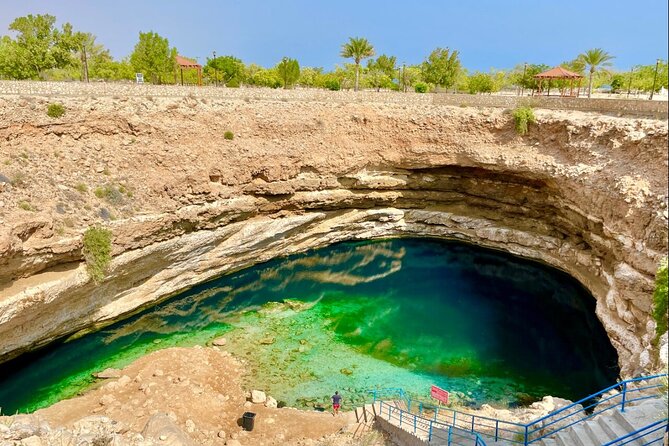
The first stop is Bimmah Sinkhole, reached on the way to Wadi Shab. You have about an hour for photographs and a quick look. Admission is free.
This is a short stop rather than a full excursion, so keep your expectations in check. It gives you a striking opening scene and a chance to stretch your legs, but Wadi Shab is the place where the day really begins.
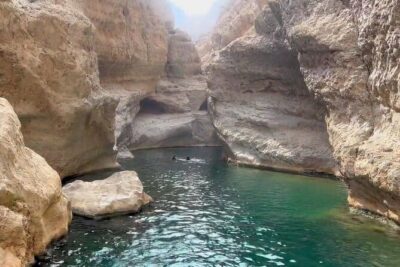
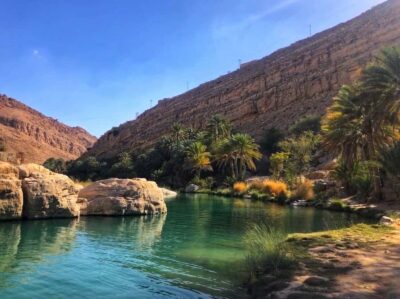
Wadi Shab is a broad canyon cut by water, with palms lining sections of the gorge. The planned visit lasts about four hours and includes the boat ticket. A short boat ride takes you across the water at the entrance, followed by a walk of roughly 35 minutes through the canyon.
The route ends at clear pools where you can swim from one pool to another. The final section is the most memorable: an opening between large rocks leads into a narrow cave with a small waterfall. Sunlight comes through the gap and gives the water its blue-green color.
This is not a passive sightseeing stop. You need a moderate level of fitness, steady footing, and comfort around water. The tour notes specifically call for moderate physical fitness. If you do not want to swim, you can still enjoy the canyon and pools, but the cave section is reached by swimming.
Bring suitable swimwear, footwear you can walk in, and a way to protect valuables from water. Those items are not listed as included, so you need to prepare them yourself. Lunch is also not included, and Wadi Shab falls at the point in the day when you may want food, so plan for that expense.
After Wadi Shab, you pause at Wadi Tiwi for about 45 minutes. Tiwi village gives this wadi its name, and its plantations make it look greener than many other dry valleys. It is a photo stop, not a second long hike, which is sensible after the exertion at Wadi Shab.
Turtle watching at Ras Al Jinz
The first day ends at Ras Al Jinz Turtle Reserve, near Ras Al Hadd. The area is known as a breeding ground for green sea turtles, and the tour includes the turtle-watching entry fee.
Two hours are allocated here. This is a valuable change of pace after the canyon walk: instead of scrambling over rocks or swimming through pools, you spend the evening focused on a protected coastal wildlife site.
The tour description says you spend the night for turtle watching, but it does not name the accommodation at Ras Al Jinz. Ask the operator to confirm the exact overnight property and the timing of the viewing before departure. That matters because wildlife sightings can never be treated like a guaranteed stage performance.
Dinner is included on the tour, along with the first of two breakfasts. The room arrangements depend on party size: two people receive a standard double room, three people receive a double room with an extra bed, and four people receive two standard double rooms.
Day two: Sur, dhow building, and Wadi Bani Khalid
Day two opens in Sur, a port city on Oman’s eastern coast. The city is tied to the country’s seafaring past, and the visit focuses on its old fortifications and traditional wooden boat building.
At the Dhow Factory, you spend about 45 minutes and receive the entry included. This is one of the better cultural stops because it shows a craft in progress rather than presenting history only behind glass. Dhows are traditional wooden vessels, and watching them take shape gives context to Oman’s connection with the sea.
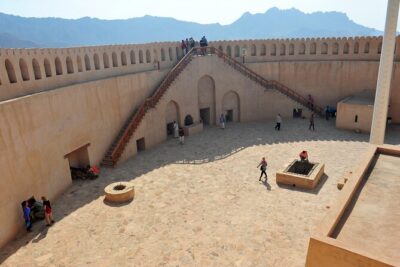
The description also points to old fortresses and Sunaysilah Fort, which has four defensive towers around a courtyard. The exact amount of time spent at the fort is not separately stated, so the main scheduled focus is the dhow workshop and a look around Sur.
From Sur, you continue to Al Kamil Wal Wafi and the Omani Ghazal Farm, also called Asilel Farm in the tour details. The visit lasts about 30 minutes and is free of charge. You may see ghazal at the farm, making this a small but unusual stop between the coastal city and the inland wadi.
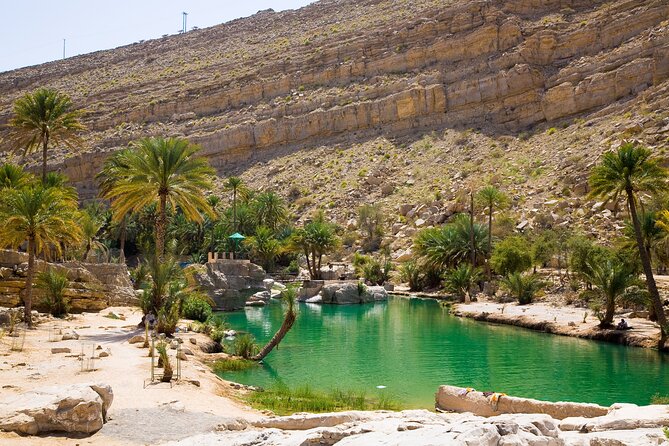
Next comes Wadi Bani Khalid, one of Oman’s best-known wadis. Two hours are set aside for swimming, sunbathing, relaxing, or a picnic among the canyon scenery. A short walk leads to large emerald-colored pools.
Compared with Wadi Shab, Wadi Bani Khalid is presented more as a place to pause and enjoy the water. That makes the two stops a good pair. Wadi Shab supplies the active canyon experience and cave swim, while Wadi Bani Khalid gives you more room to sit, swim, and take in the setting.
Lunch remains your responsibility. The tour includes bottled water, breakfast, and dinner, but not midday meals. A picnic is mentioned as an option at Wadi Bani Khalid, but the food itself is not included.
Same coast and mountains, a completely different day out:
- Muscat: Daymaniat Islands Snorkeling Trip with Brunch
★ 4.7 · 2,317 reviews - From Muscat: Wadi Shab & Bimmah Sinkhole Full-Day Tour
★ 4.8 · 1,862 reviews - Muscat: Wahiba Desert and Wadi Bani Khalid Guided Group Tour
★ 4.8 · 820 reviews - Muscat: Half-Day Sightseeing Essentials Tour and Audio Guide
★ 4.2 · 598 reviews
Sunset and campfire in Wahiba Sands
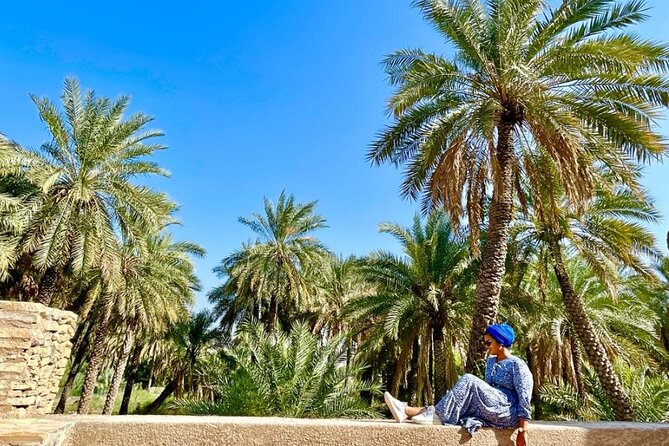
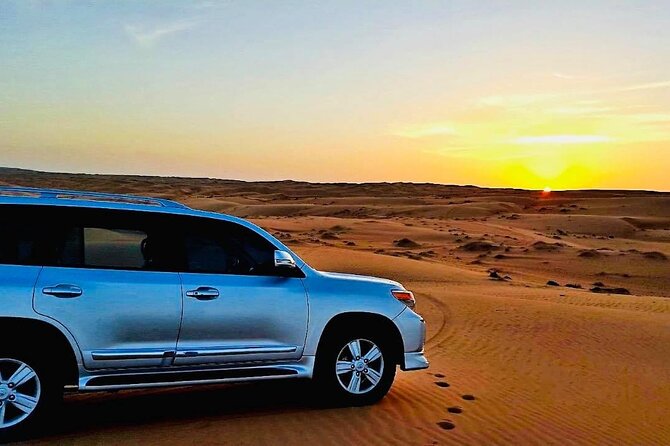
The final major stop on day two is Wahiba Sands, where you stay at a desert camp. You have about two hours for the desert portion, including time to relax or take part in an adventurous 4WD ride over the dunes.
The 4WD vehicle is included, but the details of the dune drive are not specified as a separate included activity. Ask what is covered before you agree to the ride, especially if you are comparing prices or planning your spending.
The sunset is the evening’s main event. You climb one of the larger dunes for the view, then return to camp for dinner and time around a campfire. This is a simple overnight experience, but it gives the trip an important shift in mood. After a day of roads, forts, and swimming pools, the desert offers quiet space and a very different sense of Oman.
The second dinner is included. Your second night is in the desert camp, although the exact camp name and facilities are not provided. If you need a private bathroom, air conditioning, or a particular bedding arrangement, ask before booking rather than assuming all desert camps offer the same setup.
Day three: sunrise, tombs, and the Green Mountain
The last morning begins early with sunrise from the dunes, followed by breakfast. The sunrise stop lasts about 30 minutes. You should expect an early start, but it is one of the most worthwhile short stops because the desert looks completely different in the cool morning light than it does at sunset.
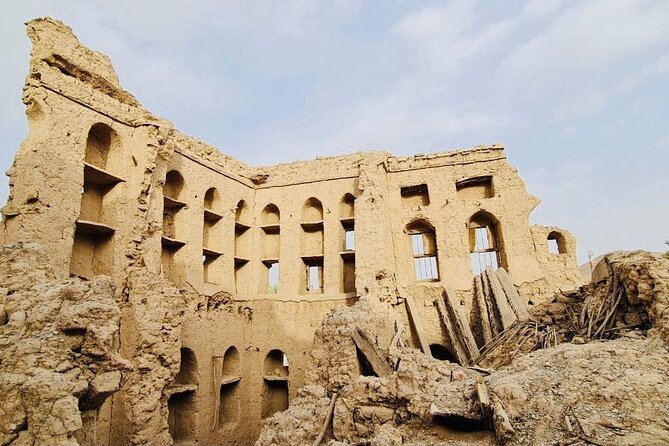
You then travel to the Zukait Tower Tombs near Izki. About an hour is planned here. These beehive-shaped tombs are described as a well-preserved Bronze Age site, with a setting that has been recognized by UNESCO as an ancient archaeological area.
The tombs are not a polished museum attraction. Their value is in their age, form, and setting. Your guide is especially important here, since the remains may mean little without an explanation of the period and their place in Oman’s past. The tour’s cultural strength comes from these smaller historical sites, not just from headline attractions.
Jebel Akhdar, or the Green Mountain, follows. It forms part of the Al Hajar Mountains and reaches about 2,980 meters, with the Saiq Plateau at roughly 2,000 meters above sea level. Two hours are scheduled for the visit.
The name can mislead you if you picture a forested mountain. Jebel Akhdar is known here for its higher, cooler mountain setting and its cultivated areas. The mountain stop gives you a strong contrast with the coast and desert, though the tour details do not specify a particular village, viewpoint, or walking route.
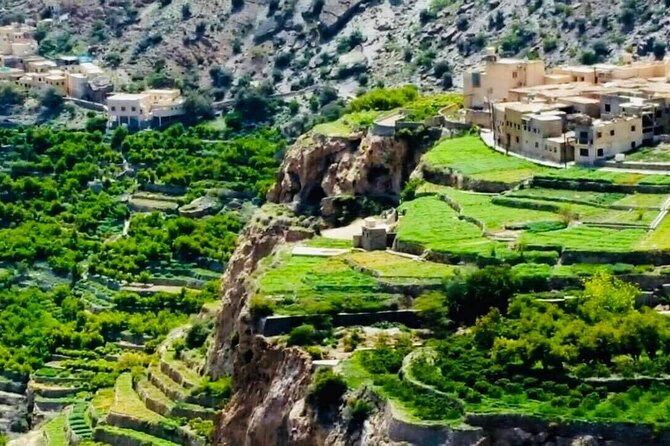
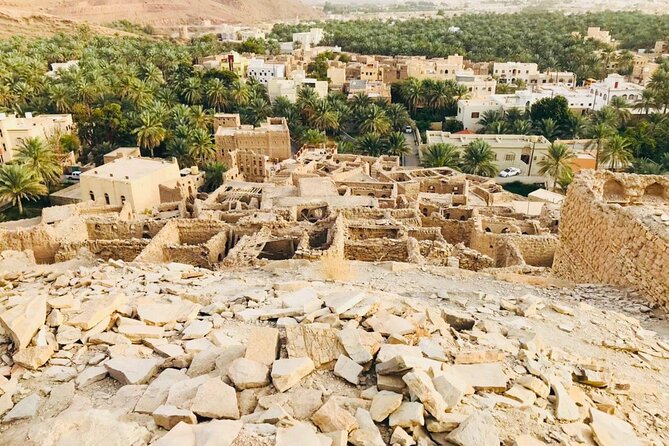
Your final stops are Birkat Al Mouz and the Aflaj Irrigation Systems of Oman. Birkat Al Mouz is an old village on the mountain face along the former Muscat to Nizwa road. Its name translates as Banana Pool, and banana plantations are part of the area’s character. Thirty minutes are planned for this stop.
Another 30 minutes are set aside for one of Oman’s aflaj irrigation systems. Five of these systems were added to the UNESCO World Heritage list. The channels show how communities moved and shared water in a dry country, so this short visit adds useful context to the wadis, palms, and farms seen earlier.
The route description does not include a separate stop in Nizwa, though one account of the trip refers to visiting Nizwa. If Nizwa Fort or the souq is important to you, confirm the final route with the company before you pay. The advertised day three stops finish with Birkat Al Mouz and the aflaj system.
What the $887 price really covers
At $887 per person, this is not a budget road trip. Its value depends heavily on your group size and on how much you would otherwise spend arranging a private vehicle, an English-speaking guide, two nights of lodging, meals, and entry fees separately.
Included are pickup and drop-off in the Muscat area, private 4WD transport, an Omani English-speaking guide, bottled water, two breakfasts, two dinners, and the listed admission fees for turtle watching, the dhow factory, the Wadi Shab boat, and the accommodation arrangement.
Lunch, visa costs, and air tickets are excluded. You should also ask about any optional dune drive charge and confirm the desert camp facilities. Group discounts are offered, and the private setup becomes more attractive when the cost is shared among three or four people, though the quoted price is per person.
The tour is commonly booked about 44 days ahead. That is useful planning information, especially if your dates depend on a particular camp or on airport pickup. Confirmation is received at booking.
The guide can make or break the pace
The strongest pattern in the feedback is not one single attraction. It is the guide service. Names attached to especially positive accounts include Mohammed, Khalid, Waleed, Yahya, Hussein, Amer, Said Al-Kiyumi, and Khalil Al Jabri.
The qualities repeatedly associated with these guides are punctuality, clear explanations about Omani culture and religion, flexibility, and attention to comfort. One guide adjusted the route to match the group’s abilities and interests. Another kept the trip moving despite bad weather and flooding. Those details matter more than polished commentary because this route needs judgment on the road and at outdoor stops.
Still, guide quality can vary by assignment, and a private tour is not automatically a slow or relaxed tour. Tell the company in advance if swimming, hiking, wildlife, archaeology, or photography matters most. The more clearly you state your priorities, the easier it is for the guide to use the private format well.
Who should book this Oman tour?
I would recommend it to a first-time Oman visitor who has only three days and wants a broad introduction. It suits couples and small families who value a private vehicle, cultural explanation, and a route that combines coast, water, desert, and mountains.
It is also a good fit if you want to avoid planning your own desert transfer and overnight arrangements. The included dinners, breakfasts, water, and entry fees simplify the trip.
I would hesitate if you prefer slow travel. Wadi Shab alone deserves energy and attention, while the route also includes Sur, two major wadis, a turtle reserve, the desert, tombs, a high mountain, a village, and an irrigation site. You will cover a lot of territory in three days.
This is not the right choice if you want a city-focused Muscat tour. Despite starting and ending in the Muscat area, most of the time is spent outside the capital. It is also a poor match if you cannot manage the Wadi Shab walk or do not want to swim, though you can still enjoy the scenery without entering the cave.
Cancellation terms are strict close to departure. Cancel at least six full days before the start for a full refund, two to six days ahead for a 50 percent refund, and less than two days ahead for no refund. Bad weather or failure to meet the minimum number of participants can lead to a new date, an alternative experience, or a full refund.
My verdict: a strong overview, at a demanding pace
Book this tour if you want Oman’s biggest contrasts in one carefully arranged loop: water at Wadi Shab, turtles on the coast, boats in Sur, pools at Wadi Bani Khalid, dunes in Wahiba Sands, and old farming and burial sites inland.
The best reasons to choose it are the private format, the included transport and dinners, and the chance to ask an Omani guide direct questions as the scenery changes. The main tradeoff is time. You are buying breadth rather than long, unhurried visits.
Before booking, confirm the exact guide, hotel and camp names, any dune-drive supplement, the final drop-off point, and whether a Nizwa stop is included. If those details suit your plans, this is a practical and memorable three-day introduction to Oman.
FAQ
Where does the tour start?
The tour starts at 8:30 am, with pickup offered from a hotel, port, or airport in the Muscat area.
Is this a private tour?
Yes. Only your own group participates in the activity.
What type of vehicle is used?
A comfortable 4WD vehicle is included.
Is an English-speaking guide included?
Yes. The tour includes an Omani English-speaking guide.
Are meals included?
Two breakfasts and two dinners are included. Lunch is not included.
Is swimming required at Wadi Shab?
Swimming is part of the route to the final cave and waterfall, but the tour details do not say that swimming is mandatory. You should have a moderate level of physical fitness for the canyon walk.
What accommodation is provided?
For two people, the arrangement is one standard double room. For three people, it is one standard double room with an extra bed. For four people, it is two standard double rooms. The tour also includes a night at a desert camp, but the exact accommodation names are not provided.
Just added around Muscat
- Wadi Shab &Bimmah Sinkhole &Heart shaped Cave &Pebble Beach★ 5.0 · 5 reviews
- Wahiba Sands and Wadi Bani Khalid Full-Day Tour from Muscat★ 4.6 · 3 reviews
- Try scuba Diving Tours To Daymaniyat Islands.★ 5.0 · 12 reviews
- From Muscat Wadi Shab and Bimmah Sinkhole Tour★ 5.0 · 6 reviews
- Watching Sunrise in Wahiba Sand Desert – Early Morning Tour★ 5.0 · 7 reviews
- Wahiba Sands&Wadi Bani Khalid desert Safari(Muscat tours)★ 4.5 · 6 reviews
- Wahiba Sands and Desert Safari from Muscat★ 5.0 · 3 reviews
- Wahiba Sands&Wadi Bani Khalid desert Safari(Muscat tours) : Private tours★ 4.5 · 6 reviews
3-Day Experiences, compared.
3 Days – 2 Nights Private Roundtrip Tours – Ahmed Tours
Read our review →
Browse the lists this tour appears in