
Reviewed · 3-DAY EXPERIENCES
Oman: Jasmin Tour | 3 Days Private Package Tour
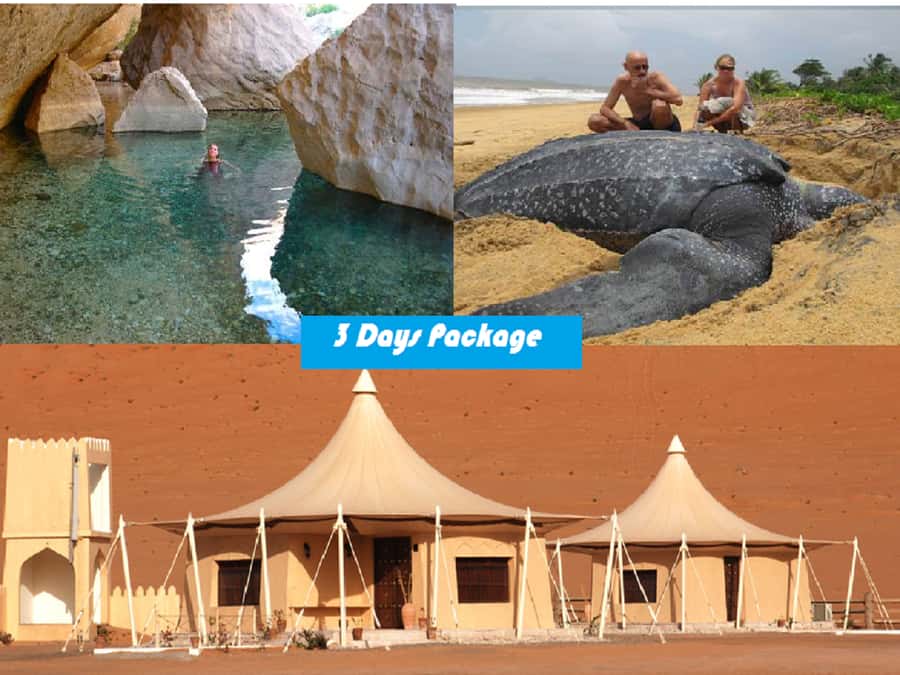
A desert sunset, a night beside the dunes, sea turtles after dark, and a swim through clear pools in a rocky canyon: this three-day Oman tour packs a lot into a short trip. It begins anywhere in Muscat and heads east, giving you a quick but vivid look at villages, wadis, coast, and desert.
I like the private format, which lets you travel with your own guide and group instead of following a large coach. I also like the range of scenery, from the old mud buildings of Fanya and Mudhairib to the turquoise pools of Wadi Shab. The main catch is the price, $965 per person, and the demanding pace, with long drives, walking, swimming, and a late turtle visit.
- Desert night near the dunes: Ride a 4×4 over the sand, watch sunset, then eat beside a campfire.
- Local Oman in Ibra: Walk through the market and visit the town’s old village.
- Wadi Bani Khalid swim: Bring suitable swimwear and a towel for one of Oman’s best-known wadis.
- Ras Al Jinz after dark: Search for nesting turtles or, with luck, newly hatched babies.
- Wadi Shab finale: Hike to clear pools, narrow crevices, and a turquoise waterfall.
- Private guiding: Guides named in past bookings include Khalfan, Juma, and Youssef.
A fast route from Muscat to Oman’s eastern coast
This tour works because it links several of Oman’s strongest sights without asking you to arrange hotels, transport, park fees, and entry tickets yourself. In three days, you move from inland villages to open desert, then across the coast and back toward Muscat.
You will travel in a private vehicle. A salon car has room for up to three people, while a 4×4 can carry up to six. That distinction matters. The desert section requires a 4×4, and the extra space will be useful when you have bags, swim gear, and several people sharing the ride.
The route is full. You should expect substantial time on the road, along with outdoor activity in heat and uneven surroundings. I would choose this package for a first visit to Oman when you want a broad sample of the country and do not want to drive yourself.
The English-speaking guide is an important part of the experience. Khalfan, Juma, and Youssef are names associated with previous bookings, though you should confirm your assigned guide when reserving. The personal format gives you a better chance to ask about local life, adjust the pace where possible, and understand what you are seeing rather than simply collecting photo stops.
Fanya and Mudhairib: mud walls beneath the mountains
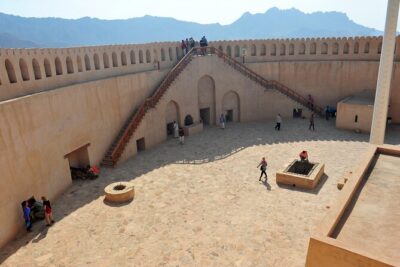
The first stops introduce you to Oman away from the polished streets of Muscat. Fanya is a desert town with old mud buildings set against a mountain backdrop. These structures are the sort of details that make the early part of the trip worthwhile: weathered walls, simple forms, and a strong sense of how settlements once adapted to a dry environment.
You will continue to Old Town Mudhairib, where ruins provide a natural photo stop. Do not expect a restored museum complex or a long guided attraction. The appeal is the atmosphere and the chance to see old village remains in their setting.
I like this opening because it slows you down before the bigger attractions arrive. Oman is easy to reduce to sand, forts, and swimming holes, but these old settlements help you see how people lived between the mountains and desert. Bring a camera, but also take a few minutes to look closely at the walls and layout of the village.
The visit is best suited to people who enjoy places with a worn, authentic feel. If you want polished exhibits, extensive interpretation, or a long list of formal attractions, this portion may feel brief.
A few more Muscat trips to weigh up
- 3 Days – 2 Nights Private Roundtrip Tours – Ahmed Tours
★ 5.0 · 28 reviews - Private 3 days 2 nights Roundtrip Tour in Oman
★ 5.0 · 17 reviews - 3 Day Package TOUR JASMIN
★ 5.0 · 11 reviews
Ibra market and the old village
In Ibra, you will walk through the local market and stop for a midday meal. Lunch is not included in the tour price, so budget separately for food each day. The market is one of the more useful parts of the route because it gives you a look at everyday commerce rather than a sight designed only for visitors.
After the market, you visit Ibra’s ancient village. The combination of market and old settlement gives you two views of the town: one active and current, the other shaped by the past.
Your guide can help turn this from a quick walk into a more meaningful stop by explaining what you are seeing and pointing out details you might otherwise miss. The private setup also makes it easier to pause for photographs or ask questions without holding up a large group.
Keep your expectations practical. The tour information does not promise a set market schedule, special shopping event, or particular food. You should think of this as a local town visit with time to eat, walk, and take in the setting.
Sand dunes, 4×4 driving, and a night by the campfire
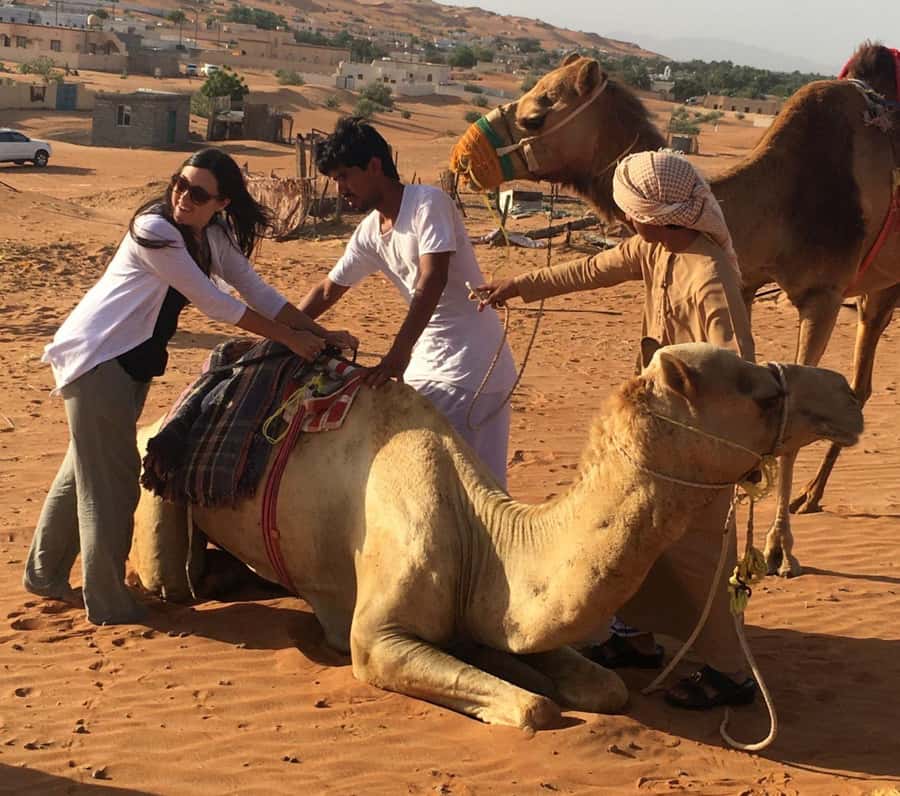
The desert section is the trip’s most cinematic moment. You will take a 4×4 onto the sand for a dune drive, then stop to watch the sun drop over the dunes. Afterward, dinner is served at the desert camp, with a campfire adding warmth to the evening.
This is more than a quick roadside photograph. You spend the night in the desert, which gives the experience a clear sense of occasion. The contrast is part of the pleasure: a busy morning in Ibra, then open sand, quiet, and a slower evening.
The 4×4 ride may be exciting, but it can also be rough. Anyone with back problems, heart problems, mobility limitations, or other pre-existing medical conditions should take the restrictions seriously. Pregnant women and wheelchair users are specifically advised not to join.
A desert camp is not the same as a standard hotel. The supplied information does not specify the exact camp facilities, room arrangement, or bathroom setup, so ask before booking if those points matter to you. You should also pack light for this section and keep personal essentials easy to reach.
The campfire dinner is included as part of the desert evening, but lunch is not included in the package. If you have special dietary needs, ask the operator in advance rather than assuming the camp menu will suit you.
Wadi Bani Khalid: the most refreshing stop
On the second day, you visit Wadi Bani Khalid, described as one of Oman’s largest and most beautiful wadis. Here you can swim, sunbathe, rest, or have a picnic among the canyon walls.
For many people, this will be the physical highlight of the trip. After the dry heat and sand, clear water offers a welcome change. The wadi gives you room to choose your own level of activity. You can swim, sit near the water, or simply enjoy the rock formations if you do not want a strenuous outing.
Pack modest, practical swimwear and a towel. Oman is a conservative country, and you should choose clothing that respects the setting. Water shoes may also help around rocky edges, though the tour information does not state that they are supplied.
Do not treat this as a guaranteed private swimming hole. Wadi Bani Khalid is a major natural attraction, and conditions can vary. The tour details also do not state how long you will stay, so ask the guide about the available free time if swimming is a priority.
The wadi is not suitable for everyone. Uneven ground, water, heat, and walking can be difficult for anyone with mobility or medical concerns. The operator lists pregnant women, wheelchair users, people with back problems, people with heart problems, and people with mobility impairments as unsuitable for the tour.
Same coast and mountains, a completely different day out:
- Muscat: Daymaniat Islands Snorkeling Trip with Brunch
★ 4.7 · 2,317 reviews - From Muscat: Wadi Shab & Bimmah Sinkhole Full-Day Tour
★ 4.8 · 1,862 reviews - Muscat: Wahiba Desert and Wadi Bani Khalid Guided Group Tour
★ 4.8 · 820 reviews - Muscat: Half-Day Sightseeing Essentials Tour and Audio Guide
★ 4.2 · 598 reviews
Sur and the road toward Ras Al Jinz
From Wadi Bani Khalid, the route continues to Sur, a coastal city with historic sights. You will tour some of the city’s landmarks, including a famous castle, before continuing to Ras Al Jinz.
The Sur portion breaks up the natural scenery with built heritage. It also helps show how Oman’s inland settlements connect to its coast. The information provided does not name the castle or promise a specific amount of interior visiting time, so treat this as a guided sightseeing stop rather than a full museum visit.
The schedule becomes more demanding here. You have already spent time outdoors at the wadi, and the turtle sanctuary visit takes place at night. I would avoid making elaborate plans for the evening after this tour. Your overnight stay is in Ras Al Hadd, either at a hotel or camp, depending on the arrangements.
Ras Al Jinz and the chance to see turtles
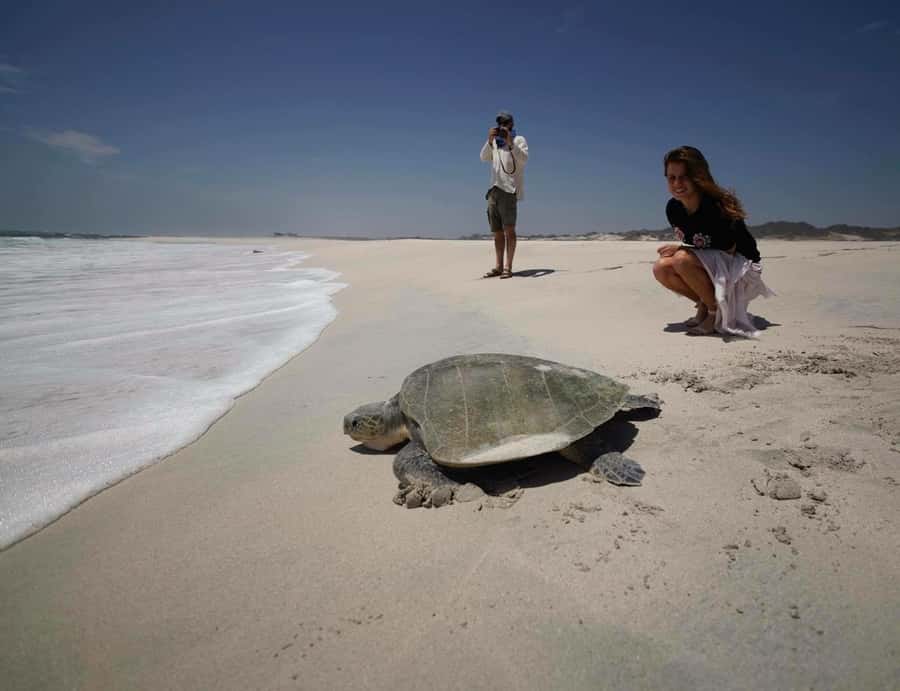
The Ras Al Jinz turtle sanctuary is the most time-sensitive part of the tour. You will go out looking for nesting sea turtles and may, if conditions are right, see baby turtles hatching.
No responsible tour can promise a turtle sighting. Wildlife follows its own schedule, and the experience depends on what is happening on the beach during your visit. That uncertainty is part of the point, but you should not book this expecting a guaranteed close encounter.
The night visit can be tiring, especially after a full day of driving and walking. Still, it adds something the desert and wadis cannot: a chance to see Oman’s coast as a living habitat, not just a scenic view.
Follow the guide’s instructions carefully. Nesting animals need space and quiet, and the sanctuary experience is best when the focus stays on observation. Keep your expectations measured, and regard any turtle sighting as a bonus rather than a promised performance.
Your overnight stop in Ras Al Hadd keeps you near the eastern coast before the final day. The accommodation may be a hotel or camp, so confirm the arrangement if you care about the difference.
Qalhat and the Tomb of Bibi Mariam
On the third day, you make a photo stop at the Tomb of Bibi Mariam in Qalhat. The site is connected with a former host to Marco Polo, giving the stop an unusual link to the old travel routes of the region.
This is a short visit rather than a full archaeological tour. Its value comes from the setting and the story attached to the tomb. You will have time for photographs and a brief look before moving on toward Wadi Shab.
I appreciate this kind of stop on a private route. It does not require a long detour in the description provided, yet it adds another layer to the trip. You are not simply moving between swimming spots. You are also seeing places tied to Oman’s older towns and connections beyond the country.
Wadi Shab: the most active day-three stop
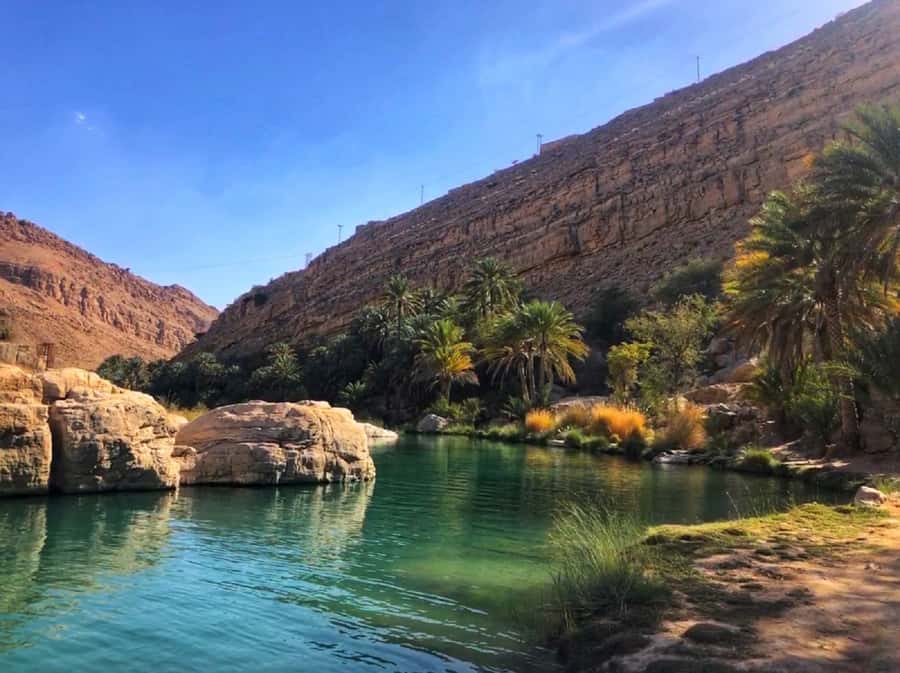
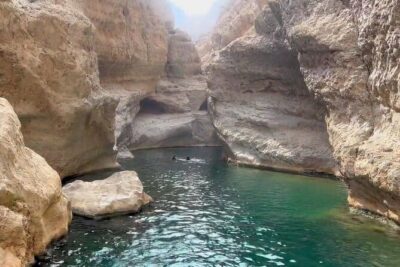
Wadi Shab is an enormous canyon with clear pools, narrow crevices, and a turquoise waterfall. You will hike into the wadi and have the chance to bathe in the pools.
This is where you should expect the most physical effort. The tour description does not give a hiking distance, trail time, or exact route, so you should ask the operator for current details before booking. The combination of walking, uneven ground, swimming, and narrow passages may be challenging.
The reward is a more active natural experience than a simple viewpoint. You are not only looking at the canyon from a road. You are entering it, moving through its spaces, and reaching water surrounded by rock.
Bring water, sun protection, swimwear, and footwear you can manage on uneven ground. The tour includes transport and entrance-related charges, but it does not say that personal equipment is provided. Plan to carry what you need.
Wadi Shab is likely to be the stop you remember most clearly, but it may also be the one that exposes the tour’s physical demands. If you prefer gentle sightseeing, Wadi Bani Khalid may suit you better. If you enjoy walking and swimming, Wadi Shab gives the final day real purpose.
Bamah Sinkhole and the return to Muscat
The return journey includes a stop at Bamah Sinkhole, which is believed to have been created by a meteor. It is an impressive final photo stop and a useful change of pace after Wadi Shab.
The sinkhole adds one last geological curiosity before you head back to Muscat. As with several places on this route, the appeal is visual and natural rather than based on a long formal visit.
You should be ready for a full return journey. The tour starts from any point in Muscat, but the provided information does not give exact pickup times or arrival times. If you have a flight, cruise departure, or other fixed appointment, leave plenty of spare time and confirm the schedule directly.
Cruise ship passengers must provide the ship name, docking time, disembarkation time, and re-boarding time when booking. That information allows the operator to judge if the route can fit your port schedule, but you should still ask for a clear return plan.
Is $965 per person good value?
At $965 per person, this is not a budget excursion. The price needs to be judged against what is bundled: three days, private transport, a private group, an English-speaking guide, fuel surcharge, local taxes, national park fees, entrance fees, the desert 4×4 section, and overnight arrangements.
Lunch is excluded, and the exact accommodation details are not supplied. Those are the two points I would clarify before paying. Ask what the desert camp and Ras Al Hadd stay include, and ask if any meals besides the camp dinner are covered.
For a solo visitor or couple, the cost may feel high. For a small private group, the price can make more sense because you are paying for a dedicated vehicle and guide rather than joining a large shared departure. The salon car holds up to three people, while the 4×4 holds up to six, so group size affects the practical value.
The strongest reason to pay more is convenience. You do not need to arrange a rental car, find the desert route, organize a turtle visit, or connect the eastern coast sights yourself. The private guide also gives you a better chance to ask questions and adjust small parts of the day.
Who should book this Oman tour?
I would recommend it to you if you have three days, want to see several parts of Oman, and prefer a private itinerary. It suits active couples, families with older children, and small groups who value a guide and private vehicle.
It is less suitable if you want a slow holiday. The schedule combines long drives with walking, swimming, sand, late-night wildlife viewing, and a return to Muscat. You will need energy and a willingness to accept that some stops may be shorter than you would choose on a self-drive trip.
The tour also suits people who want both natural and cultural sights. Fanya, Mudhairib, Ibra, Sur, Qalhat, and the old villages add human stories, while the desert, wadis, coast, turtles, and sinkhole provide the dramatic scenery.
The five-star feedback associated with guides Khalfan, Juma, and Youssef points to the human side of the experience. Juma was singled out as making a family trip memorable, while Youssef was praised for helping a group understand Oman and its people. A French-language note also described a well-prepared route with enough flexibility to move beyond the most obvious path. You should not assume a particular guide is guaranteed, but you can ask whether one of these guides is available.
Should you book it?
Book this tour if you want a strong first taste of eastern Oman and are happy to pay for a private guide, vehicle, and tightly planned route. The desert camp, Wadi Bani Khalid, Ras Al Jinz, and Wadi Shab give you four very different experiences in only three days.
Skip it if you need wheelchair access, have a medical condition affected by rough transport or outdoor exertion, or want a relaxed schedule with generous time at each place. Before booking, confirm the guide, accommodation, meals, pickup time, and the walking conditions at Wadi Shab.
For an active small group starting in Muscat, this is a practical way to see a lot of Oman without handling the logistics yourself. Just go in prepared for a full schedule, separate lunch costs, and the fact that wildlife and weather cannot be controlled.
FAQ
Where does the tour begin?
The tour can start from any point in Muscat.
How long does the tour last?
The experience lasts three days.
Is the tour private?
Yes. It is designed for a private group with private transport and a live English-speaking guide.
What languages are available?
The listed tour language is English.
How many people can travel in the vehicle?
A salon car has three seats, while a 4×4 vehicle can carry up to six people.
Are meals included?
Lunch is not included. The information provided does not specify every included meal, so confirm meal arrangements before booking.
Is a passport required?
Yes. You need a current valid passport on the day of travel.
Can cruise ship passengers book this tour?
Yes, but cruise ship passengers must provide the ship name, docking time, disembarkation time, and re-boarding time when booking.
Just added around Muscat
- Wadi Shab &Bimmah Sinkhole &Heart shaped Cave &Pebble Beach★ 5.0 · 5 reviews
- Wahiba Sands and Wadi Bani Khalid Full-Day Tour from Muscat★ 4.6 · 3 reviews
- Try scuba Diving Tours To Daymaniyat Islands.★ 5.0 · 12 reviews
- Watching Sunrise in Wahiba Sand Desert – Early Morning Tour★ 5.0 · 7 reviews
- Wahiba Sands&Wadi Bani Khalid desert Safari(Muscat tours)★ 4.5 · 6 reviews
- From Muscat Wadi Shab and Bimmah Sinkhole Tour★ 5.0 · 6 reviews
- Wahiba Sands and Desert Safari from Muscat★ 5.0 · 3 reviews
- Wahiba Sands&Wadi Bani Khalid desert Safari(Muscat tours) : Private tours★ 4.5 · 6 reviews
3-Day Experiences, compared.
3 Days – 2 Nights Private Roundtrip Tours – Ahmed Tours
Read our review →

Browse the lists this tour appears in