
Reviewed · CITY TOURS
Private Muscat City Sightseeing Tour – A Fascinating Capital
Muscat reveals itself in layers: a grand mosque, a small museum filled with Omani traditions, a working souq, and an old harbor district guarded by Portuguese forts. This private four-hour tour gives you a brisk first look at all of them, with hotel pickup and a guide who can adjust the pace for your group.
I like the efficient route and the chance to see both Muscat’s polished embassy quarter and its older neighborhoods in one morning. I also like the personal format, especially if you are in port for only a day. The main consideration is guide quality: several guests praised Rashid’s English and local knowledge, while two rated the guiding lower because the explanations were limited.
Key points to know
- Start with the Sultan Qaboos Grand Mosque: Dress carefully, since shoulders and knees must be covered and women must cover their heads.
- See Muscat’s traditional side: Bait Al Zubair Museum and Muttrah Souq add culture, crafts, silver goods, and local daily life.
- Use your private format wisely: You can ask for more photo stops, a slower walk, or extra explanation at places that interest you.
- Finish in Old Muscat: Al Alam Palace, Mirani Fort, and Jalali Fort make a strong final chapter to the morning.
- Plan for a compact visit: Four hours is enough for an introduction, but not for long museum visits or extended shopping.
- Expect a generally well-rated experience: The tour holds a 4.6 rating from 12 reviews, with 92 percent recommending it, though service is not entirely consistent.
A fast, useful introduction to Muscat
At $169 per person, this is not the cheapest way to see Muscat. It is a private excursion, though, so the price buys more than transport. You get a vehicle for your own party, hotel pickup and drop-off, an English-speaking guide, and a route linking several districts that would be awkward to cover on foot.
I see the tour as a city orientation rather than a slow cultural study. You will touch the main sights, hear about Oman’s traditions and Islamic architecture, browse Muttrah, and leave with a clear sense of how Muscat fits together. If you want a full museum visit, a long meal, or serious souq shopping, four hours will feel tight.
The early 8:00 am start is useful. It gives you a cooler part of the day for walking and leaves time afterward for your own plans. That matters if you are visiting Muscat from a cruise ship or have a flight, hotel change, or another excursion later.
A few more Oman trips to weigh up
- Full-Day Private Wahiba Sands Desert and Wadi Bani Khalid Tour
★ 5.0 · 291 reviews - Half-Day Private Muscat City Tour – Top Landmarks in Just 4 Hours
★ 5.0 · 256 reviews - Oman: Private Muscat City Tour With Pick-up/ Drop-off
★ 4.4 · 234 reviews
Sultan Qaboos Grand Mosque sets the tone
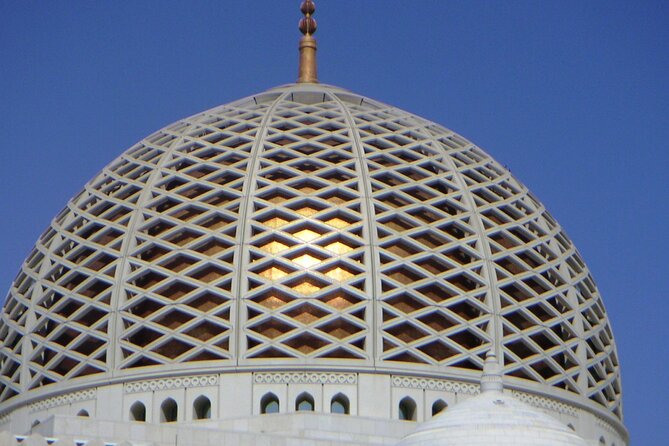
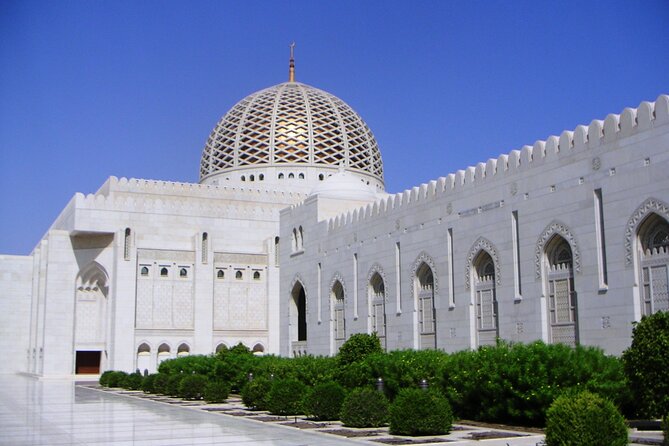
The tour begins at Sultan Qaboos Grand Mosque, one of the largest mosques in the Middle East. This is the most formal stop, and it is also the place where clothing rules matter most.
Women need a long-sleeved shirt, full-length trousers or a long skirt, and a scarf covering the head. Men may wear short sleeves, but both men and women must wear full pants. Shorts are not allowed, and shoulders and knees should remain covered throughout the visit.
Bring a scarf if you need one, and do not treat the clothing rule as a minor detail. Being dressed correctly makes entry simpler and shows respect for a working religious site. The tour information also asks you to pay attention to local customs when taking photographs, so follow your guide’s instructions rather than photographing casually.
The mosque is valuable even if you are not especially interested in religious buildings. Your guide can explain elements of Islamic architecture and Omani religious tradition, helping you read the space instead of simply walking through a grand interior. The supplied schedule gives only a brief five-minute admission notation, so I would not assume a long, leisurely visit. Ask at the start how much time your group will have inside.
Bait Al Zubair Museum explains Omani identity
Next comes Bait Al Zubair Museum, described as the Omani museum on the tour. This stop focuses on the country’s culture, customs, and material traditions. It gives useful context before you reach the souq, where those traditions appear in a more commercial and everyday setting.
I like the pairing. A museum can show you why certain objects matter, while Muttrah Souq gives you a chance to see how craft and trade continue in public life. The information provided does not list individual galleries or displays, so you should think of this as a compact introduction rather than a specialist museum tour.
Time management matters here. With only four hours for the entire city, you may need to choose between reading every display and keeping enough time for Muttrah and Old Muscat. Tell your guide what matters most to you. A visitor focused on culture may want more museum time, while someone visiting for photographs may prefer to move on to the Corniche and forts.
The Corniche connects modern Muscat with Old Muscat
After the museum, the vehicle follows Muscat’s picturesque Corniche toward the old walled district. This drive is not just a transfer between stops. It helps you see the city’s broad layout and the contrast between its carefully planned modern districts and the older harbor area.
The tour also passes through Muscat’s embassy quarter in a luxury air-conditioned coach or minibus. That detail matters in Oman, where a private vehicle gives you a welcome break from the heat and lets you cover separated sights without arranging several taxis.
The vehicle experience may vary. Most feedback is very positive about the service, but one highly critical account complained about the vehicle and a lack of organization. The operator responded that it does not use vehicles that are ten years old, yet the complaint still gives you a practical question to ask before booking: what vehicle is planned for your group, and where exactly will pickup take place?
Same coast and mountains, a completely different day out:
- Muscat: Daymaniat Islands Snorkeling Trip with Brunch
★ 4.7 · 2,317 reviews - From Muscat: Wadi Shab & Bimmah Sinkhole Full-Day Tour
★ 4.8 · 1,862 reviews - Muscat: Wahiba Desert and Wadi Bani Khalid Guided Group Tour
★ 4.8 · 820 reviews - Muscat: Half-Day Sightseeing Essentials Tour and Audio Guide
★ 4.2 · 598 reviews
Al Alam Palace is a photo stop, not a palace tour
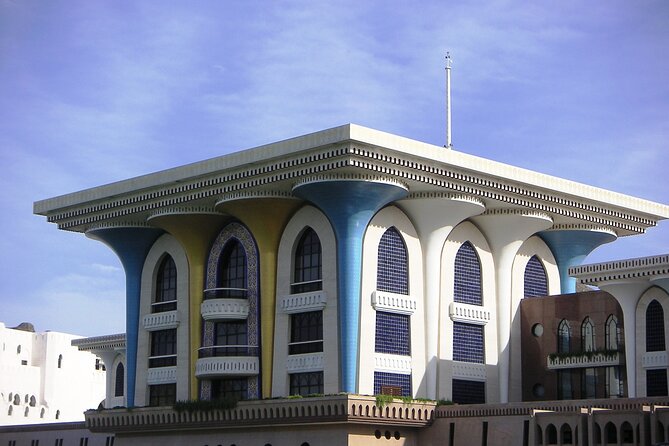
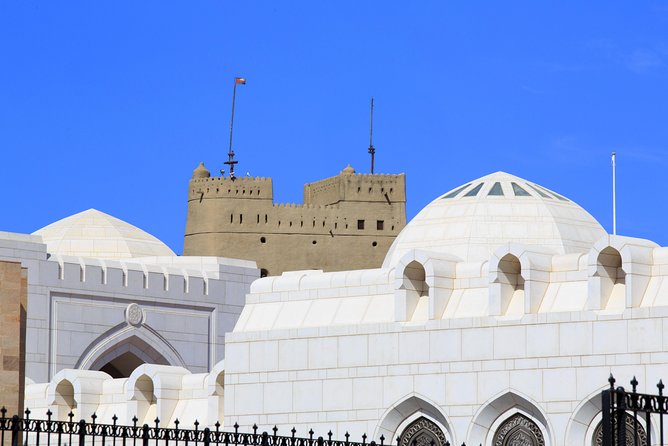
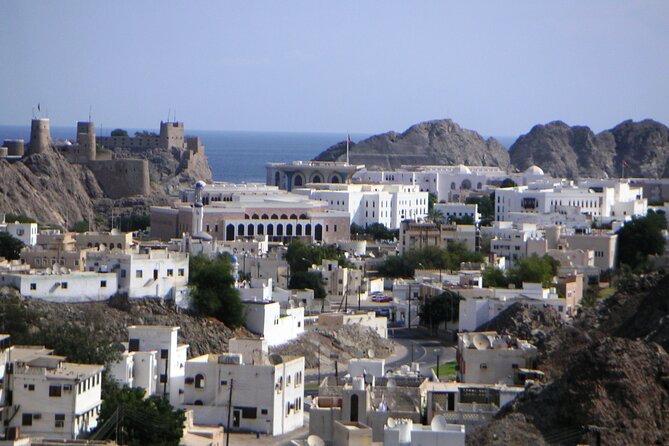
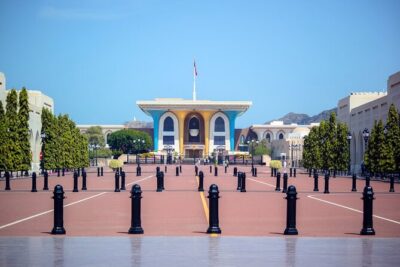
In Old Muscat, you stop for photographs at Al Alam Palace, the residence of Oman’s sultan. The palace is flanked by Mirani Fort and Jalali Fort, both linked to the Portuguese period in the sixteenth century.
The wording matters here. This is a photo stop at the palace, not an interior palace visit. You will get the setting, the ceremonial exterior, and the striking relationship between the palace and the forts, but do not expect to walk through the royal residence.
This is one of the tour’s strongest visual moments. The palace gives you a polished symbol of present-day Oman, while the forts point to an older period of coastal defense and foreign influence. A good guide can connect those pieces without turning the stop into a long lecture.
If photography is important to you, tell the guide early. Several positive accounts describe extra small stops chosen for photographs, and the private format makes that kind of adjustment possible. Still, the exact stops are not guaranteed, so treat them as a welcome bonus rather than part of the fixed route.
Muttrah Souq brings you close to everyday commerce
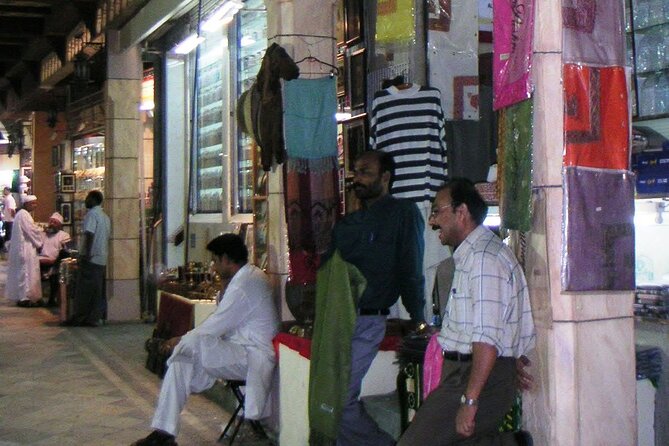
Muttrah Souq is the tour’s most hands-on stop. You can stroll through the traditional market, bargain for handicrafts, and look for silver items. It is a chance to shift from sightseeing to participation, even if you only browse.
I would save a little energy and attention for this part. The museum tells you about Omani traditions, but the souq lets you see objects, prices, shop displays, and social habits in real time. You do not need to buy anything, and you should not feel pushed into a purchase. If you do shop, compare prices and bargain politely.
The time limit is the main drawback. A four-hour city tour cannot provide an extended shopping session, especially when the mosque, museum, palace, and forts are all included. If you want silver, handicrafts, or gifts, decide in advance what you are looking for. That way, you can shop with purpose instead of losing the whole morning in the market.
The route also includes the fish market in the Muttrah quarter in the general tour description, while the detailed inclusions specifically name the traditional souq. Because the stop list is not fully consistent, ask your guide whether the fish market is included on your departure date.
Old Muscat rewards a short walk
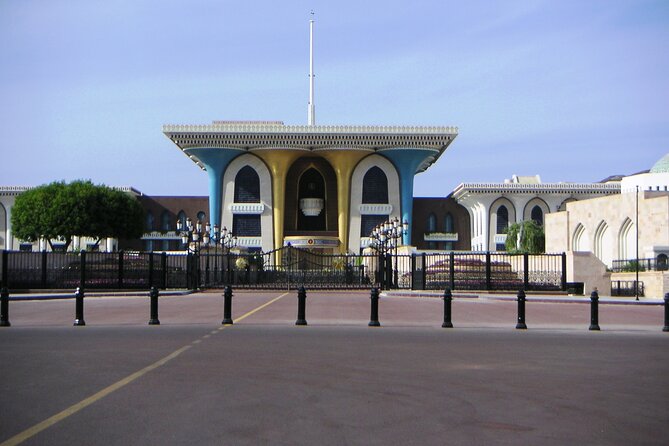
The Old Town portion is done partly on foot, so steady shoes are a smart choice. Bring sunscreen and a hat, as requested in the tour information, and remember that respectful clothing remains important beyond the mosque.
The walking section gives the tour a better sense of place than a drive-by visit would. You can see how the old district relates to the water, the palace, and the forts, while your guide fills in the story of Muscat’s past and present. The supplied details do not give a precise walking distance or surface conditions, so anyone with mobility concerns should discuss the route before the tour begins.
One guest with a handicap reported that the guide adapted the outing to suit mobility needs and personal interests. That is encouraging, but it is not a formal accessibility guarantee. If you need a particular vehicle, shorter walking distances, or help at steps, arrange those details directly with the provider before the day.
What the guide can add to the morning
The guide is the key variable in this experience. The strongest feedback describes Rashid as friendly, flexible, helpful, and deeply attached to Oman. He is also praised for clear English, local knowledge, thoughtful commentary, and the ability to show a group a lot in a short time.
That kind of guide changes the tour. Instead of seeing a mosque, museum, palace, and souq as separate attractions, you begin to understand how religion, royal power, trade, and local customs fit together. A private guide can also answer the questions that matter to you, from shopping etiquette to the meaning of a fort or palace.
The feedback is not uniformly strong. Two entries say the guide’s English was not very good and that the explanations could have been fuller. Since the tour depends heavily on commentary, I would contact the operator before booking if detailed historical interpretation is your main reason for going. You can also state clearly that you want substantial guiding, not just a driver and a series of stops.
How the private format affects value

The $169 price per person makes the most sense for a small group that values control and convenience. Pickup and drop-off are included, transport is private, and only your own party participates. Group discounts may improve the cost for several people, so check the final rate rather than judging the base price alone.
For two people, the price is a serious investment for four hours. For a family or group splitting the cost, it may compare more favorably with arranging separate transport and entrance visits. The private setup also protects you from waiting for strangers at every stop and gives you a better chance of adjusting the pace.
You should not book it expecting every entrance fee or meal to be covered. Food and drink are excluded unless specified, and optional gratuities are also extra. The provided inclusions name the museum and palace photo stop, but do not list separate admission charges for every attraction. Confirm any entrance details if you need a precise budget.
Free cancellation is available when you cancel at least 24 hours before the local start time. Changes or cancellations inside that window are not accepted for a refund, so this is worth remembering if your plans depend on a ship schedule or changing flight.
Who will get the most from this tour
I would recommend this tour to a first-time Muscat visitor who wants the main picture quickly. It is especially suitable if you are in Oman for a short stay, visiting from a cruise, traveling with family, or prefer a private vehicle to piecing together several local transfers.
It also suits you if you want a guide’s help with context and customs. The mosque dress code, photography etiquette, market bargaining, and palace and fort history are easier to handle with someone local.
You may want another option if you dislike tight schedules or want to spend hours at one place. The route is ambitious for four hours. Museum readers, serious shoppers, and visitors who prefer long walks will likely find the pace brisk.
Before departure, I would confirm four things: the pickup location, the vehicle, the guide’s English level, and the amount of time planned at each stop. Those questions address the few weak points in the feedback and help you match expectations to the actual outing.
Should you book the Muscat city tour?
Book it if you want an efficient, private introduction to Muscat with hotel transport and a broad mix of sights. The Grand Mosque, Bait Al Zubair Museum, Muttrah Souq, Al Alam Palace, and the two forts give you a useful first chapter in Oman, and a strong guide such as Rashid can make the short route feel personal.
I would be cautious if your priority is a long, detailed history lesson or an unhurried museum and market visit. The tour’s value rests on the guide and the private format, not on the number of hours alone. Confirm the practical details, dress correctly, and use your private time to ask for the kind of morning you want.
FAQ
How long is the Muscat city tour?
The tour lasts approximately four hours.
What time does the tour start?
The stated start time is 8:00 am.
Is hotel pickup included?
Yes. Hotel pickup and drop-off are included.
Is this a private tour?
Yes. Only your own group participates in the activity.
Is an English-speaking guide included?
Yes. The tour includes a professional English-speaking guide.
What vehicle is used?
Transport is provided in a luxury air-conditioned coach or minibus.
What should women wear for the Grand Mosque?
Women should wear a full-sleeved shirt, full-length pants or another garment covering the legs, and a scarf covering the head.
Can men wear shorts?
No. Both men and women must wear full pants for the Grand Mosque visit.
Are food and drinks included?
No. Food and drinks are not included unless specifically stated.
Can I cancel for a full refund?
Yes, if you cancel at least 24 hours before the experience start time. Cancellations made less than 24 hours before the start time are not refunded.
Just added around Oman
- West of Salalah private tour – fascinating mountains and beaches★ 5.0 · 9 reviews
- Wadi Shab &Bimmah Sinkhole &Heart shaped Cave &Pebble Beach★ 5.0 · 5 reviews
- Wahiba Sands and Wadi Bani Khalid Full-Day Tour from Muscat★ 4.6 · 3 reviews
- West Salalah Beaches and Blowholes★ 5.0 · 7 reviews
- Try scuba Diving Tours To Daymaniyat Islands.★ 5.0 · 12 reviews
- Where Sea Meets Rock: A Scenic Journey to West Salalah’s Shores★ 5.0 · 5 reviews
- Private tour – Empty Quarter desert adventure – Wadi Dawka + Ubar★ 5.0 · 5 reviews
- West Salalah Tour by VisitSalalah★ 5.0 · 6 reviews
City Tours, compared.


Half-Day Private Muscat City Tour – Top Landmarks in Just 4 Hours
Read our review →
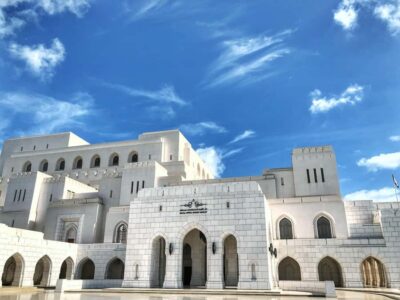



Half-Day Private Muscat City Tour- with a local guide
Read our review →Browse the lists this tour appears in