
Reviewed · HISTORICAL TOURS
Nizwa and Oman’s Historical Gems Tour
Nizwa’s Friday livestock market is the star of this experience. Animals are presented, inspected, and traded in a lively old Omani setting before you move on to forts, villages, mountain roads, or museums. The tour gives you a useful choice of five routes, so you can match the day to your interests.
I like the small maximum group of 20 and the included pickup from Muscat. I also like the mix of places: the Nizwa Souq shows daily life, while Nizwa Fort and the old villages explain how Oman was organized and defended. The main thing to consider is the long day, with seven to ten hours including driving between stops.
- Five routes from Muscat: Choose from Al Hamra, Bahla and Jabreen, the Oman Across Ages Museum, Jebel Akhdar, or Jebel Shams.
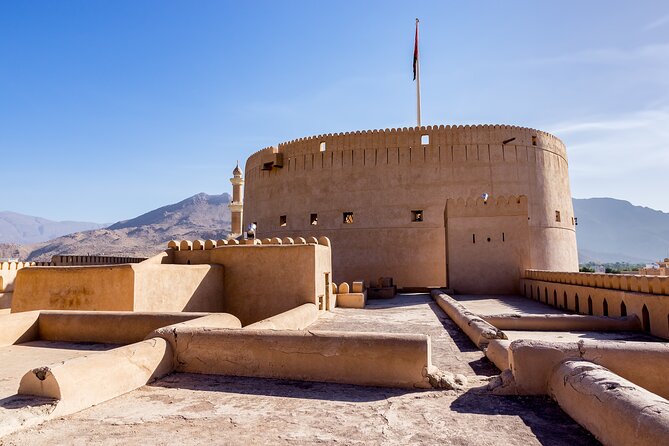
- Nizwa Fort’s central tower: Climb for wide views and see rooms restored to their former use.
- A real look at Omani water systems: Falaj Daris introduces the irrigation channels that still serve Nizwa.
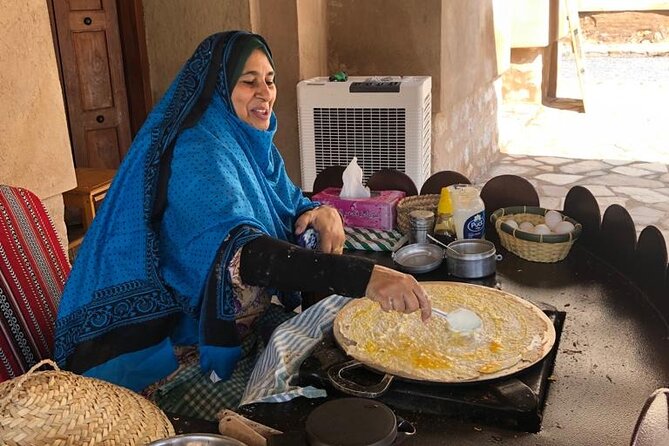
- Traditional Al Hamra house: Watch bread-making, coffee grinding, and juniper-oil production.
- Lunch, coffee, and tea included: The $80 price covers more than transport and guiding.
- Strong guide service: Jamal is specifically praised for his kindness, helpfulness, humor, and information.
Choosing the Right Route from Muscat
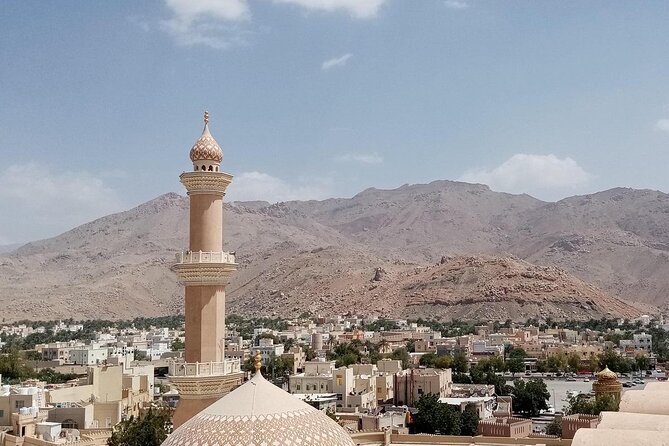
This is not one fixed day trip. It is a group tour built around Nizwa, with five possible versions. That matters because the experience can change from a market-and-village day to a mountain trip or a museum visit.
The options are:
- Nizwa Friday Market and Al Hamra
- Nizwa, Bahla, and Jabreen
- Nizwa and the Oman Across Ages Museum
- Nizwa and Jebel Akhdar
- Nizwa and Jebel Shams
All versions include pickup and drop-off in Muscat, transport, and a professional guide. The exact route should be clear when you book, especially if you care more about mountain views than forts or want to see the Friday livestock market.
The total time is about seven to ten hours. That includes the transfers, so you should think of this as a full day outside Muscat rather than a quick excursion. The fixed timing is useful if you want a planned day, but it leaves less freedom to linger at one market stall or fort room.
Nizwa Souq and the Friday Market
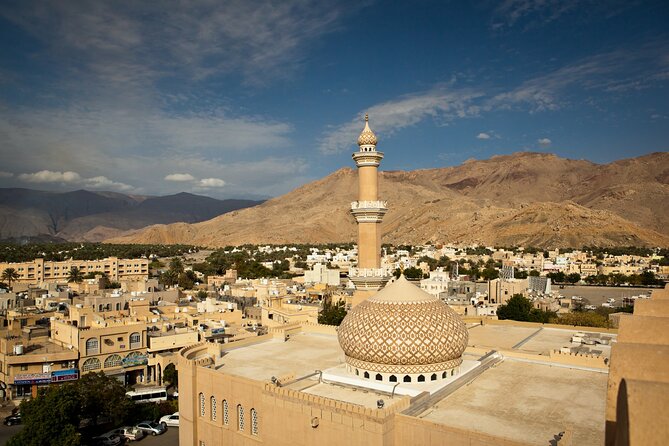
Nizwa Souq is one of the most useful stops because it gives context before the monuments. You can walk among fruit, meat, sweets, pottery, souvenirs, and antiques, with around 30 minutes set aside for the visit.
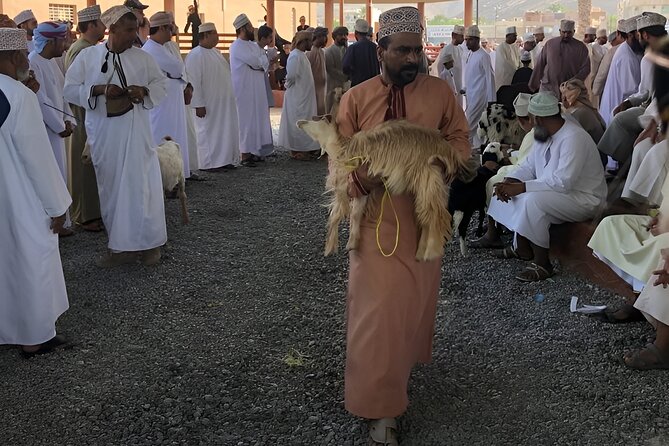
That half-hour is enough to get your bearings and see the main character of the market, but it is not generous if you want to shop slowly. If your chosen option includes the Friday livestock market, that adds a more distinctive local experience. The animal market is especially worth choosing if you want to see a traditional part of Nizwa’s weekly rhythm rather than only restored buildings.
I would keep your attention on the ordinary details: what is being sold, how the stalls are arranged, and how local people use the space. The souq is not just a shopping stop. It helps you understand why Nizwa remains an important inland center.
The Friday option is the best fit for early risers and anyone interested in local trade. It may be less suitable if you prefer quiet museums and formal historical displays.
A few more Muscat trips to weigh up
- From Muscat: Nizwa and Oman’s Historical Gems Tour
★ 4.7 · 403 reviews - Nizwa Heritage & Culture Full Day Tour with Audio Guiding
★ 4.3 · 213 reviews - Private Historical Tour – Nizwa Fort – Nizwa Souq – Bahla Fort – Jabreen Castle
★ 5.0 · 73 reviews
Nizwa Fort and the Date Syrup Defense
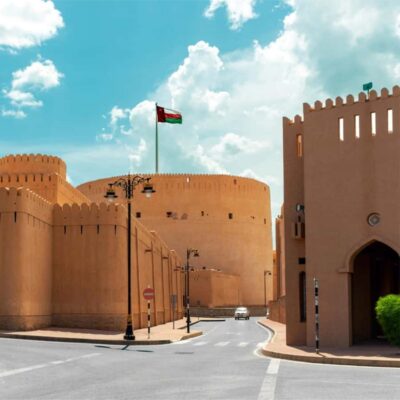
Nizwa Fort dates from the 17th century, during the Al Ya’rubi dynasty, and was built over the remains of a 9th-century castle. The restored structure has rooms arranged to show how the fort functioned, with displays explaining pieces of its past.
Allow about an hour here. The central tower is the main payoff, since the climb leads to broad views over Nizwa. You should wear sensible shoes and keep some energy for the stairs, especially after an early start and a long drive from Muscat.
Some of the most memorable details are practical rather than grand. The fort includes a prisoner room, and the displays explain how local dates were used during wartime. Date syrup could be heated and poured as a weapon, a grim but striking reminder that this was a working stronghold, not simply a pretty building.
The entrance fee is not included in the tour price. That is a small extra cost to plan for, but the fort is one of the day’s most substantial stops. If you only choose one paid historical site, this is the obvious choice.
Falaj Daris and Oman’s Water Story
Falaj Daris Park offers a quieter change of pace. You spend about 30 minutes seeing the largest falaj in Oman, one of five falaj systems in the country that were collectively listed as UNESCO World Heritage Sites in 2006.
A falaj is an irrigation channel that carries water to farms and settlements. Nizwa’s earlier prosperity depended on its water supply, with more than 134 aflaj in the Nizwa wilayat and about 100 still in use.
This stop is valuable because it explains the practical foundation beneath the forts, farms, and villages. Oman’s inland towns could not have developed in the same way without systems that moved water across dry country.
You will not spend hours here, and the stop is not a major attraction in the same way as Nizwa Fort. Still, the short visit makes the rest of the day easier to understand. It connects the physical setting with the way people lived and worked.
Al Hamra’s House, Bread, Coffee, and Costumes
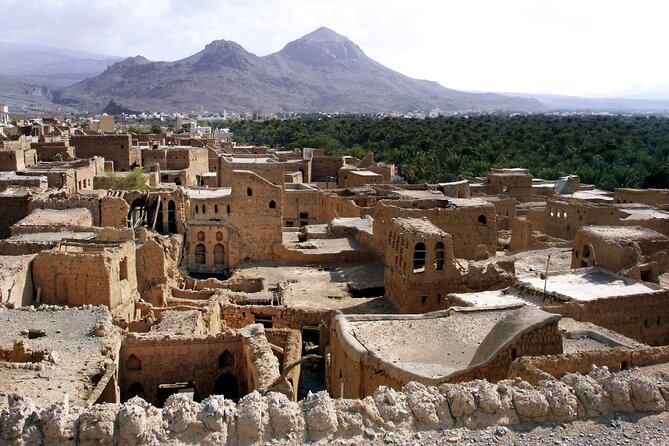
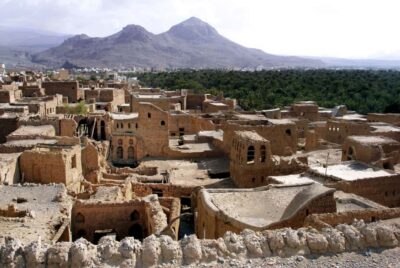
Al Hamra offers a more personal encounter with Omani customs. The visit takes place in a traditional house in an old, weathered village, where three local women demonstrate juniper-oil production, Omani bread-making, and coffee-bean grinding.
You can sit cross-legged in the majlis, the reception room, and sample coffee and dates. There is also a chance to pose in traditional regional clothing. The exchange may rely partly on gestures, but that can make the meeting feel less formal and more direct.
I like this stop because it is not built around a grand monument. It shows household skills and social customs in a setting that feels connected to daily life. The old village also gives you a sense of how traditional homes were arranged, though the aged condition may not appeal to anyone seeking polished museum displays.
The listed information treats Al Hamra’s admission separately from the included items, so confirm the entrance arrangement before departure. It is described as free in the stop details, but the tour inclusions also list an Al Hamra entrance fee as not included. That inconsistency is worth clarifying when booking.
Same coast and mountains, a completely different day out:
- Muscat: Daymaniat Islands Snorkeling Trip with Brunch
★ 4.7 · 2,317 reviews - From Muscat: Wadi Shab & Bimmah Sinkhole Full-Day Tour
★ 4.8 · 1,862 reviews - Muscat: Wahiba Desert and Wadi Bani Khalid Guided Group Tour
★ 4.8 · 820 reviews - Muscat: Half-Day Sightseeing Essentials Tour and Audio Guide
★ 4.2 · 598 reviews
Bahla Fort and Jabreen Castle
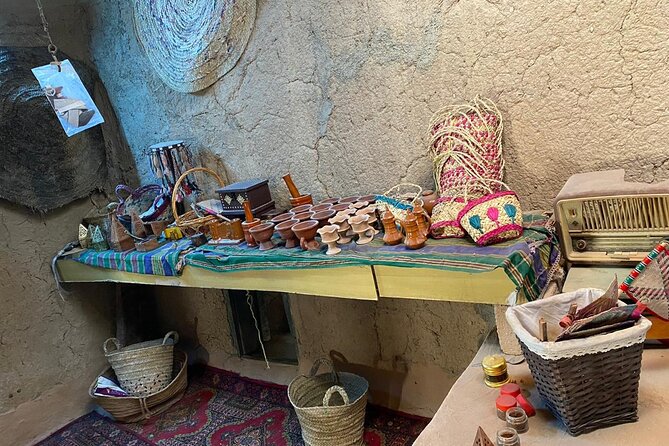
The Bahla and Jabreen option is the strongest choice for anyone focused on Omani architecture and royal history. Bahla Fort is UNESCO-listed, while Jabreen Castle is known for its decorated interiors.
Bahla gives you a major fortified site, while Jabreen offers a more refined look at rooms and decoration. Together with Nizwa Fort, they make a full day of defensive walls, historic interiors, and the power centers of inland Oman.
The supplied timing does not give separate visit lengths for Bahla and Jabreen, so you should not assume unlimited time at each site. Transfers between Muscat and the interior also take up much of the day. Still, this option gives you more fort and castle variety than the routes aimed at mountains or modern interpretation.
Choose this route if you want buildings, rooms, and historic detail. If you would rather spend time in high mountain air or see the Grand Canyon of Oman, one of the mountain options will suit you better.
The Oman Across Ages Museum
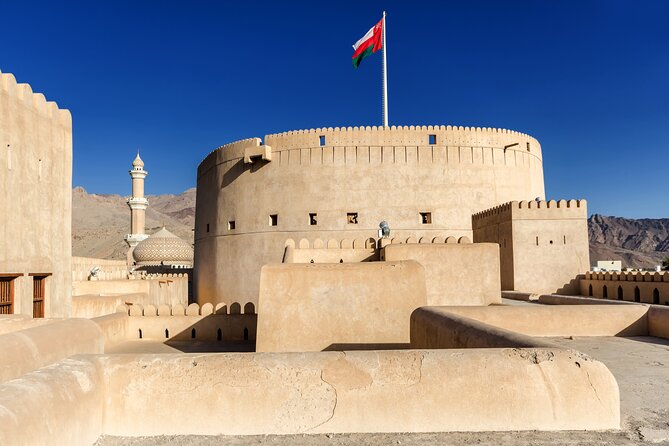
The Oman Across Ages Museum in Manah offers a different approach from Nizwa’s restored fort. It presents Oman’s past and future through interactive displays and has received an award for its design and presentation.
This is a good route for you if you like museums that explain a country through a modern, guided presentation. Nizwa Fort gives you the physical remains of a historic center, while the museum provides a broader frame for understanding Oman’s development.
The contrast is useful. One stop is about thick walls, towers, rooms, and old defenses. The other is about interpretation, technology, and the country’s future. You get a more balanced day than you would from visiting forts alone.
The information provided does not state how long the museum visit lasts or whether its entrance fee is included. Ask about that before booking if museum time is important to you.
Jebel Akhdar and Birkat Al Mouz
The Jebel Akhdar route adds cooler mountain air and high views to the Nizwa experience. It includes Nizwa Fort, Birkat Al Mouz village, and the heights of Jebel Akhdar.
Birkat Al Mouz gives the day a village setting before the climb into the mountains. The combination lets you see the change from Nizwa’s historic center to a higher, cooler environment without giving up the fort.
Jebel Akhdar is the better mountain option if you want a highland setting but still want a village and cultural stop. The description promises panoramic heights, though it does not specify a hiking program or walking distance. Do not book this option expecting a dedicated trek unless the operator confirms one.
The mountain route can also make the day feel more varied. You move from market streets and defensive architecture to open views and cooler air. That contrast is one of the tour’s main strengths.
Jebel Shams and the Grand Canyon of Oman
The Jebel Shams option is for dramatic scenery. It combines Nizwa Fort with Al Hamra and the Grand Canyon of Oman at Jebel Shams.
This route gives you a strong sequence: historic town, old village, then a major mountain viewpoint. Jebel Shams is the choice if your priority is wide, rugged scenery rather than a second fort or a modern museum.
The description does not promise a hike at the canyon. You should therefore treat this as a scenic viewing stop unless the guide confirms walking plans. The journey is also likely to feel full, since the tour includes Muscat transfers and several stops within a seven to ten hour window.
If you want the most visual day, I would choose Jebel Shams. If you want the most historical detail, choose Bahla and Jabreen. If the Friday market is your main goal, make sure you select the option that includes it.
What the $80 Price Covers
At $80 per person, the value depends on how much you would otherwise pay for transport into Oman’s interior. Pickup and drop-off from Muscat, a vehicle, a professional guide, lunch, coffee, and tea are included.
That package is useful because Nizwa is not a quick hop from Muscat, and a private car or separate driver would add cost. A guide also helps connect the souq, fort, falaj, village, and mountain sites rather than leaving you to piece them together alone.
The price does not include the Nizwa Fort entrance fee. Al Hamra is also listed as an extra, although its stop description says free admission, so check this point before paying. Other entrance costs for the selected route are not clearly specified in the information provided.
The maximum group size is 20. That is not a private tour, but it is still small enough to keep the day organized. Several guests specifically praised the time management, saying the schedule stayed on track. That matters on a long route with many transfers.
The Guide Makes a Difference
Guide quality matters on a day built around history and local customs. Jamal is specifically praised for being kind, helpful, informative, and funny, with an ability to explain Oman’s people and past while keeping the mood light.
Another guide review praises the amount of information about Oman and its people, with special mention of Nizwa and Jebel Akhdar. The German-language feedback also highlights the guide and the Friday livestock market.
You should not assume Jamal will lead every departure, but his name is worth noting when checking availability. The guide’s role is especially important at Nizwa Fort and Falaj Daris, where a short explanation can turn walls and water channels into a readable story.
The strongest praise is consistent: clear timing, helpful guidance, and a good balance between learning and enjoyment. That is exactly what you want on a full day with several stops.
Timing, Group Size, and Practical Tradeoffs
The tour lasts approximately seven to ten hours, with transfer time included. That range suggests the selected route and conditions affect the length, so keep your schedule clear after the tour rather than booking a tight evening commitment.
Pickup is offered, and you receive a mobile ticket. Confirmation is provided at booking. Most people can participate, and the group can include up to 20 people.
You should be ready for a day that moves at a steady pace. Thirty minutes at the souq and 30 minutes at Falaj Daris are enough for an introduction, but not for slow photography or detailed shopping. The one-hour fort visit is more generous, especially if you want to climb the tower and read the displays.
Lunch, coffee, and tea remove some of the day’s small planning chores. Free cancellation is available until 24 hours before the start time. After that point, changes and refunds are not accepted, and poor weather or an insufficient minimum group may lead to a different date or a full refund.
Who Should Book This Day Trip
I would recommend this tour if you want to see more than Muscat but do not want to arrange an inland route yourself. It suits first-time visitors who want forts, markets, villages, water systems, and either mountains or a modern museum in one organized day.
It is also a good match for you if you value explanation. The sites are more rewarding when you understand the date trade, the falaj system, and the purpose of the fort rooms.
You may want a different arrangement if you prefer private touring, long independent visits, or a slow photography schedule. A group of up to 20 and a seven to ten hour plan require you to follow the day’s rhythm.
Should You Book Nizwa and Oman’s Historical Gems?
Book it if you want a practical, good-value route from Muscat into Oman’s interior. The strongest reasons are the choice of five versions, included transport and lunch, the well-regarded guide service, and the chance to see places that are hard to combine without a car.
Choose your option carefully. Pick the Friday market and Al Hamra for local customs, Bahla and Jabreen for architecture, the Oman Across Ages Museum for modern interpretation, Jebel Akhdar for mountain air, or Jebel Shams for the Grand Canyon views.
The main caution is the packed schedule and unclear extra-fee wording around Al Hamra. Confirm your selected route and admission costs, then book this tour if you are happy with a full, guided day rather than a leisurely independent outing.
FAQ
How long does the tour last?
The experience lasts approximately seven to ten hours, including transfer time between locations.
Does the tour include pickup from Muscat?
Yes. Pickup and drop-off from Muscat are included.
How many people can join the tour?
The maximum group size is 20 people.
Are lunch, coffee, and tea included?
Yes. Lunch, coffee, and tea are included in the tour.
Is the Nizwa Fort entrance fee included?
No. The Nizwa Fort entrance fee is listed as not included.
Which route visits Jebel Shams?
The Nizwa and Jebel Shams option includes Nizwa Fort, Al Hamra, and the Grand Canyon of Oman at Jebel Shams.
Is free cancellation available?
Yes. You can cancel up to 24 hours before the experience for a full refund.
What happens if bad weather cancels the tour?
If poor weather causes cancellation, you will be offered a different date or a full refund.
Just added around Muscat
- Wadi Shab &Bimmah Sinkhole &Heart shaped Cave &Pebble Beach★ 5.0 · 5 reviews
- Wahiba Sands and Wadi Bani Khalid Full-Day Tour from Muscat★ 4.6 · 3 reviews
- Try scuba Diving Tours To Daymaniyat Islands.★ 5.0 · 12 reviews
- Watching Sunrise in Wahiba Sand Desert – Early Morning Tour★ 5.0 · 7 reviews
- Wahiba Sands&Wadi Bani Khalid desert Safari(Muscat tours)★ 4.5 · 6 reviews
- From Muscat Wadi Shab and Bimmah Sinkhole Tour★ 5.0 · 6 reviews
- Wahiba Sands and Desert Safari from Muscat★ 5.0 · 3 reviews
- Wahiba Sands&Wadi Bani Khalid desert Safari(Muscat tours) : Private tours★ 4.5 · 6 reviews
Historical Tours, compared.
Nizwa Heritage & Culture Full Day Tour with Audio Guiding
Read our review →
Private Historical Tour – Nizwa Fort – Nizwa Souq – Bahla Fort – Jabreen Castle
Read our review →


Salalah City Tour with History, Culture, Souq Shopping, Halwa
Read our review →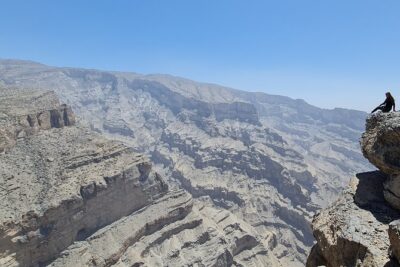
Nizwa Heritage & Jebel Shams Canyon – Private Tour from Muscat
Read our review →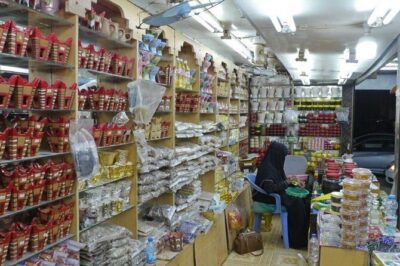
Browse the lists this tour appears in