Reviewed · TOURS
Mountain, Desert & Coastal Tour (03 Days / 02 Nights)
Oman packs an astonishing range of scenery into three busy days. You move from Nizwa’s massive fort to the cool greenery of Misfat Al Abriyyin, then up to Jebel Shams, across Wahiba Sands, and along the coast near Sur. It is a fast-moving tour, but it gives you a real taste of Oman’s variety.
I like the private 4WD format, since you can travel with just your own group and a driver rather than being tied to a large bus. I also like that hotels, two breakfasts, two dinners, entrance tickets, and drinking water are arranged for you. The main caution is pace: several long drives and active wadi stops leave little room for dawdling.
Key points to know
- Three distinct sides of Oman: Mountain villages, desert dunes, freshwater wadis, and the Gulf of Oman all appear in one short trip.
- Private transport: Only your group participates, with a guide and driver in a 4WD vehicle.
- Two worthwhile swims: Wadi Bani Khalid is more relaxed, while Wadi Shab requires stronger swimming skills if you want to reach the cave.
- A strong cultural opening: Nizwa Fort, its market, Misfat Al Abriyyin, and Sur’s boatyards add meaning beyond scenic stops.
- Useful inclusions: Two nights of accommodation, two breakfasts, two dinners, admission tickets, and water are covered.
- A demanding schedule: The tour starts at 9:00 am and combines walking, swimming, mountain roads, desert driving, and long transfers.
Why this three-day route works
Oman is not a compact sightseeing destination. Its best places are spread across mountains, inland valleys, desert, and coast. You can rent a car, but reaching Jebel Shams and Wahiba Sands takes planning, and a 4WD is important for some roads and dunes.
This tour removes much of that work. You have a driver for three days, lodging is included, and the route forms a broad loop from Muscat through the interior and back along the coast. You do not spend your holiday comparing hotels or working out how to connect a mountain road with a desert camp.
The private setup matters. You can ask to pause for photographs, take a little longer at a village, or adjust your swimming time if the schedule allows. Still, private does not mean leisurely here. The program covers a lot of ground, and the 9:00 am start is only the beginning of each day’s movement.
Desert Flower Tours has used guides named Abdullah, Khalid, Nassr, and Said on Oman trips. Guide assignment can vary, so do not assume one particular person will lead your departure. What you should expect is a local guide service paired with an experienced 4WD driver.
Other Muscat days people book alongside this one:
- Muscat: Daymaniat Islands Snorkeling Trip with Brunch
★ 4.7 · 2,317 reviews - From Muscat: Wadi Shab & Bimmah Sinkhole Full-Day Tour
★ 4.8 · 1,862 reviews - Muscat: Wahiba Desert and Wadi Bani Khalid Guided Group Tour
★ 4.8 · 820 reviews
Day one: Nizwa, Misfat Al Abriyyin, and Jebel Shams
Nizwa Fort and the traditional market
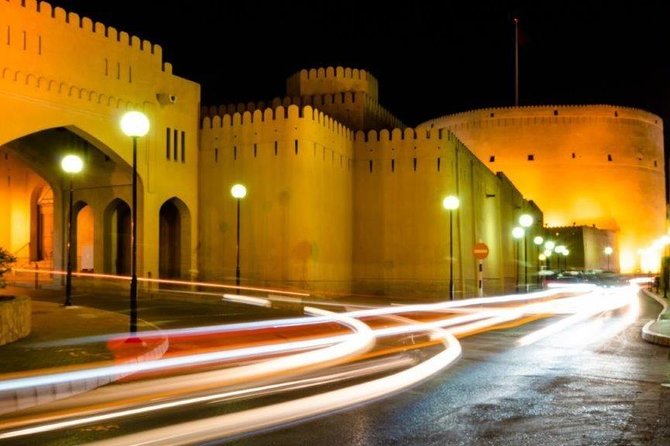
The tour begins with Oman’s cultural foundation at Nizwa Fort. Its enormous round tower and thick defensive walls make it easy to see why Nizwa was such an important center of power. You have about two hours here, with admission included.
This is more than a quick photo stop. Inside, the fort helps explain how people governed, defended, and organized life in Oman. Afterward, the nearby market gives you a chance to browse local goods and sample Omani specialties such as halwa, a sweet traditionally made with dates and other ingredients.
I would use this first stop to ask your guide questions about local customs and the fort’s role. The guide is one of the tour’s most valuable features because the bare stone walls do not explain themselves. The market also gives you a more ordinary view of Nizwa than a fort alone can provide.
Two hours is enough for a solid visit, though you may want more time if you enjoy shopping or taking photographs. Since this is the first stop, do not let the fort consume the whole day. The mountain road ahead is part of the experience.
Misfat Al Abriyyin’s gardens on the mountainside
Misfat Al Abriyyin offers a sharp change from the fort. The village sits partway up a steep mountain and is known for date palms, bananas, and pomegranates. Those crops survive because of a traditional irrigation system that has served the settlement for generations.
You get about an hour here, with no separate admission charge. The point is not a long hike or a museum visit. It is seeing how people made productive farmland in a dry setting, using water carefully and maintaining terraces and channels.
Wear shoes that feel secure on uneven ground. The village setting is steep, and an hour passes quickly once you stop for photographs and look at the irrigation paths. This is also a good place to slow down mentally after Nizwa’s architecture. You are seeing a living settlement, not only an attraction prepared for sightseeing.
Same coast and mountains, a completely different day out:
- Muscat: Half-Day Sightseeing Essentials Tour and Audio Guide
★ 4.2 · 598 reviews - Muscat: Wadi Bani Khalid Oasis & Oman Desert Tour
★ 4.8 · 434 reviews - Muscat: Daymaniat Islands Snorkeling Tour with Refreshments
★ 4.7 · 426 reviews - Daymaniyat Island: Snorkelling Tour with Tasty Lunch
★ 4.8 · 403 reviews
Jebel Shams and Oman’s Grand Canyon
Jebel Shams means Mountain of the Sun, and it reaches about 3,000 meters, making it Oman’s highest mountain. The main reward is the huge canyon cut into the mountain, often called the Grand Canyon of Oman.
You have roughly two hours at the mountain. The scenery is the star, with vast drops and rugged rock formations replacing the palms and village lanes of the morning. Several people who took closely related three-day routes added the Balcony Walk, a mountain hike that follows the canyon rim. That hike is not clearly listed as part of this standard program, so ask before booking if it is essential to you.
The mountain stop can be physically simple or more active depending on what your guide arranges and how much walking you choose. Bring a layer even if Muscat is hot. Higher elevations can feel much cooler, and the terrain calls for sensible footwear.
The drawback is timing. Nizwa, Misfat Al Abriyyin, and Jebel Shams make a satisfying day, but you will not have unlimited time at any one place. If mountain walking is your main reason for visiting Oman, a longer Jebel Shams stay would suit you better.
Day two: freshwater pools and Wahiba Sands
Wadi Bani Khalid for a cool break
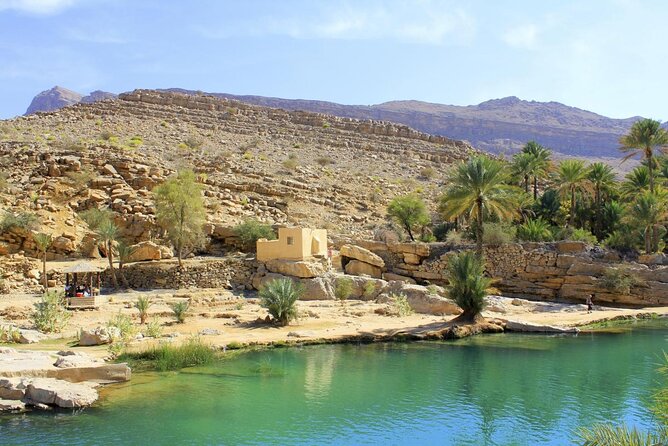
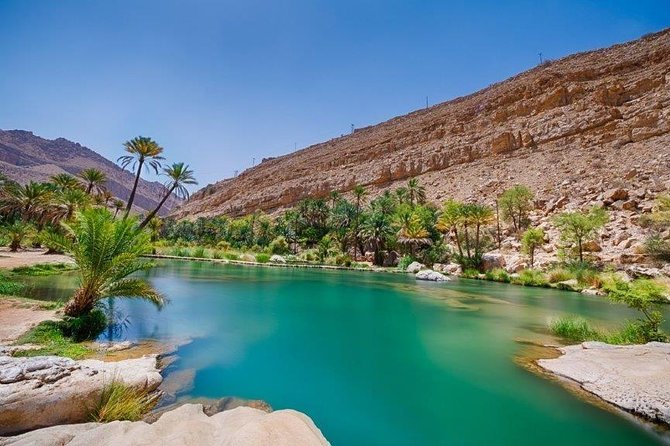
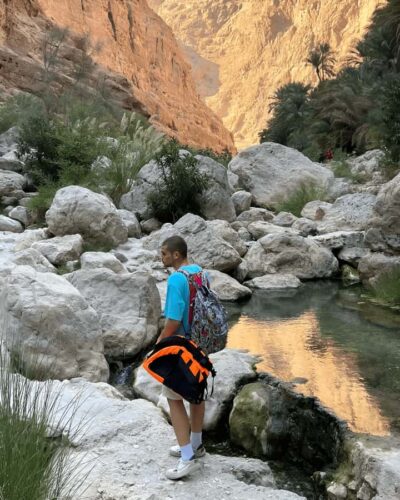
Wadi Bani Khalid is one of the easier places on this route to appreciate immediately. Orchards and plantations surround water that flows through pools and channels, with mountains rising behind them. You have three hours here, which is generous compared with the shorter cultural stops.
Swimming is the main activity. The pools offer a refreshing break after the road journey, and you can also walk around the wadi and enjoy the water, palms, and rocky surroundings. Bring a swimsuit, towel, sun protection, and a spare set of dry clothes.
Oman is socially conservative, so modest swimwear matters. An old shirt and shorts worn over a swimsuit are specifically recommended. This is not only polite, it helps you feel more comfortable around local families using the same pools.
You should also pack footwear that can handle wet rock. The tour includes drinking water, but keep your own bottle close during the day. Three hours gives you time to swim without turning the stop into a race, though the amount of walking and water activity you manage depends on your fitness.
Wahiba Sands at the end of the day
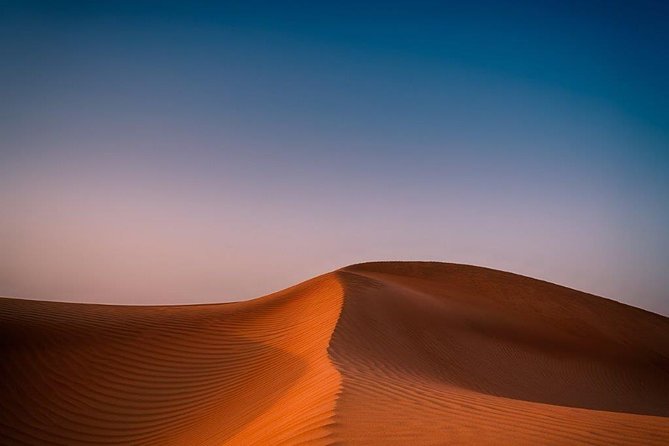
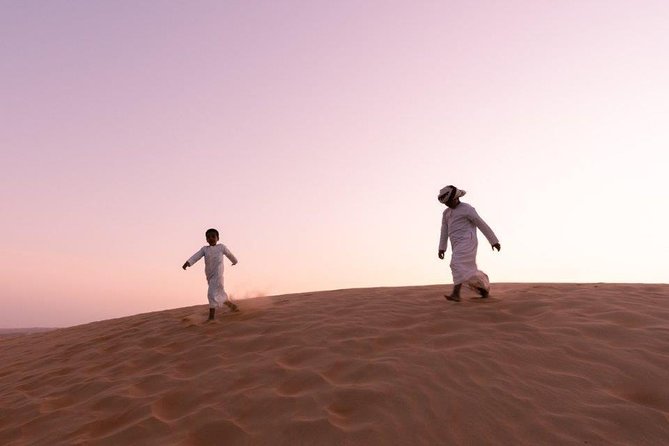
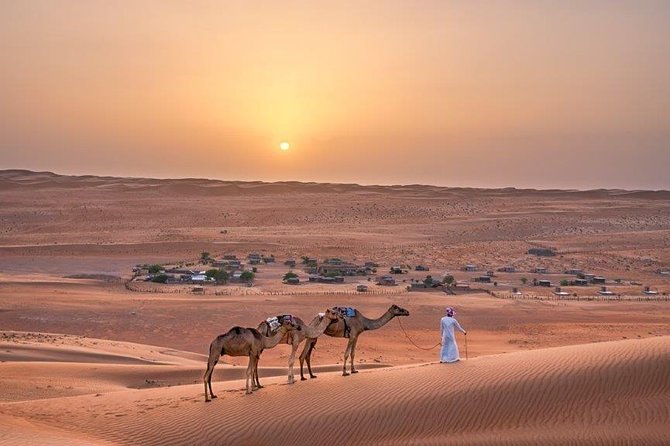
Wahiba Sands brings the route into open desert, with broad fields of orange and gold sand. After the enclosed wadi, the space feels almost unreal. You can expect time among the dunes for views, photographs, and the quiet that comes with being far from towns.
The schedule allows about three hours. It does not promise a separate dune-bashing session, camel ride, or other paid desert activity. Those would count as extra activities unless specifically arranged, so ask before paying for the tour if one of them is important to you.
A 4WD makes this section practical. Driving in soft sand is not a task you should casually attempt without the right vehicle and experience. The private setup also means the desert stop can feel less like a procession of buses and more like a chance to watch the changing colors and open sky.
Expect dust and sun. Keep a light bag with sunglasses, a hat, sunscreen, and water. Your included water supply is useful, but you should still prepare for heat. The desert is a powerful part of the route, yet it is not a full desert retreat. You are combining it with a large amount of Oman in the same trip.
Day three: Sur, Wadi Shab, and Bimmah Sinkhole
Sur’s dhow boatyards and coastal setting
Sur introduces Oman’s maritime past. At the boatyards, artisans continue traditional dhow-building methods, producing wooden boats associated with Oman’s links to East Africa and the Indian subcontinent.
You have about an hour here. That is enough to see the boat work and take in Sur’s coastal setting, including its lagoon and forts, but it is not a detailed museum tour. If you enjoy craft, trade, and seafaring stories, this stop adds useful context to the natural scenery.
Ask your guide to explain what you are seeing at the yard. The tools and timber may be familiar to anyone who has seen boatbuilding elsewhere, but the local tradition gives them meaning. Sur is also a reminder that Oman’s identity is not only about mountains and desert. The sea shaped its economy and its connections with distant shores.
Wadi Shab and the keyhole swim
Wadi Shab is the most adventurous stop on the route. A path follows a narrow valley with pools, streams, and occasional waterfalls. The route eventually appears to end at a large boulder, but a narrow keyhole opening allows strong swimmers to continue through the rock to a waterfall inside a cave.
The visit lasts about two hours, and admission is included. The walk and swim require more effort than the Bani Khalid stop. The pools beyond the opening are very deep, so you must be a competent swimmer to attempt the final section.
Take the safety warning seriously. If you are not confident in deep water, enjoy the earlier pools and scenery instead of trying to reach the cave. You do not need to complete the entire route for Wadi Shab to be worthwhile.
Wear secure water shoes or footwear that can get wet, and carry only what you need. The tour’s drinking water is helpful, but you should bring a swimsuit, towel, and dry clothes. Two hours can feel short once walking, changing, swimming, and photographing are included, so follow your guide’s timing.
This is also the stop most likely to disappoint anyone expecting an easy stroll. The water, rocks, and heat demand care. For active visitors, it may be the highlight of the whole trip. For anyone with limited mobility or weak swimming skills, it is better treated as a scenic wadi visit rather than a cave adventure.
Bimmah Sinkhole as the final swim
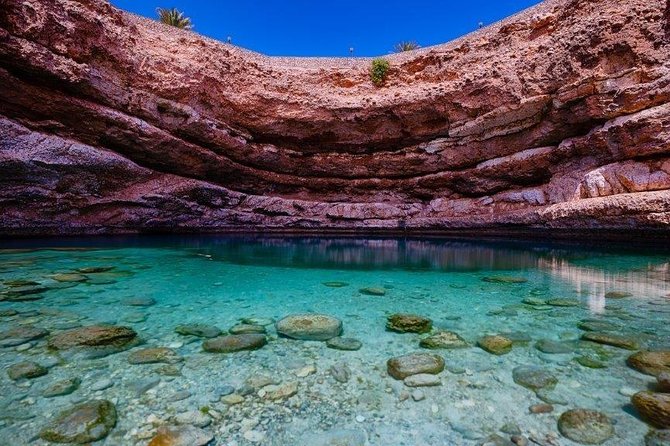
Bimmah Sinkhole is the final stop before Muscat. Geological explanations point to the collapse of an underwater cave where fresh and seawater meet, although local stories once attributed the hole to a meteor strike.
You have about an hour here, with no separate admission charge. The clear water makes it an appealing final dip, especially after Wadi Shab. It is also a simple stop: look, swim if conditions suit you, and enjoy the last striking natural feature before the return drive.
By this point, you may be tired from the previous two days and the Wadi Shab walk. Keep your expectations modest. Bimmah Sinkhole is a refreshing finale, not a replacement for the longer wadi experience.
What the $1,240 price means
At $1,240 per person, this is a major expense for a three-day tour. The price makes more sense if you value private transport and want the practical pieces handled for you.
Included are two nights of accommodation, two breakfasts, two dinners, all applicable entrance tickets, drinking water, and a guide service in a 4WD for all three days. You are also paying for route planning across parts of Oman that are awkward to connect without your own vehicle.
The price does not include flights, a tourist visa, travel insurance, meals beyond the two listed breakfasts and dinners, or activities not named in the program. You should budget for lunches and any optional desert or other activities separately.
For two or more people, ask about group discounts. Since the vehicle is private, the per-person cost may be easier to justify when shared among a small group. Solo visitors pay the full listed rate per person, so this format is likely less attractive unless convenience is your top concern.
The included hotels are not named in the information provided, which is important. Accommodation quality can strongly affect how you judge the price. Ask for the names and locations of the two properties before confirming, especially if you care about a desert camp, a private bathroom, or a particular comfort level.
Who will enjoy this tour most
I would recommend this route to a first-time visitor with only three days beyond Muscat. It gives you a useful introduction to Oman’s fort towns, villages, high mountains, desert, coastal culture, and wadis without asking you to organize a self-drive itinerary.
It is especially suited to people who enjoy variety. You will not spend three days in one region, and the constant changes keep the trip interesting. Families have used similar private routes, including families with teenagers, though parents should consider the heat, long drives, deep-water swimming, and uneven terrain.
It also suits couples and small groups who want a private vehicle. Past company trips have been arranged for families, older travelers, and visitors seeking French-language guiding. Ask directly about guide language and fitness needs when booking.
I would hesitate to recommend it to anyone wanting a slow holiday, a high-end hotel-focused trip, or a dedicated desert expedition. The program is full, and the strongest nature stops involve walking, water, heat, or mountain roads.
Practical details before you book
The start time is 9:00 am. Pickup is offered, and the tour is private, with only your group participating. Confirmation is received at booking, and the departure point is near public transportation.
Most people can participate, but the itinerary is not passive sightseeing. You should be ready for uneven paths at Misfat Al Abriyyin and Wadi Shab, swimming at two wadis, desert conditions, and time in a 4WD.
Pack modest swimwear, an old shirt and shorts for Wadi Bani Khalid, sturdy shoes, sun protection, a towel, dry clothes, and a light layer for Jebel Shams. Keep lunch money available, since only two breakfasts and two dinners are included.
The cancellation terms are strict close to departure. You receive a full refund if you cancel at least three full days before the local start time. Later cancellations and late changes are not refunded or accepted. The tour requires good weather, and poor conditions can lead to a new date or a full refund.
Should you book the Mountain, Desert and Coastal Tour?
Book it if you want Oman’s greatest hits in a compact, private package and do not want to drive. The route is impressively varied, and the combination of Nizwa, Jebel Shams, Wadi Bani Khalid, Wahiba Sands, Sur, Wadi Shab, and Bimmah Sinkhole gives you far more than a city break.
Before paying $1,240 per person, confirm the two hotels, ask whether the Balcony Walk or any desert activity is included, and check the guide language. If those details suit you, the price buys real convenience as well as transport.
Skip it if you have a week and prefer slow mornings, longer hikes, or more time in each region. With only three days, though, this is a sensible way to see Oman’s mountain, desert, and coast in one well-packed sweep.
FAQ
How long is the Mountain, Desert and Coastal Tour?
The tour lasts three days and includes two nights of accommodation.
What time does the tour begin?
The stated start time is 9:00 am.
Is this a private tour?
Yes. Only your group participates in the activity, with guide services provided in a 4WD vehicle.
What destinations are included?
The route includes Nizwa Fort, Misfat Al Abriyyin, Jebel Shams, Wadi Bani Khalid, Wahiba Sands, Sur, Wadi Shab, and Bimmah Sinkhole.
Are accommodation and meals included?
Two nights of accommodation, two breakfasts, and two dinners are included. Other meals are not included.
Can I swim during the tour?
Yes. Swimming is possible at Wadi Bani Khalid, Wadi Shab, and Bimmah Sinkhole. The deeper pools beyond the keyhole at Wadi Shab require competent swimming ability.
What does the price include?
The $1,240 per-person price includes applicable entrance tickets, drinking water, two nights of accommodation, three days of guide service in a 4WD vehicle, two breakfasts, and two dinners.
What is the cancellation policy?
You can receive a full refund if you cancel at least three full days before the experience begins. Cancellations or changes made less than three full days before the local start time are not refunded or accepted.
Just added around Muscat
- Wadi Shab &Bimmah Sinkhole &Heart shaped Cave &Pebble Beach★ 5.0 · 5 reviews
- Wahiba Sands and Wadi Bani Khalid Full-Day Tour from Muscat★ 4.6 · 3 reviews
- Try scuba Diving Tours To Daymaniyat Islands.★ 5.0 · 12 reviews
- Watching Sunrise in Wahiba Sand Desert – Early Morning Tour★ 5.0 · 7 reviews
- Wahiba Sands&Wadi Bani Khalid desert Safari(Muscat tours)★ 4.5 · 6 reviews
- From Muscat Wadi Shab and Bimmah Sinkhole Tour★ 5.0 · 6 reviews
- Guided Private Tour to Wakan Village in Oman★ 5.0 · 3 reviews
- Wahiba Sands and Desert Safari from Muscat★ 5.0 · 3 reviews
Tours, compared.

Wahiba Desert and Wadi Bani Khalid Guided Group Tour
Read our review →
Half-Day Sightseeing Essentials Tour and Audio Guide
Read our review →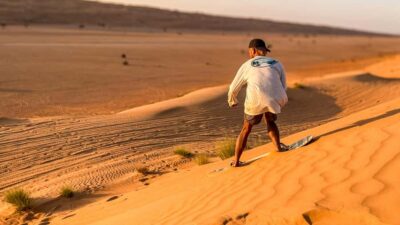

Daymaniat Islands Snorkeling Tour with Refreshments
Read our review →

Daymaniyat Island: Snorkelling Tour with Tasty Lunch
Read our review →