Reviewed · SAFARI
Luxury Overnight Desert Safari in Salalah
The best part of this Salalah adventure is that it reaches the Empty Quarter, one of the world’s great sand deserts, then lets you stay there overnight instead of rushing back after sunset. I like the combination of Wadi Dawkah’s frankincense trees and Ubar’s old desert setting, followed by dune driving and a quiet night under the stars.
I also like the local guides, especially Mohammed, Ali, and Ahmed, who explain Omani customs, frankincense, and the country’s past along the way. The main caution is that the word luxury applies more clearly to the modern Land Cruiser transport and private family tent arrangement than to the camp itself. Expect a pleasant desert camp, not a polished resort.
Key points to know before booking
- Wadi Dawkah adds real local context: See one of Dhofar’s important frankincense-growing areas before reaching the dunes.
- Ubar gives the trip an archaeological focus: The legendary desert city is linked with the UNESCO-listed Al-Ain archaeological sites.
- Dune bashing is a major part of the day: Expect three or four sand-driving sessions with a professional desert driver.
- Mohammed, Ali, and Ahmed receive strong praise: The best part of the experience may be the guide’s stories and personal care.
- The camp is traditional rather than lavish: Tents are comfortable and family-oriented, but facilities can feel basic or shared.
- Sunset, fire, dinner, and sunrise make the overnight worthwhile: You get the desert at its most beautiful times, not just a quick photo stop.
From Salalah to Wadi Dawkah’s frankincense trees
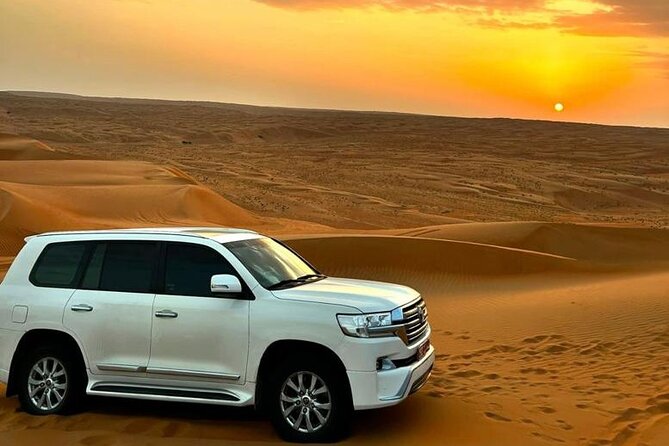
This is a full-day journey from Dhofar into the Empty Quarter, so the drive is part of the experience. You travel in a newer vehicle with comfort features, usually a Land Cruiser-style 4×4, and an English-speaking Omani guide handles both the driving and explanations.
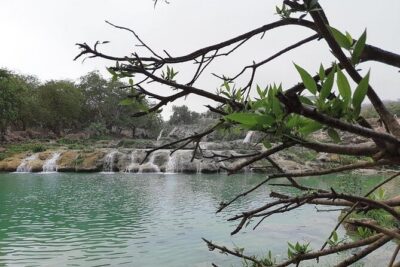
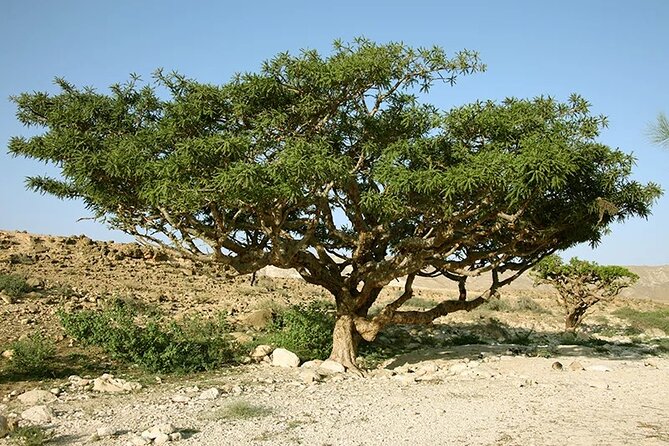
Your first major stop is Wadi Dawkah, known for its frankincense trees. Frankincense is not just a souvenir in Oman. It has shaped trade, religion, medicine, and Dhofar’s links with the wider ancient world. Seeing the trees in their dry valley gives you a better sense of how valuable this small piece of resin once was.
I would pay close attention here rather than treating the stop as a quick stretch of the legs. Your guide can explain how the resin is collected and why Dhofar became so closely tied to frankincense. The tour also includes information about Omani culture and the country’s historical development, which helps connect the natural stop with the larger story.
The exact pace can vary. You might stop at a frankincense plantation or at a simple local roadside place, depending on the day’s arrangements. One guide also stopped for a typical rice dish with baked fish when the group was hungry. That kind of unscheduled local meal can be useful, but you should not expect a formal café experience at every stop.
A few more Oman trips to weigh up
- Desert Safari Sharing Tours
★ 5.0 · 313 reviews - East Salalah Mountain Safari, Wadi Darbat, Beach, Camels, Dunes
★ 5.0 · 206 reviews - Desert Safari Private
★ 5.0 · 177 reviews
Ubar and the old desert trade routes
The next major point is Ubar, the legendary desert city often connected with the lost city of the sands. The site forms part of the UNESCO World Heritage-listed Land of Frankincense area and gives the trip more substance than a simple ride into the dunes.
Ubar matters because the Empty Quarter was not always viewed as an empty place. Desert routes once carried frankincense north toward major trading centers. The city’s story sits between archaeology, old trade, and legend, so your guide’s explanation is important. Without context, the site can seem spare. With context, the bare setting becomes part of the story.
You will want sensible expectations. This is not a large museum complex filled with restored buildings. The appeal is the location, the remains, and the idea of an ancient settlement surviving at the edge of a huge desert. If you prefer scenery and historical background to a long archaeological visit, the stop should fit well.
The drive between these points can be long. That is one reason the modern vehicle matters. A newer 4×4 with good seating and air conditioning makes a real difference during a day that moves from settled Dhofar into open sand.
Three or four rounds of dune bashing
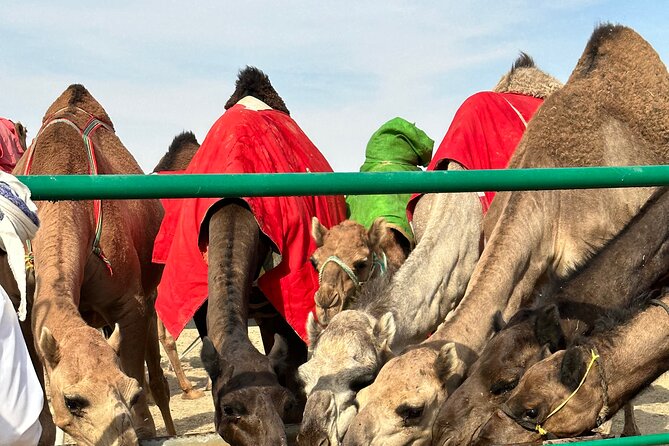
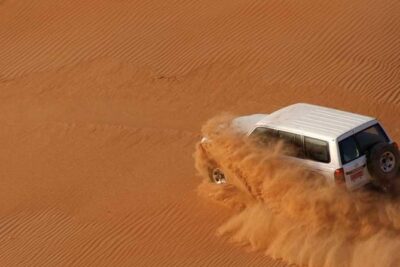
The trip reaches its most active stage in the Empty Quarter, where the driver takes you over the dunes for three or four rounds of dune bashing. This means steep climbs, sandy descents, and fast turns across the dunes. It is exciting, but it is not a gentle sightseeing drive.
The quality of this part depends heavily on the driver. The tour uses professional desert guides, and the strongest guide names connected with the experience are Mohammed, Mohammed Al Mahdali, Ali, and Ahmed. Several accounts describe the drivers as polite, attentive, and good at explaining Oman and its customs.
The dune driving may be shorter than you expect. One account described it as short but enjoyable, while another praised the huge, quiet dunes and felt they were more impressive than Wahiba Sands. That difference is useful: this is not sold as an all-day off-road driving course. It is a scenic and energetic part of a wider overnight trip.
If you have back problems or are pregnant, this activity is not suitable. Even if neither applies, tell your guide if you want a milder ride. The sand can look soft, but the repeated motion of dune driving can be tiring.
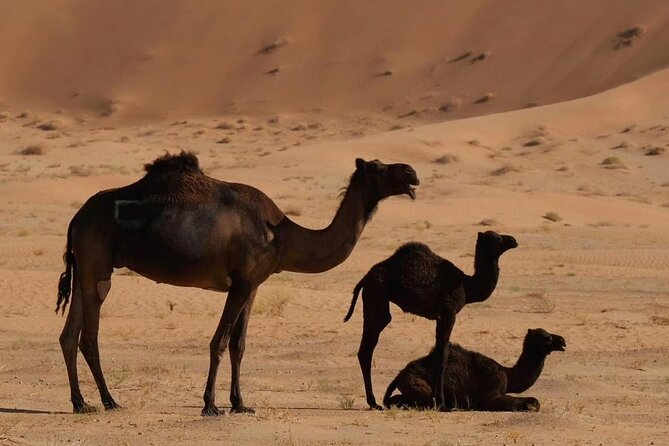
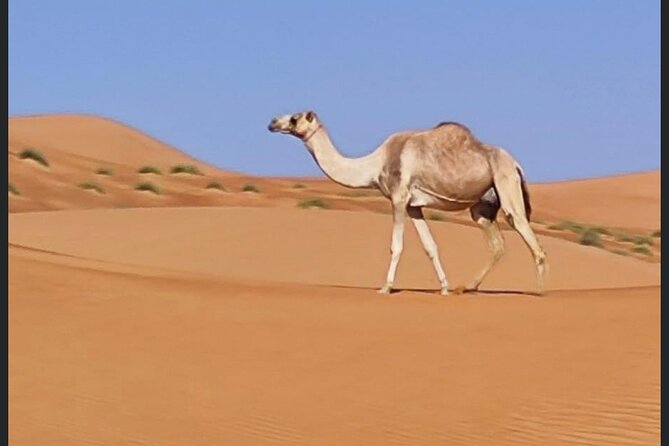
The Empty Quarter itself is the star here. The dunes are broad, spare, and lightly visited compared with better-known desert areas. You get long views of sand ridges with very little visual clutter. The tour also includes a stop to see black camels, a striking sight that is specifically associated with this desert setting.
Sunset coffee, dates, and the desert evening
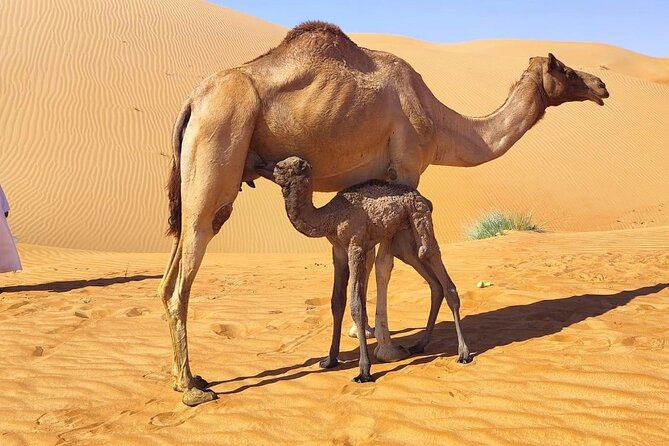
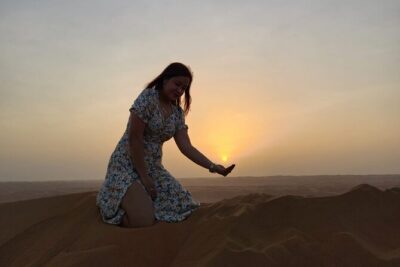
As the sun drops, the guide sets up an Arabic-style pause with coffee or tea and dates. This is meant to be a simple Bedouin-style desert moment, not a restaurant service. You sit among the dunes, watch the light change, and have time to take photographs.
Set your expectations correctly. The coffee stop may be informal. One account found it disappointing because the coffee came from a container-like building rather than an atmospheric Arabic café. In the Empty Quarter, the setting is the real attraction. If you want elaborate service, this will feel plain. If you want hot coffee in the dunes before sunset, it does the job.
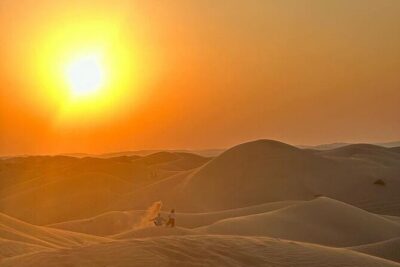
The sunset is one of the clearest reasons to book the overnight option. A day tour that turns around before evening misses the desert’s best color changes. Sand shifts from pale gold to orange and then to darker reds as the sun lowers.
I would also value the quiet. The Empty Quarter can feel far more remote than a busy group excursion near a city. The camp may have other people, but the dunes around it offer room to pause and watch the light without a long list of scheduled activities.
Same coast and mountains, a completely different day out:
- Muscat: Daymaniat Islands Snorkeling Trip with Brunch
★ 4.7 · 2,317 reviews - From Muscat: Wadi Shab & Bimmah Sinkhole Full-Day Tour
★ 4.8 · 1,862 reviews - Muscat: Wahiba Desert and Wadi Bani Khalid Guided Group Tour
★ 4.8 · 820 reviews - Muscat: Half-Day Sightseeing Essentials Tour and Audio Guide
★ 4.2 · 598 reviews
A traditional camp with useful but basic comforts
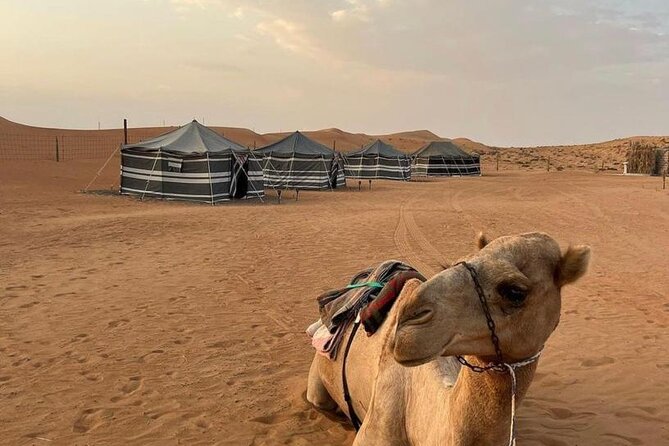
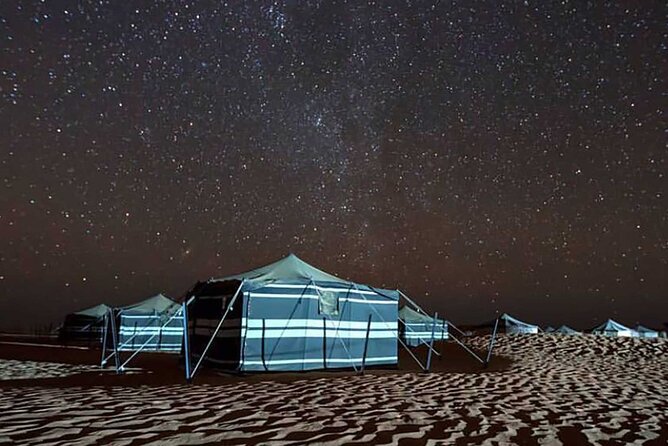
The overnight stay is in an Arabic-style desert camp. Each family is intended to have a private tent, and the package describes shower and toilet facilities. The tents are spacious, but the camp should not be confused with a luxury hotel.
This is the biggest gap between the marketing language and the practical experience. Facilities can be shared or located a short walk from the tents. One account placed the bathroom several dozen meters away, while another specifically advised not to expect much from the shared showers. The camp has also been described as very rustic and simple.
The tents may not be heated. Nights in the desert can feel cold, especially during winter, although blankets are provided. Bring warm layers rather than relying only on the word luxury. A fleece, long trousers, and socks will make the evening and early morning much more comfortable.
For one night, the simple setting works for many people. You have a bed or tent space, basic washing facilities, dinner, a fire, and a clear view of the sky. The appeal is the location and the overnight rhythm, not fine furniture or hotel-style plumbing.
The private family tent arrangement is useful if you are traveling with children or want more personal space. One guide, Mohammed, was praised for looking after a mother and daughter in an attentive but unobtrusive way. The experience can suit families, but the dune driving and basic facilities still require some flexibility.
Dinner, camel meat, shisha, and the night sky
Dinner is a typical Arabic meal with rice, meat, salads, and other foods intended to suit different tastes. The camp cooks make a serious effort, and the food has been described as tasty and satisfying, even though it is simple rather than elaborate.
You may also have the chance to taste camel meat around the bonfire. It is a small but memorable part of the Bedouin-style evening. If you have never tried it, this is a low-pressure way to do so, with the meal and camp setting providing useful context.
The bonfire gives the evening a social center. Shisha is provided for each client, and the package includes stargazing. With little artificial light around the camp, the sky can be the evening’s best entertainment.
The music and evening program may be less polished. The setup can feel spontaneous rather than carefully produced. I see that as a fair trade for a simple camp, but you should not book this expecting a choreographed cultural show.
A guide who talks well can make the night better. Ali, Ahmed, and Mohammed are noted for their conversation and explanations, from Omani traditions to frankincense and desert life. If you enjoy learning through informal conversation, this is where the guide adds real value.
Sunrise, breakfast, and the return drive
Set an alarm for sunrise. The morning view is a key reason to sleep in the Empty Quarter rather than leave after dinner. The dunes change color again as the first light reaches their ridges, and the desert feels very different from the previous evening.
Breakfast is included before departure. The morning schedule can feel tight, especially if the group needs to pack quickly after sunrise. One account found the departure stressful, so do not assume you will have a long, lazy morning at camp.
That early start is part of the practical tradeoff. You gain sunrise and a full desert night, but you also give up the chance to sleep late. If you want photographs, prepare your camera and clothing the night before.
The return route includes the same broad desert setting and can include further explanations from the guide. Water and soft drinks are provided in the vehicle, which is useful during the long day. Still, I would carry any personal snacks you need, particularly if you get hungry between formal meal stops.
What $245 means in real value
At $245 per person, this is an expensive day-and-night excursion by local standards. The price makes more sense when you count the private or family tent, the 4×4 transport, professional dune driving, meals, drinks, guide service, sunset, sunrise, and the overnight location.
You are also paying for access to a remote part of Dhofar without having to arrange a desert vehicle, route, camp, meals, and safety details yourself. The English-speaking guide is especially valuable because the route includes cultural and historical stops, not only scenery.
The value is weaker if you expect five-star accommodation. The camp is rustic, bathrooms may be shared, and the coffee setup may be basic. In practical terms, I would rate this as a premium guided desert experience, not a luxury hotel stay in the sand.
The strongest value comes for people who want variety in one trip: frankincense trees, Ubar, local history, black camels, dune bashing, sunset, dinner, stars, and sunrise. If you only want to see dunes, a shorter desert outing may be enough. If you want the full desert day and night, the overnight format earns its price more easily.
Who will enjoy this Salalah safari most
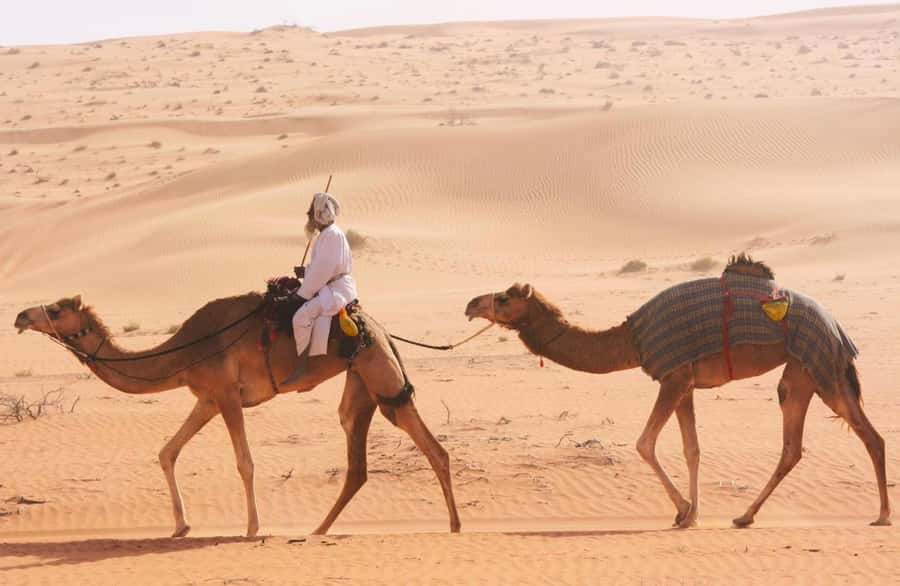
I would recommend it to couples, families, and small groups who want a memorable desert night without handling the logistics themselves. Children can enjoy the ride, the camels, the bonfire, and the open space, although parents should be comfortable with a rustic camp and an active vehicle ride.
It also suits anyone who values a good guide. Mohammed, Mohammed Al Mahdali, Ali, and Ahmed are the kind of names worth requesting if the operator can accommodate that preference. Their ability to explain culture, frankincense, and daily life can turn a long drive into part of the experience.
I would hesitate if you need soft beds, heated rooms, private bathrooms, or a carefully staged evening show. I would also avoid it if you are pregnant or have back problems, since dune bashing is a central feature rather than an optional extra.
English is the listed tour language. The price is per person, and you can reserve while keeping payment flexible. Cancellation is allowed up to 24 hours before the experience for a full refund, which gives you useful breathing room when arranging a Salalah itinerary.
Should you book this overnight desert safari?
Book it if your ideal Salalah day includes real desert scenery, useful local stories, and a night under a clear sky. The strongest moments are the Empty Quarter dunes at sunset and sunrise, supported by capable guides such as Mohammed, Ali, and Ahmed.
Book with realistic expectations about the camp. You are buying a well-organized desert adventure with comfortable transport and a traditional overnight setting, not luxury plumbing or a resort-style program. Bring warm clothes, accept the basic showers, and let the desert do most of the entertaining.
FAQ
How much does the Luxury Overnight Desert Safari cost?
The experience costs $245 per person.
Which language is available for the tour?
The listed tour language is English, provided by an English-speaking local guide.
What locations are visited during the safari?
The route includes Wadi Dawkah, known for its frankincense trees, Ubar, and the Empty Quarter.
Is accommodation provided in a private tent?
A private tent is provided for each family, with the package describing shower and toilet facilities. The camp itself is traditional and basic, and facilities may be shared or located outside the tent area.
What food and drinks are included?
The experience includes a Bedouin-style Arabic dinner, breakfast, camel meat tasting, Arabic coffee or tea with dates, and water and soft drinks in the vehicle.
Is the safari suitable for pregnant women or people with back problems?
No. The experience is listed as unsuitable for pregnant women and people with back problems because dune bashing is part of the program.
Just added around Oman
- West of Salalah private tour – fascinating mountains and beaches★ 5.0 · 9 reviews
- Wadi Shab &Bimmah Sinkhole &Heart shaped Cave &Pebble Beach★ 5.0 · 5 reviews
- Wahiba Sands and Wadi Bani Khalid Full-Day Tour from Muscat★ 4.6 · 3 reviews
- West Salalah Beaches and Blowholes★ 5.0 · 7 reviews
- Try scuba Diving Tours To Daymaniyat Islands.★ 5.0 · 12 reviews
- Where Sea Meets Rock: A Scenic Journey to West Salalah’s Shores★ 5.0 · 5 reviews
- Private tour – Empty Quarter desert adventure – Wadi Dawka + Ubar★ 5.0 · 5 reviews
- West Salalah Tour by VisitSalalah★ 5.0 · 6 reviews
Safari, compared.
East Salalah Mountain Safari, Wadi Darbat, Beach, Camels, Dunes
Read our review →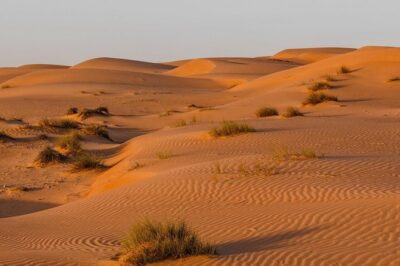
Sunset desert safari tour in Salalah(private tour)
Read our review →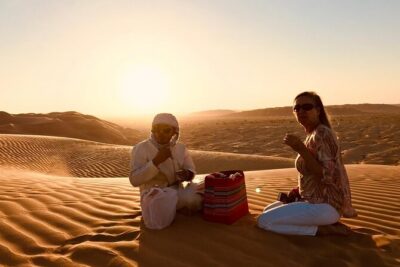
Desert Safari, Sunset & Sand Bashing (Rub Al Khali Desert)
Read our review →