
Reviewed · JEBEL AKHDAR TOURS
Jebel Akhdar Al Suwjara – Birkat Al Mouz Ruins – Private Full Day Tour
The best part of this day is the change in scenery. You leave Muscat for Birkat Al Mouz, then climb into the cool, rugged heights of Jebel Akhdar, where old villages, fruit plantations, rose gardens, and steep valley views replace the city. The final stop, Al Suwjara, feels especially rewarding because reaching its old houses requires a walk down one side of the mountain, across a wooden bridge, and back up the other.
I like the private 4WD setup, since the mountain roads and access to Al Suwjara call for a sturdy vehicle and a flexible schedule. I also like the mix of sites: ruined homes, a working irrigation tradition, viewpoints, and a living village. The main consideration is physical effort. You need moderate fitness, and the old village section includes a fairly demanding uphill and downhill walk.
Key points to know before booking
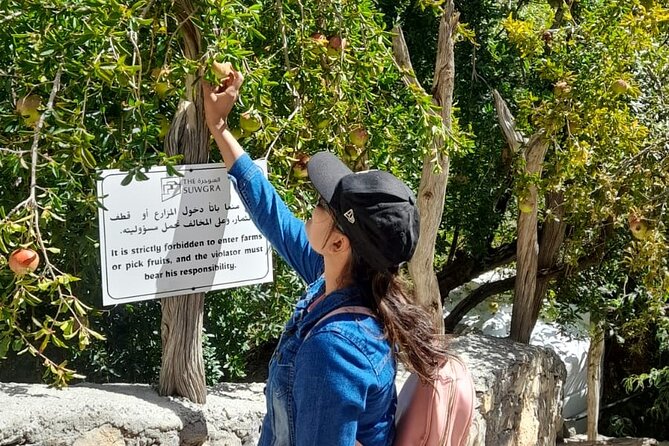
- Al Suwjara is the day’s most unusual stop: Access to the old village requires crossing a wooden bridge and walking over uneven mountain ground.
- The tour uses a private 4WD: Your group travels alone with an English-speaking Omani guide and receives pickup and drop-off in Muscat.
- Birkat Al Mouz combines ruins and palms: Its name means Banana Pool, a nod to the banana plantations around the village.
- Al Kattmyn is part of Oman’s UNESCO-listed aflaj tradition: The irrigation system shows how water has been guided through dry mountain country.
- Diana Point offers a major photo stop: You pause for broad valley views from Jebel Akhdar.
- Lunch is extra: Water, transportation, entrance fees, and the guide are included, but you need to budget separately for the midday meal.
From Muscat to the ruins of Birkat Al Mouz
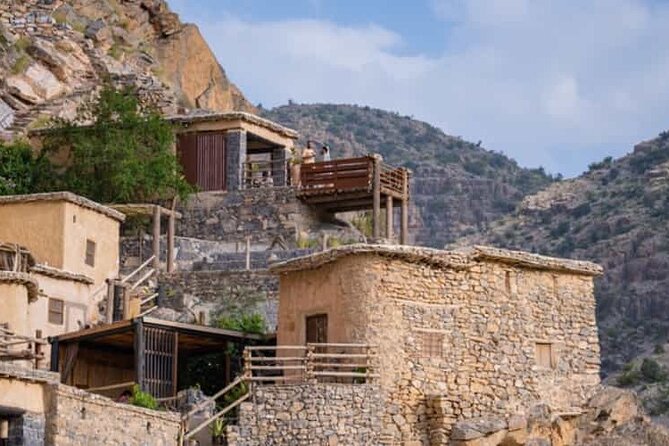
This full-day outing runs about eight hours, making it a substantial day away from Muscat rather than a quick mountain excursion. Pickup and drop-off are included, so you avoid arranging your own route to the foot of Jebel Akhdar.
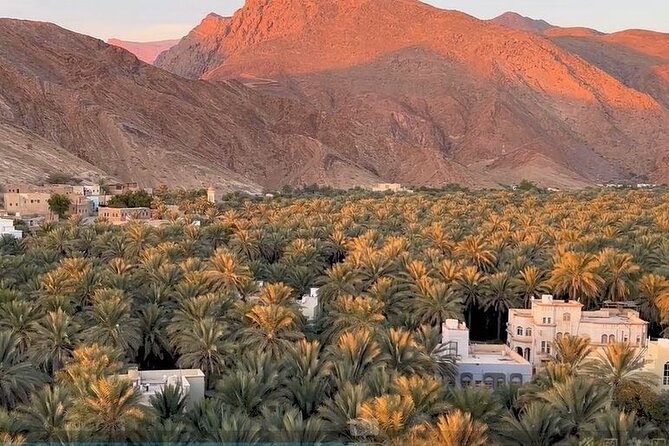
Birkat Al Mouz is a strong first stop because it gives you an immediate sense of Oman’s older mountain settlements. The village lies off the old Muscat to Nizwa road, and its name translates as Banana Pool. Banana plantations grow in the area, which makes the name more than a curious translation.
You have about two hours here. That is enough time to walk among the ruined homes and look closely at how the settlement was built. The remains are not polished or restored into a neat open-air museum. Their worn state is part of the appeal, but it also means you should expect uneven surfaces and a more informal visit.
I find this stop valuable because it sets up the rest of the day. Jebel Akhdar is not only about viewpoints. It is also about how people built homes, moved water, and farmed on difficult mountain slopes. Birkat Al Mouz gives you that human side before the road climbs higher.
More Jebel Akhdar Tours in Muscat
- From Muscat: Nizwa and Jebel Akhdar Tour with Lunch
★ 4.8 · 319 reviews - Full Day Private Nizwa/Jebel Akhdar
★ 5.0 · 205 reviews - Muscat: 4×4 Adventure Through Jebel Akhdar and Nizwa
★ 4.9 · 115 reviews
Following water through Al Kattmyn
The next stop focuses on the aflaj irrigation system of Al Kattmyn. You spend about an hour here, with no separate admission fee listed.
The aflaj systems are among Oman’s most important cultural features. They guide water through channels so communities can support homes and plantations in a dry climate. Al Kattmyn is one of five irrigation systems in Oman recognized by UNESCO, giving this stop importance beyond its modest appearance.
Do not expect a large attraction with many displays. The value is in seeing an irrigation system in its setting and understanding the practical thinking behind it. The channel is tied to the villages and plantations around it, so it helps explain why settlements could survive in this mountain environment.
This is also a good point to pay attention to your guide. An English-speaking Omani guide can connect the water system to the old village you have just seen and the farms you will encounter higher up. Guides Khalid and Amer are named in the tour information, and both are associated with a helpful, flexible approach. Amer, in particular, is noted for adjusting plans carefully when rain created a possible safety problem.
Climbing into Jebel Akhdar’s fruit country
Jebel Akhdar means Green Mountain, although the appearance depends on the season and the exact part of the range you visit. The area is known for fruit plantations and rose gardens, with mountain valleys opening below the road and walking routes.
The tour allows about two hours for this section. That gives you time to stop, walk, and take in the views rather than simply drive to a lookout and leave. You should expect the focus to be on scenery and short walks, not a long formal hike.
The mountain setting changes the rhythm of the day. Birkat Al Mouz is about walls and irrigation. Here, you look outward across folds in the mountain and inward at cultivated terraces and gardens. The contrast is one of the tour’s strengths.
Diana Point and the wide valley views
Diana Point is one of the named highlights on Jebel Akhdar. It is linked to Princess Diana, who stopped at the spot, and it is used as a viewpoint over the valleys.
This is the most straightforward photo stop of the day. You do not need to work out where to pull over or find the viewpoint yourself. Your guide brings you to the location as part of the mountain route, then gives you time to look around.
The view is likely to be one of the day’s biggest visual rewards, but keep expectations sensible. Weather and visibility matter greatly in mountain country. On a clear day, the valleys provide the grand scale that makes the climb worthwhile. On a hazier day, the stop may feel less dramatic, though the mountain setting and village visits still carry the day.
One useful detail comes from the experience’s weather policy. The outing requires good weather, and poor conditions can lead to a different date or a full refund. That is reassuring for a route involving mountain roads and walking paths. Rain can also make the old village access more difficult, so flexibility matters more here than it would on a city tour.
Same coast and mountains, a completely different day out:
- Muscat: Daymaniat Islands Snorkeling Trip with Brunch
★ 4.7 · 2,317 reviews - From Muscat: Wadi Shab & Bimmah Sinkhole Full-Day Tour
★ 4.8 · 1,862 reviews - Muscat: Wahiba Desert and Wadi Bani Khalid Guided Group Tour
★ 4.8 · 820 reviews - Muscat: Half-Day Sightseeing Essentials Tour and Audio Guide
★ 4.2 · 598 reviews
Al Suwjara, the village below the cliff
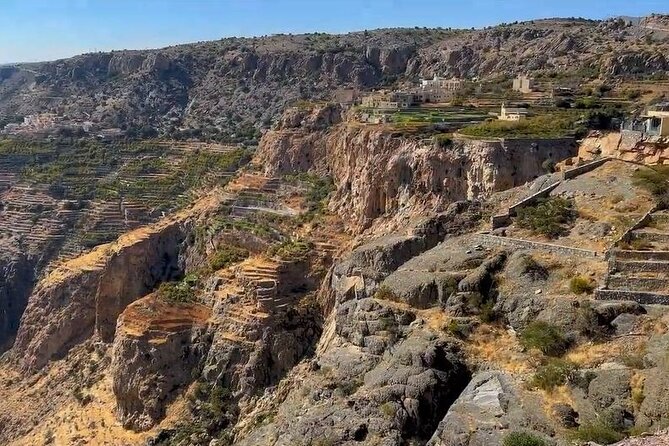
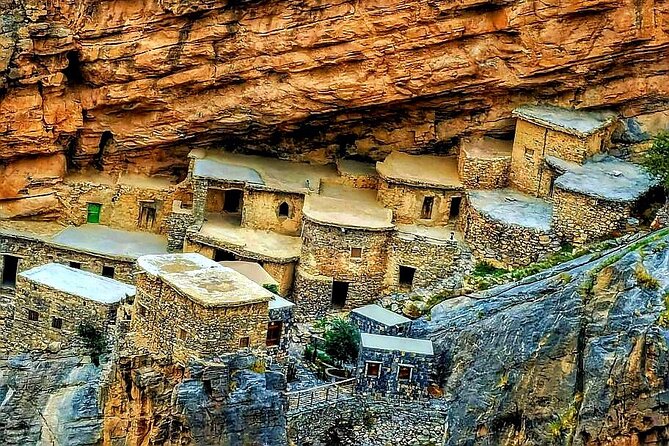
Al Suwjara is the most distinctive part of the route. The village began with one family and is now divided into an old and a new section. The newer village is about a 20-minute hike from the old one.
A 4WD vehicle can reach the new village, but not the old houses. To get to the historic section, you climb down one side of the mountain, cross a wooden bridge, and climb up the other side. That route is exactly why you should take the moderate-fitness warning seriously.
The walk is not a small stroll from a parking area. It involves changes in elevation and uneven mountain ground. Wear shoes that give you a secure footing, and bring water even though water is supplied as part of the tour. If you have knee, balance, or mobility concerns, ask the operator about the current access conditions before booking.
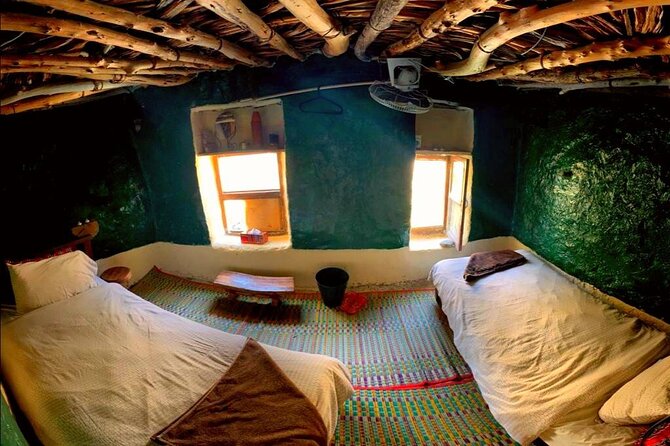
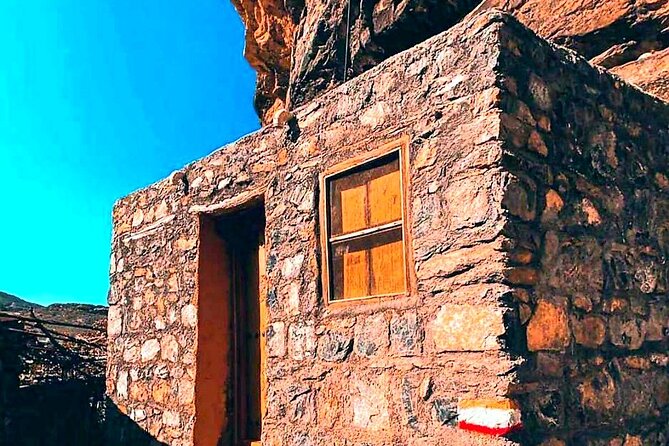
The old homes were built from mud and stone. Their construction fits the mountain around them, while the village’s newer tourism use adds another layer. The Cliff Guest House began with one room and later grew to seven rooms, with additional renovations planned. Its rooms use stone from the mountain and keep a traditional style, while offering views from the cliff.
You do not need to stay overnight to appreciate the guest house. It helps show how an old settlement can remain connected to present-day visitors without losing its physical character. At the same time, this is not a fully restored heritage town with smooth paths and broad access. The rough approach is part of what makes Al Suwjara memorable, but it also limits who will enjoy the stop.
The itinerary gives Al Suwjara about three hours, the longest single visit of the day. That makes sense. You need time for the approach, the village itself, the views, and the return walk. Rushing this section would undercut the reason for coming.
What the private 4WD format adds
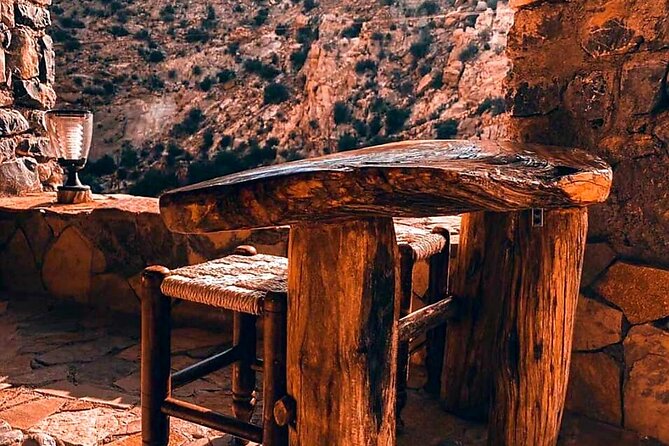
A private tour is useful here for more than comfort. Your group travels alone, so you can ask the guide to explain details at the ruins, irrigation channels, and villages without holding up a large coach party.
The 4WD is also a practical choice for Jebel Akhdar. The route reaches the mountain and the newer part of Al Suwjara, while the final approach to the old village still requires walking. The vehicle does not remove the hike, but it handles the road sections that make this trip unsuitable for a standard city car.
The English-speaking Omani guide is another important part of the value. The strongest comments about the service focus on guides who were attentive and adaptable. Khalid is described as making sure the day ran smoothly, while Amer handled a potentially unsafe rainy day with care and clear information.
Those details matter because mountain weather can change the plan. A good guide needs to do more than point out a view. You want someone who can judge when a route is safe, explain what you are seeing, and adjust the day without turning the trip into a stressful negotiation.
Is $176 per person a fair price?
At $176 per person, this is not a budget sightseeing trip. The price makes more sense for a small private group that values convenience, a dedicated 4WD, hotel pickup and drop-off, an English-speaking guide, water, and entrance fees.
The value improves as your group gets larger, since the vehicle and guide are being reserved for your party rather than shared with strangers. Group discounts are also offered, though the exact saving is not specified.
You still need to pay for lunch. One reported stop was an Afghan and Iranian restaurant with an overlook, but the tour details do not make that restaurant a guaranteed part of the plan. Treat lunch as an extra cost and ask the operator where the day’s meal will take place.
The itinerary covers several kinds of sights in one day, which helps justify the cost. You get Birkat Al Mouz ruins, Al Kattmyn, Jebel Akhdar viewpoints and plantations, and Al Suwjara. A self-drive version might cost less, but it would require your own vehicle, route planning, and confidence on mountain roads. The private format is most useful if you want the day arranged from start to finish.
The tour is often reserved well ahead of time, with bookings averaging about 35 days in advance. That does not mean every date sells out, but it is a sensible reason to reserve early if your Oman schedule is fixed.
Who will enjoy this day most?
I would choose this tour if you want mountain scenery with a strong cultural element. It suits you especially well if you enjoy old buildings, working irrigation systems, village walks, and viewpoints more than shopping or city attractions.
It is also a good fit for couples, families with older children, or friends who want a private day and the ability to ask questions along the way. The private arrangement gives you more breathing room than a large group outing.
I would think twice if you want a gentle sightseeing day with almost no walking. Al Suwjara requires the most effort, and the mountain route may be tiring after several hours on the road. Anyone with limited mobility should confirm the access conditions before paying.
Good weather is important. Rain can affect both road safety and the village walk, so keep some flexibility in your Oman plans. If conditions force cancellation, you can be offered another date or a full refund, provided the operator cancels the experience for weather.
Practical advice for the day
Wear firm walking shoes. The approach to Al Suwjara includes a descent, a wooden bridge, and a climb, so sandals or smooth-soled shoes are not ideal.
Carry sun protection and a small day bag. Water is included, but lunch is not, and the tour’s long mountain day means you should be ready for several hours away from Muscat.
Keep your schedule open after the tour. The advertised duration is about eight hours, and mountain roads, walking time, weather, and stops can affect the exact return time. The private format should make the day more flexible, but it does not make the route predictable down to the minute.
Use the guide. Ask about the aflaj channels, the old village construction, the plantations, and the difference between Al Suwjara’s old and new sections. Those explanations turn a scenic drive into a better understanding of how Omani mountain communities worked.
Should you book the Jebel Akhdar Al Suwjara tour?
Book it if you want a full day that combines mountain views with old Omani settlements and you are comfortable with a real walk at Al Suwjara. The private 4WD, included transport, and English-speaking guide make the high price easier to accept, especially for a group sharing the experience.
Skip it if you need easy access, a guaranteed restaurant lunch, or a short and relaxed outing. The day’s best stop is also its most demanding one.
For the right person, this is a strong introduction to the villages, water systems, farms, and high valleys of Jebel Akhdar. The Diana Point view may be the photo you remember, but Al Suwjara and Al Kattmyn give the day its lasting character.
FAQ
How long does the tour last?
The tour lasts approximately eight hours, including the journey from Muscat and the visits to Birkat Al Mouz, Al Kattmyn, Jebel Akhdar, and Al Suwjara.
Is hotel pickup included?
Yes. Pickup and drop-off are included.
Is this a private tour?
Yes. Only your group participates in the activity.
What type of vehicle is used?
Transportation is provided in a 4WD vehicle.
Is an English-speaking guide included?
Yes. An Omani English-speaking tour guide is included. The guides named in the available information include Khalid and Amer.
Is lunch included?
No. Lunch is not included in the tour price.
How much walking is required at Al Suwjara?
You need to walk down one side of the mountain, cross a wooden bridge, and climb up the other side to reach the old village. A moderate level of physical fitness is recommended.
Are entrance fees included?
Yes. Entrance fees are included, and the listed stops do not have a separate admission charge.
Can I cancel for a full refund?
You can cancel at least 24 hours before the start time for a full refund. Changes or cancellations made less than 24 hours before the start time are not accepted for a refund. If poor weather causes the operator to cancel, you will be offered another date or a full refund.
More Full-Day in Muscat
- Wadi Shab and Bimmah Sinkhole Group Full Day Tour
★ 5.0 · 303 reviews - Full-Day Private Wahiba Sands Desert and Wadi Bani Khalid Tour
★ 5.0 · 291 reviews - Nizwa Fort-Nizwa Souq-Misfah Al Arbyeen-Jebel Shams – Private Full Day Tour
★ 5.0 · 220 reviews - Nizwa Heritage & Culture Full Day Tour with Audio Guiding
★ 4.3 · 213 reviews
Just added around Muscat
- Wadi Shab &Bimmah Sinkhole &Heart shaped Cave &Pebble Beach★ 5.0 · 5 reviews
- Wahiba Sands and Wadi Bani Khalid Full-Day Tour from Muscat★ 4.6 · 3 reviews
- Try scuba Diving Tours To Daymaniyat Islands.★ 5.0 · 12 reviews
- Watching Sunrise in Wahiba Sand Desert – Early Morning Tour★ 5.0 · 7 reviews
- Wahiba Sands&Wadi Bani Khalid desert Safari(Muscat tours)★ 4.5 · 6 reviews
- From Muscat Wadi Shab and Bimmah Sinkhole Tour★ 5.0 · 6 reviews
- Wahiba Sands and Desert Safari from Muscat★ 5.0 · 3 reviews
- Wahiba Sands&Wadi Bani Khalid desert Safari(Muscat tours) : Private tours★ 4.5 · 6 reviews
Jebel Akhdar Tours, compared.
East Salalah Mountain Safari, Wadi Darbat, Beach, Camels, Dunes
Read our review →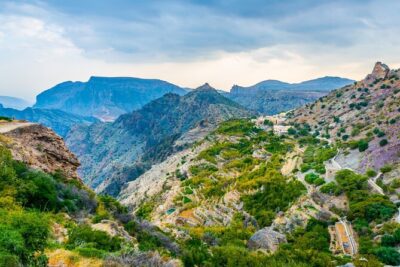
Nizwa Fort-Nizwa Souq-Birkat Al Mouz-Jebel Akhdar – Private Full Day Tour
Read our review →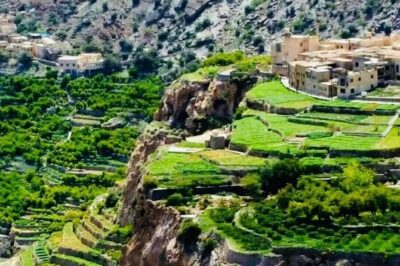
AMOUAGE: Full Day Private Trip to Nizwa and Al Jabal Akhdar
Read our review →Browse the lists this tour appears in