
Reviewed · SALALAH TOURS
Enjoy a Full-Day Tour Uncovering East Salalah’s Hidden Gems
East Salalah packs sea, mountain valleys, waterfalls, unusual trees, and an ancient frankincense port into one long day. This private tour takes you from Taqah’s coast into the Samhan mountains, with plenty of stops for photographs and short walks.
I like the mix of natural sights and Omani heritage, especially Wadi Darbat and the rare baobab trees of Hinnah Valley. I also like the private setup, since guides such as Hamid and Hafez can adjust the pace for families and add stops when time allows. The main drawback is that the day is busy, and some sites require walking or stairs. Taqah Castle may also be under maintenance, so your castle visit could become a viewpoint stop instead.
Key points to know before booking
- Taqah combines coast, old houses, and local history in the opening part of the day.
- Wadi Darbat changes with the season, offering greener scenery, streams, cascades, and possible water activities after the khareef.
- Tawi Attair is a 211-meter sinkhole, with birds nesting in the limestone walls.
- Hinnah Valley has rare baobab trees, a striking sight far from the trees’ better-known African ranges.
- Gravity Point is a fun road illusion, where a vehicle in neutral appears to roll uphill.
- Sumhuram gives the day historical weight, linking the tour to Dhofar’s old frankincense trade.
Why this East Salalah route works so well
Salalah is not just a beach destination. The city sits between the Arabian Sea and the Dhofar mountains, and this route lets you see how quickly the scenery changes. You begin with palms and fishing-town traditions, then climb into cooler mountain country before ending at an ancient trading settlement.
The schedule lasts about six to eight hours. A typical full day may run from around 9 a.m. to 6 p.m., though the exact timing can shift with road conditions, weather, and how long you spend at each stop.
The private format matters here. You are not being moved through a fixed coach schedule with a large crowd. For one to three adults, the arrangement uses a two-wheel-drive vehicle. Groups of four to six use a 4WD, while seven to nine adults travel in two 4WD vehicles with one guide and two drivers.
That setup suits families and small groups well. Several past bookings involved children, including a two-year-old, and the guides were able to adjust the pace and help with more difficult paths. Still, this is an active sightseeing day, not a gentle drive with no walking.
A few more Salalah trips to weigh up
- Full Day Guided Salalah a Combination of East and West tour
★ 5.0 · 20 reviews - Explore West Salalah’s Stunning Natural Scenery – a Full-Day Tour
★ 5.0 · 20 reviews - Desert Safari Trip Full Day & Ubar Lost city
★ 5.0 · 18 reviews
Taqah Beach begins the day beside the sea
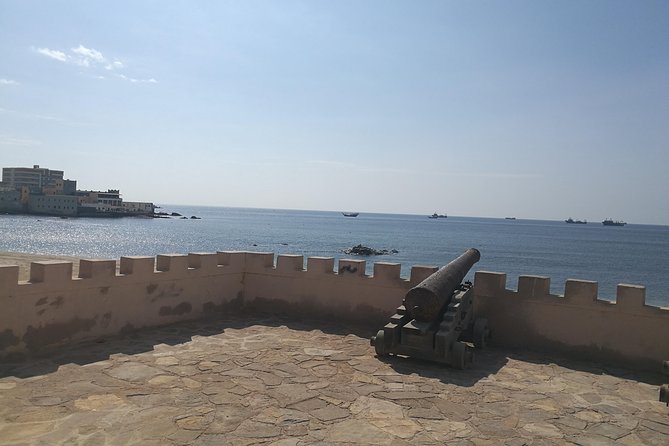
The first stop is Taqah Beach, a short 15-minute introduction to the coast. Tall palms line the sandy shore, and the water provides a calm opening before the mountain roads begin.
Dolphins may be seen near the coast, though you should treat that as a lucky possibility rather than a planned wildlife encounter. The beach stop is free and brief, so it works best as a chance to stretch, take photographs, and get your first look at Taqah.
Taqah itself is known for dried sardines, farm produce, and traditional Dhofari mud houses. That local character gives the next stop, Taqah Castle, more meaning. You are not simply visiting an isolated old building. You are seeing part of a coastal town that developed around fishing, farming, and regional administration.
Taqah Castle adds a human story
The drive into Taqah passes local plantations before reaching the old castle. The building was once the home of the wali, or governor, and is now used as a museum with displays about the town and local life.
The castle visit is scheduled for about an hour and includes admission. You can also see a nearby watchtower on a hill beside the castle. Together, the castle and tower help explain how authority and protection once worked in this coastal settlement.
There is one important catch: Taqah Castle is currently under maintenance. Ask your operator about its status before departure. If it is closed, the tour provides extra time at Taqah Cliff viewpoint instead. That is not an equal substitute for the museum, but it does give you a fine coastal view and more time for photographs.
Taqah Cliff shows the coast from above
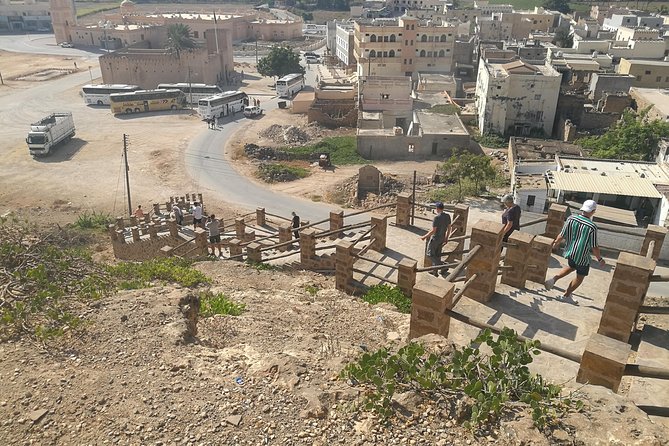
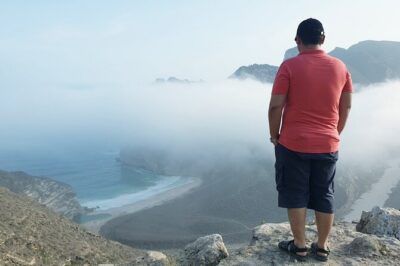
The viewpoint is a quick 15-minute stop, but it offers a different sense of the area. From the cliff, you can see the Indian Ocean below and the rough rock formations along the shoreline.
This is the kind of stop where a few minutes can be enough. The view works especially well in clear weather, when the blue sea contrasts with the cliffs. Keep your footing in mind near any exposed edge, and do not expect a long walking trail here.
If the castle remains closed, this viewpoint becomes more important to the day. It also gives you a useful pause before the route turns inland toward Wadi Darbat.
Same coast and mountains, a completely different day out:
- East Salalah Mountain Safari, Wadi Darbat, Beach, Camels, Dunes
★ 5.0 · 206 reviews - Salalah: Wadi Darbat, Jabal Samhan, Baobab, Mirbat Sand Dune
★ 4.6 · 178 reviews - Mountain Safari Private Tour
★ 5.0 · 105 reviews - Sunset Desert Safari Salalah Tour in Rub Al Khali – Empty Quarter
★ 5.0 · 91 reviews
Wadi Darbat is the natural centerpiece
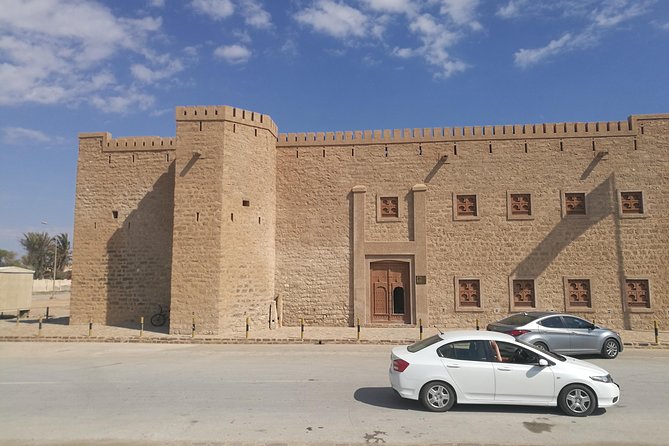
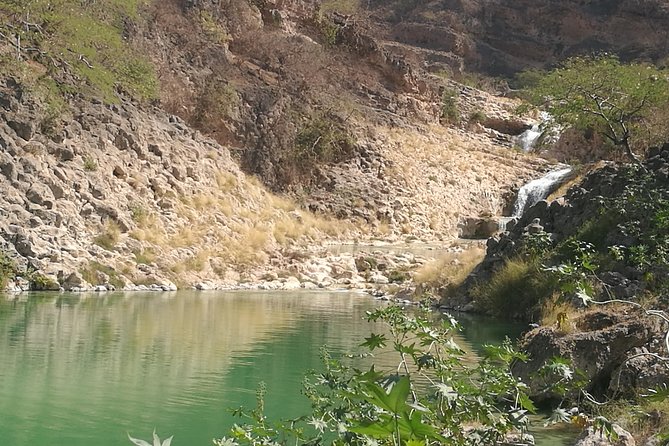
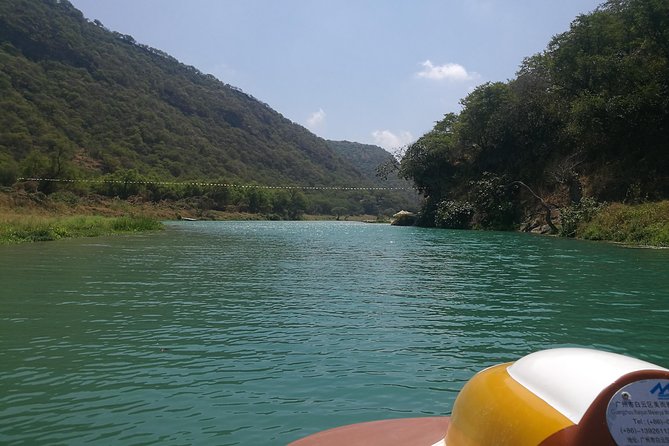
Wadi Darbat is likely to be the day’s most memorable stop. The valley is known for seasonal water, small cascades, pools, and a setting that becomes especially attractive after the monsoon season, locally called khareef.
Water levels vary. At one time of year, you might find flowing falls and green slopes. At another, the valley may be quieter and drier. The tour description also notes pedal kayaks, speedboats, and kayaks when conditions allow, but these activities are not listed as included. Plan to treat them as optional possibilities, not part of the guaranteed package.
The valley also has a strong family appeal. Camels, goats, and cattle are often seen nearby, and the open setting gives children something to watch while adults enjoy the water and scenery. One useful point from the tour experience is that guides may help families along more difficult paths and suggest which short walks are practical.
You have about an hour here. That is enough for photos and a walk, but perhaps not enough for every possible activity if the valley is busy or water conditions are good. Wear shoes that can handle uneven ground, especially if you plan to follow a trail near the cascades.
Wadi Darbat is also where the tour’s seasonal nature becomes clear. If your main goal is waterfalls, the khareef period offers the best chance of seeing strong water flow. If you prefer a quieter outing, another season may provide a calmer visit, but the falls can be less dramatic.
Tawi Attair drops 211 meters into the mountain
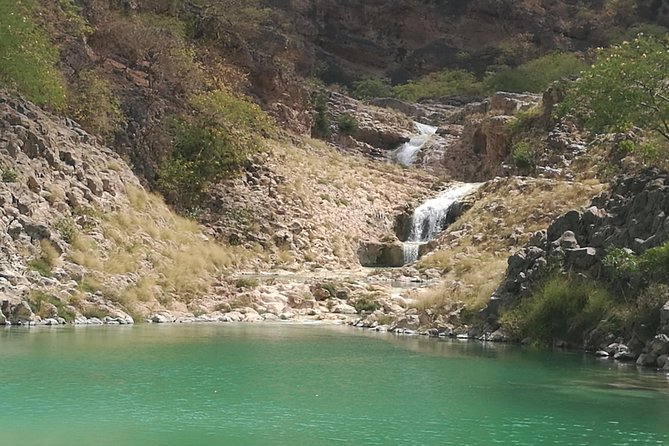
About 20 minutes beyond Wadi Darbat, the road climbs through the open countryside of the Jabal settlements. The destination is Tawi Attair, often called the well of birds.
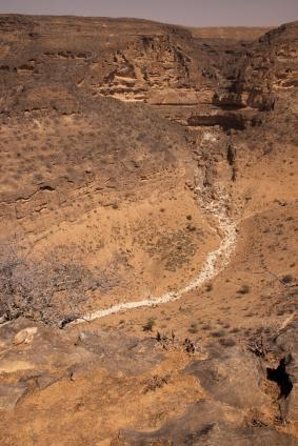
The sinkhole reaches about 211 meters deep, roughly the height of a 60-story building. You view it from a designated viewpoint while the guide explains the limestone formation and its name. Birds use the walls for nesting, and their calls can echo around the opening.
This is a quick 30-minute stop, but the scale is impressive. The appeal comes from looking straight into a natural opening rather than walking through a built attraction. If you dislike heights, stay well back from the edge and take your time.
The mountain drive is part of the experience. The road connects the coastal side of Dhofar with its high country, and the change in altitude gives you a sense of how varied Salalah can be within a short distance.
Gravity Point is a playful roadside pause
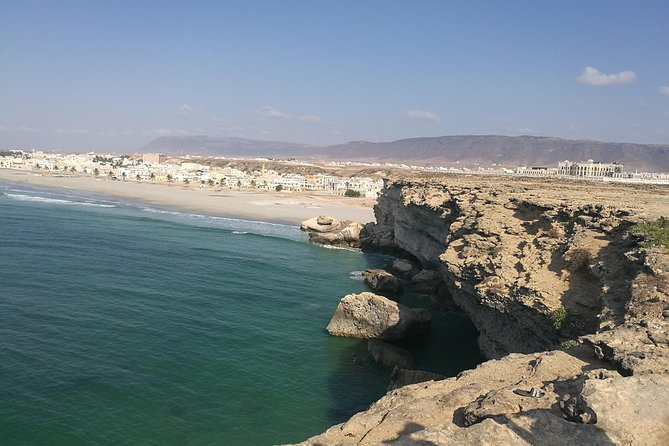
Gravity Point comes next, about 15 minutes down the Samhan mountain roads. Put the vehicle in neutral at the marked section, and it appears to move uphill.
The experience is best understood as a visual and road illusion. The surrounding slope and horizon can fool your eye, making the vehicle’s movement seem to contradict gravity. You do not need much time here, and the stop takes about 25 minutes.
This is not the grandest sight of the day, but it breaks up the mountain drive and gives you a simple activity to try yourself. Children usually find it entertaining, and adults will want to take a short video. Follow the guide’s instructions and do not test the effect outside the designated area.
Hinnah Valley has Dhofar’s unusual baobabs
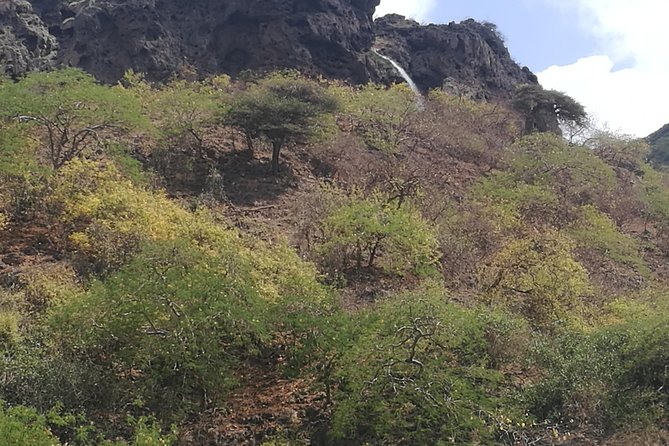
The baobab trees in Hinnah Valley are the tour’s most distinctive natural feature. Dhofar has about 200 of these trees, which can reach around 25 meters in height and grow trunks up to two meters across.
The trees are locally known as Ankiji or Al Mashwa. Their thick trunks and unusual shapes make them easy to recognize, and the sight feels very different from the palm-lined coast and watery valley earlier in the day.
Baobabs are more strongly associated with Africa, including Madagascar, so seeing them in Dhofar adds a rare botanical angle to the tour. You have about 30 minutes to photograph the trees and walk around the valley.
The stop does require some physical effort. You may need to walk on uneven ground, and the information provided specifically notes light climbing and stairs at some locations. Comfortable footwear is sensible, especially if you want to get close to several trees rather than photograph the first one from the vehicle.
Do not expect a large forest in the usual sense. The attraction is the rarity and shape of the trees, not a long marked hike. A guide can also help you understand why these trees matter locally and point out the best examples.
Sumhuram connects the day to frankincense
The final stop is Sumhuram, an ancient city on a small hill overlooking the Indian Ocean. It is part of a UNESCO World Heritage site and is tied to Dhofar’s historic frankincense trade.
The settlement dates back several centuries before Christ and once served as an important port. Its remains give you a strong closing scene: after seeing modern villages, farms, mountain valleys, and coastal roads, you finish at the ruins of a place that linked Dhofar to a much older trade network.
An information center shows a six-minute film that explains the site and places the ruins in context. That short presentation is useful because the remains can otherwise be difficult to read. You see walls and foundations, but the film helps you picture the port as a working settlement rather than just stones on a hill.
The stop is planned for about 30 minutes. You will walk around the archaeological area, and there may be stairs or uneven surfaces. If you want time to read every display and explore at a slower pace, tell the guide early in the day. With eight stops on the route, the schedule favors a broad introduction over a long archaeological visit.
What the $207 price includes
At $207 per person, this is not a bargain-priced city outing. Its value depends heavily on how many people share the cost and how much convenience you want.
The price includes private transportation, an air-conditioned vehicle, bottled water, a local Arabic and English-speaking guide, and admission fees for the sites. You are also paying for a long route that reaches the coast, the mountains, Wadi Darbat, Tawi Attair, Hinnah Valley, Gravity Point, and Sumhuram in one day.
For a couple or a small family, the cost may feel high. For a group sharing private transport and a guide, it becomes easier to justify. You avoid arranging separate transport to remote mountain sites, and you have someone handling the route, explaining the places, and helping adjust the day.
Meals and anything not specifically listed are not included. Bring money and ask in advance about meal arrangements if you need a full lunch. Bottled water is provided, but carrying an extra bottle is still sensible during a long day in the mountains.
The flexibility is a real part of the value. Guides such as Hamid have adjusted plans for family needs and timing, and some bookings included extra attractive stops outside the basic route. That kind of flexibility cannot be guaranteed at every departure, but a private tour gives you a better chance of discussing changes than a fixed group excursion.
Guides and the feel of a private day
The strongest part of the experience is the guide service. Hamid is frequently associated with this route, and Hafez is another named guide. The practical difference is not just language. An Arabic and English-speaking local guide can explain Omani customs, Dhofari buildings, frankincense, mountain villages, and the purpose of places that might otherwise look like ordinary roadside stops.
The guide also affects how comfortable the day feels. Families have been accommodated, difficult paths have been approached at a manageable pace, and early pickup has been arranged in some cases. Good driving matters here because the route includes mountain roads and a long list of stops.
Still, you should tell the operator about children, mobility limits, or a preference for shorter walks before the day begins. The tour is private, but it is not built around full accessibility. Tawi Attair, the baobab valley, and Sumhuram can involve stairs, walking, or uneven ground.
Best time, clothing, and practical preparation
Weather affects this tour. If poor weather makes the experience unsafe or impractical, the operator may offer another date or a full refund. This is particularly relevant during changing mountain conditions and the khareef season.
For the best chance of seeing flowing water at Wadi Darbat, consider the monsoon period. The valley’s falls and streams are seasonal, so conditions can change. The sea views and archaeological site remain worthwhile outside that period, but the natural sights may look different.
Wear practical clothes for both coast and mountain stops. Shoes should be suitable for light walking and uneven paths. Sun protection is useful at the beach, viewpoints, and Sumhuram, while a light layer may help in the higher country when conditions are cooler.
The day is photo-friendly from beginning to end. Bring a phone or camera with enough battery for the coast, sinkhole, gravity stop, baobabs, and ruins. You will also want to leave room in your schedule for the guide’s explanations, not just quick photographs.
Free cancellation is available up to 24 hours before the start time for a full refund. Changes or cancellations made less than 24 hours before departure are not accepted for a refund. The local time cutoff applies.
Who should book this tour
I would choose this tour if you have limited time in Salalah and want one outing that covers both nature and history. It is especially useful for first-time visitors who do not want to arrange mountain transport, identify remote stops, or work out how to combine Taqah, Wadi Darbat, and Sumhuram on their own.
Families can also benefit from the private vehicle and flexible pace. The guide support on uneven paths is useful, though you should not mistake that for a completely easy day. Young children may enjoy the camels, water, and Gravity Point, but the long schedule can still be tiring.
Photographers will find plenty to work with: palms and sea at Taqah, waterfalls when seasonal conditions cooperate, the huge Tawi Attair opening, unusual baobab trunks, and ruins above the ocean. History fans will appreciate Sumhuram and Taqah Castle, though the castle’s maintenance status should be checked before booking.
You may want a different plan if you prefer a slow day at one valley, a dedicated beach outing, or a tour with meals included. This route covers a lot of ground. Its strength is variety, not lingering at one attraction.
Should you book East Salalah’s full-day tour?
Book it if you want the broadest introduction to eastern Dhofar in a single day. The combination of Wadi Darbat, baobab trees, Tawi Attair, and Sumhuram is hard to match in one private route, and the local guide adds useful context to places that are easy to miss or misunderstand.
Before paying, confirm the current status of Taqah Castle, ask about the day’s pickup time, and be clear about walking needs. Also remember that waterfalls and water activities depend on the season.
At $207 per person, the tour makes the most sense for people who value private transport, a local guide, and a flexible itinerary. If that sounds like your style, this is a strong way to see East Salalah beyond the city and coast.
FAQ
How long does the East Salalah tour last?
The tour lasts approximately six to eight hours. A typical full-day schedule may run from around 9 a.m. to 6 p.m., depending on timing and conditions.
What places are included?
The route includes Taqah Beach, Taqah Castle or additional time at Taqah Cliff if the castle is under maintenance, Taqah Viewpoint, Wadi Darbat, Tawi Attair sinkhole, Gravity Point, Hinnah Valley’s baobab trees, and Sumhuram Old City.
Is transportation included?
Yes. Private transportation in an air-conditioned vehicle is included, along with pickup. Vehicle arrangements depend on group size.
Are entrance fees and water included?
Yes. Site admission fees and bottled water are included. Meals and anything not listed under inclusions are not included.
Is this a private tour?
Yes. Only your group participates in the activity. Groups of one to three adults use a two-wheel-drive vehicle, four to six adults use a 4WD, and seven to nine adults use two 4WD vehicles with one guide and two drivers.
Does the tour require walking?
Some walking and slight physical effort are required. The archaeological site and baobab valley may include stairs or uneven paths, so comfortable footwear is recommended.
Just added around Salalah
- West of Salalah private tour – fascinating mountains and beaches★ 5.0 · 9 reviews
- West Salalah Beaches and Blowholes★ 5.0 · 7 reviews
- Where Sea Meets Rock: A Scenic Journey to West Salalah’s Shores★ 5.0 · 5 reviews
- Private tour – Empty Quarter desert adventure – Wadi Dawka + Ubar★ 5.0 · 5 reviews
- West Salalah Tour by VisitSalalah★ 5.0 · 6 reviews
- Explore Samhan Mountain – Half-Day Getaway with Lunch Included.★ 5.0 · 10 reviews
- Salalah City Tour: Discover Salalahs Treasures with a Local Guide★ 5.0 · 4 reviews
- Full-Day Private Salalah West Tour with Lunch★ 5.0 · 12 reviews
Salalah Tours, compared.
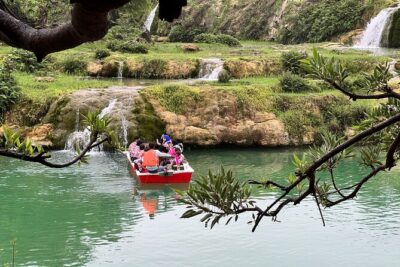
East Salalah Mountain Safari, Wadi Darbat, Beach, Camels, Dunes
Read our review →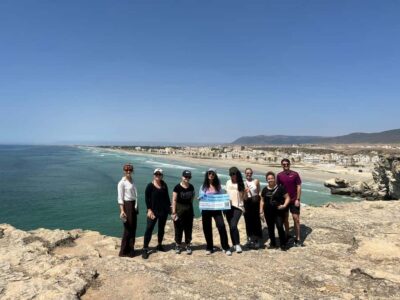
Wadi Darbat, Jabal Samhan, Baobab, Mirbat Sand Dune
Read our review →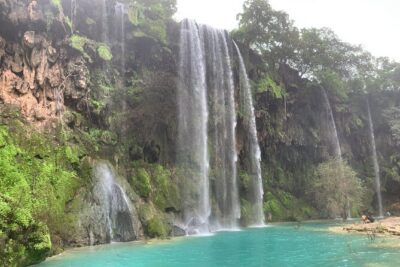
West Salalah Tour – Caribbean of Orient – Fazayah Beach with City
Read our review →
Salalah City Tour: Discover the Best of Oman’s Coastal Gem
Read our review →
Sunset desert safari tour in Salalah(private tour)
Read our review →
East & West Salalah Combination Tour – Darbat Waterfall, Mughsail
Read our review →
Browse the lists this tour appears in