Reviewed · FULL-DAY
Full-Day Nizwa Fort, Bahla Fort and Jabreen Castle Private Tour
Nizwa’s great round fort is the star of this day out, but the real pleasure is seeing three very different strongholds in one sweep through Oman’s interior. You’ll climb for wide views at Nizwa, study old rooms and painted ceilings at Jabreen, and see Bahla’s sprawling defensive walls.
I like the private 4WD, which gives your group more room and makes it easier to set the pace. I also like the mix of monuments and local craft, especially Nizwa’s silver jewelry, khanjars, pottery, copperware, and dates. The main drawback is the long day: the listed stops fill seven to eight hours before you add the drive from Muscat and a lunch break.
Key points to know before booking
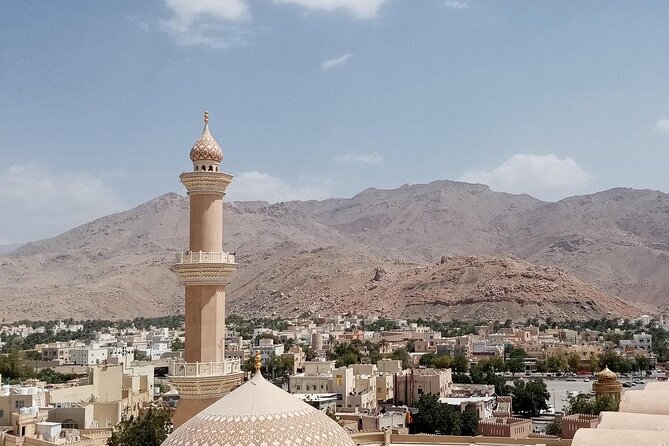
- Nizwa Fort has an unusual round tower: It rises 24 meters and measures 43 meters across on the outside.
- Three sites, three moods: Nizwa is a massive military work, Bahla is a broad fortified complex, and Jabreen feels more like a refined palace.
- Nizwa Souk adds local life: Use the short stop to look for silver jewelry, khanjars, copper goods, leather, pottery, and dates.
- A private guide changes the day: Guides including Waleed, Ali, Amer, Aziz, Saif, Ahmed, Khalid, and others have been praised for history, flexibility, and care.
- Costs are not fully bundled: Bottled water, fuel, transport, pickup, drop-off, and the English-speaking guide are included, but lunch and entrance fees are extra.
- Plan for heat and stairs: The forts and castle are historic buildings, not polished modern museums, so comfortable shoes and modest clothing help.
Why Nizwa makes the best first stop
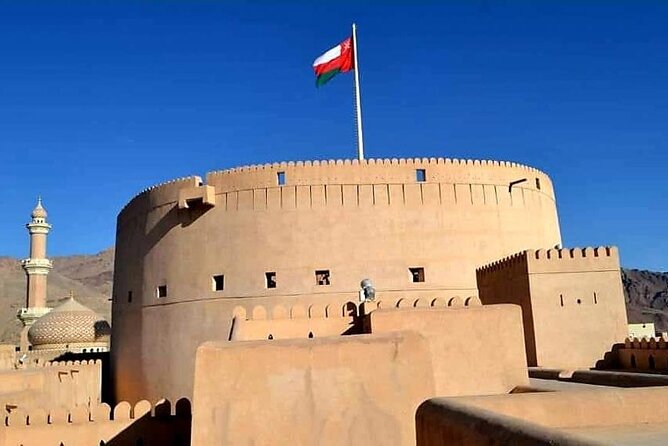
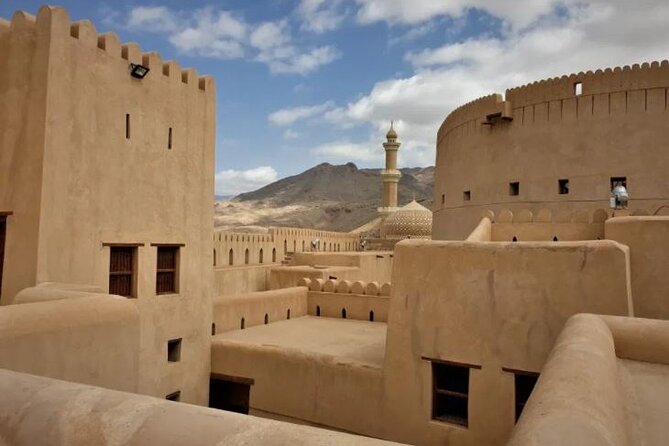
Nizwa was once Oman’s ancient capital, and its fort gives you an immediate sense of why this town mattered. The main tower is not the usual square block found in many desert forts. Its huge circular form was built to absorb attack and give defenders a strong position over the town.
The tower reaches 24 meters. Its outer diameter is 43 meters, with an inner diameter of 36 meters. Those figures sound dry on paper, but they become clear once you are inside the structure. The scale is the point. You are not visiting a small watchtower. You are walking through a great defensive machine built in the middle of the 17th century by Imam Sultan Bin Saif Al Ya’ribi.
The fort stop is scheduled for about three hours, with admission charged separately. That is a generous amount of time compared with a quick photo stop. You can inspect the architecture, climb to higher levels for views, and listen as your guide explains how power and defense worked in Oman’s interior.
I would not rush this part. The fort’s shape is its most striking feature, but its value comes from noticing how the building worked as a whole. Ask your guide about the tower, the town below, and the reasons Nizwa became such an important center. Guides such as Waleed, Ali, Amer, Aziz, Saif, Ahmed, and Khalid have been singled out for making the past easier to understand, so a private tour gives you a good chance to ask questions rather than simply follow a fixed speech.
There is one practical catch. Nizwa Fort is a walking visit with stairs and uneven surfaces. The tour information says most people can take part, but you should still be honest about your comfort with climbing and standing in the heat. Wear shoes with a firm sole, carry a hat, and use the bottled water supplied in the vehicle.
A few more Muscat trips to weigh up
- From Muscat: Wadi Shab & Bimmah Sinkhole Full-Day Tour
★ 4.8 · 1,862 reviews - Wadi Shab and Bimmah Sinkhole Group Full Day Tour
★ 5.0 · 303 reviews - Full-Day Private Wahiba Sands Desert and Wadi Bani Khalid Tour
★ 5.0 · 291 reviews
Nizwa Souk and the small details worth shopping for
After the fort, the itinerary allows about 30 minutes in Nizwa. That is short, but it gives you time to see the market and get a taste of the town beyond its walls.
Nizwa is known across Oman for silver work. Look for traditional silver jewelry and the distinctive khanjar, the curved ceremonial dagger associated with Oman. You may also find copperware, coffee pots, swords, leather goods, pottery, and dates.
This is not the place for a slow, open-ended market wander. Thirty minutes passes quickly, especially if you stop to compare pieces or taste dates. If silver interests you, say so early and use your guide’s local knowledge. A guide can help explain what you are looking at and keep the stop focused.
The souk is also useful because it breaks up a day of stone walls and old military buildings. You get a brief look at crafts that are still tied to Omani identity. I especially like this contrast: the fort shows how Nizwa protected itself, while the market shows what local makers produced and traded.
The stop is listed as free, but shopping is not included. Bring money if you want to buy something. There is no lunch included, so this is also a good point to ask your guide about the day’s meal plan. The supplied details do not name a restaurant or promise a meal stop, so do not assume food is covered in the $187 price.
Jabreen Castle brings a softer side of Oman’s past
Jabreen Castle, also written as Jabrin or Jabreen, is the most graceful stop on the route. It was built by Imam Bil’arab bin Sultan of the Yaruba dynasty, who ruled from 1679 to 1692 and was buried at the site.
The castle was not designed only for battle. Its rooms, paintings, and old utensils give it a more domestic and scholarly feel than Nizwa Fort. You can expect to spend about two hours here, and admission is listed as free.
That longer visit matters. Jabreen is the kind of place where a guide’s explanation adds a great deal. Without context, you see towers, rooms, and decorated surfaces. With a good explanation, you begin to understand how a ruling household lived, stored goods, received people, and used the building.
The old paintings are a major reason to take your time. The castle’s decoration gives you something different from Bahla’s heavy walls and Nizwa’s round tower. Ancient utensils add another human scale, reminding you that these were working spaces, not just symbols of authority.
I would place Jabreen near the middle or later part of the day as a welcome change of pace. The tour’s drivers and guides are not simply there to get you from one fort to the next. Several guides, including Waleed and Ali, have been praised for explaining the connection between Oman’s past and present. That sort of conversation works especially well inside Jabreen, where the building rewards close attention.
As with the other historic sites, expect stairs and walking. The information provided does not promise air-conditioning, special access arrangements, or a fully step-free route. If mobility is a concern, ask the operator before booking.
Bahla Fort and the pottery tradition
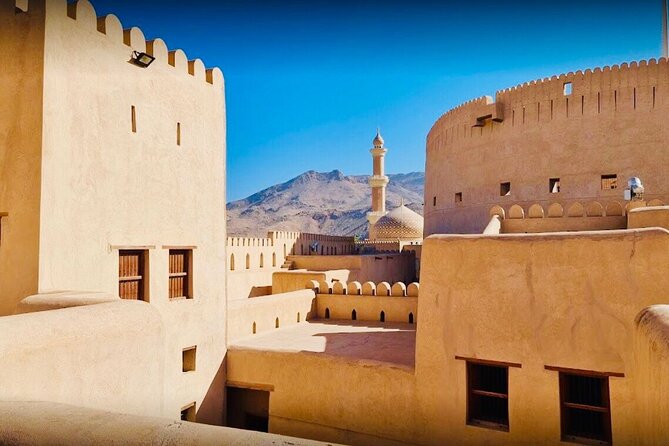
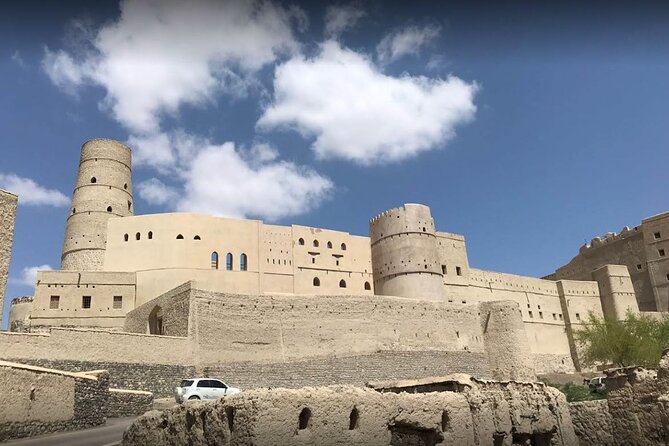
Bahla is about 40 kilometers from Nizwa and roughly 200 kilometers from Muscat. The town is a UNESCO World Heritage Site and is known for its pottery as well as its 13th-century fort.
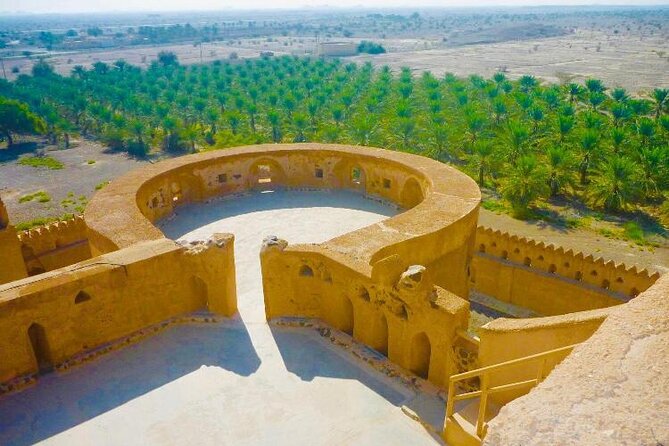
Bahla Fort feels different from both Nizwa and Jabreen. Nizwa centers on one giant round tower. Jabreen is a castle with decorated interiors. Bahla is a much broader fortified town setting, with walls and defensive features spread across a larger area.
The listed visit is about two hours, and admission is not included. That gives you enough time to look beyond a single viewpoint and understand the scale of the place. You might also see pottery being made or sold in the town, an important local craft that gives Bahla its own character.
The fort’s condition and layout may feel less tidy or direct than a restored castle. That is part of the experience, but it can also make the visit harder to read without help. I would rely on your guide to point out what matters and explain how Bahla fit into the power struggles of Oman’s interior.
One useful lesson from this route is the contrast between strongholds. Power did not always sit in one permanent capital. Different towns and forts mattered at different times, and the buildings reflect those shifts. A guide can turn three separate stops into one story rather than leaving you with a pile of dates and names.
Bahla is also a good place to think about the value of the tour’s private format. You may want more time for the fort, less time for shopping, or a slower walk through the town. The operator describes the outing as private, so only your group takes part. That does not guarantee unlimited time at every stop, but it gives you a better chance to discuss changes with the guide.
Same coast and mountains, a completely different day out:
- Muscat: Daymaniat Islands Snorkeling Trip with Brunch
★ 4.7 · 2,317 reviews - Muscat: Wahiba Desert and Wadi Bani Khalid Guided Group Tour
★ 4.8 · 820 reviews - Muscat: Half-Day Sightseeing Essentials Tour and Audio Guide
★ 4.2 · 598 reviews - Muscat: Wadi Bani Khalid Oasis & Oman Desert Tour
★ 4.8 · 434 reviews
What the private 4WD setup adds
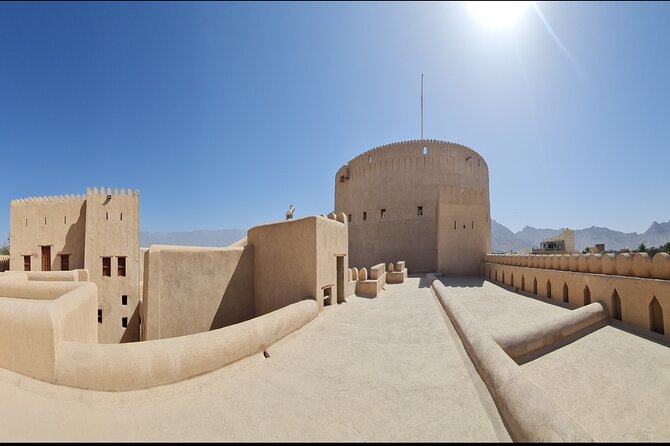
Pickup and drop-off are offered in the Muscat area. Transport is provided in a comfortable 4WD, with fuel and bottled water included. That matters on a full day that links Muscat with Nizwa, Jabreen, and Bahla.
A private vehicle is more comfortable than joining a large bus group, particularly if you are traveling with family or friends. You do not have to wait for strangers at each stop, and you can ask the guide to explain a detail again without holding up a full coach.
The vehicle also supports the route’s inland focus. Some Oman excursions add mountain roads and rougher terrain, but this tour is built around forts, castles, the souk, and towns. The 4WD gives you a sturdy, practical ride without making the day about off-road thrills.
The English-speaking Omani guide is central to the experience. Past guide assignments have included Waleed, Ali, Amer, Aziz, Saif, Ahmed, Khalid, Said, Mohammed, Khamis, and Khalil. The strongest pattern in the available feedback is not one specific guide but the service style: friendly, patient, careful driving, good local explanations, and flexibility around the group’s interests.
Still, guide quality can vary from one person to another. When you book, it is sensible to state what matters most to you. Ask for more architectural detail if you enjoy buildings, more cultural background if you want to understand daily life, or more shopping time if silver and dates are high on your list.
Is $187 a fair price?

At $187 per person, this is not the cheapest way to reach Nizwa. The price buys privacy, pickup and drop-off in Muscat, a 4WD, fuel, bottled water, and an English-speaking Omani guide. For a solo visitor or couple, that can be good value because the day would be awkward to arrange independently without a rental car.
For families or small groups, group discounts may improve the value. The private format also matters more as your group grows. You are paying for a dedicated vehicle and guide rather than a seat on shared transport.
The price does not include lunch or entrance fees. That is the main budget point to watch. Because Nizwa Fort and Bahla Fort charge separate admission, your final cost will be higher than the advertised tour price. Jabreen Castle and the Nizwa stop are listed without an admission charge.
I would compare this tour with the cost of renting a car, fuel, navigation, and arranging your own understanding of the sites. If you already have a car and enjoy researching Oman’s forts, a self-guided day may cost less. If you want someone else to handle the long drive and explain why the buildings differ, the private tour is easier and likely worth the extra money.
Who should book this day from Muscat?
This outing suits you if you want Oman’s history in a single day and prefer a private vehicle. It is especially useful for first-time visitors who want a guide to connect Nizwa, Bahla, and Jabreen rather than treating them as unrelated photo stops.
It also suits families and friends who value a flexible pace. The private format lets your group ask questions, shop for silver, linger over architecture, or move on when everyone has had enough.
You should think twice if you dislike long drives, hot outdoor sites, stairs, or days with several historic stops. The schedule is full, and the seven to eight hours refers to the tour duration shown for the experience, not necessarily every minute spent traveling from your Muscat hotel and back.
This is also not a food tour. Lunch is not included, and the itinerary gives only a short market stop in Nizwa. Pack lightly, carry water from the vehicle, and plan to pay separately for food and admissions.
Booking, weather, and cancellation details
Confirmation is provided when you book, and mobile tickets are available. The experience is listed as suitable for most people and near public transportation, although pickup and drop-off in the Muscat area are included.
Free cancellation is available up to 24 hours before the start time for a full refund. Changes or cancellations made within 24 hours are not accepted and are not refunded. The tour requires good weather, so if poor conditions cause the operator to cancel, you will be offered another date or a full refund.
The tour is often booked about 22 days ahead. That is a useful clue if your Muscat visit falls during a busy period. Booking early also gives you time to ask about the guide, pickup area, lunch plans, and the current entrance fees.
My verdict: a strong history day with a full schedule
I would book this tour if I had one free day in Muscat and wanted to see Oman’s inland forts without managing the drive myself. Nizwa Fort supplies the grand scale, Jabreen adds painted rooms and courtly detail, and Bahla brings a wider fortified town and pottery tradition. The souk keeps the day connected to living craft.
The best reason to choose it is the combination of private transport and an Omani guide. You get more than four impressive buildings. You get help reading them, comparing their roles, and seeing how power moved through the interior.
The main caution is cost and pace. At $187 per person, with lunch and entrance fees extra, this is a comfort-and-context purchase rather than a budget outing. Book it if you value a dedicated 4WD, hotel pickup, and a flexible English-speaking guide. Skip it if you want a slow day, dislike historic stairs, or would rather explore Nizwa independently.
FAQ
How long does the tour last?
The tour lasts approximately seven to eight hours. The listed stops include about three hours at Nizwa Fort, 30 minutes in Nizwa, two hours at Jabreen Castle, and two hours at Bahla Fort.
Is pickup from Muscat included?
Yes. Pickup and drop-off are included for the Muscat area.
Is this a private tour?
Yes. Only your group participates in the private activity.
Are entrance fees included?
No. Entrance fees are not included. Nizwa Fort and Bahla Fort list admission as extra, while Jabreen Castle and the Nizwa stop are listed without an admission charge.
Is lunch provided?
No. Lunch is not included in the tour price.
What happens if bad weather cancels the tour?
You will be offered a different date or a full refund if poor weather causes the experience to be canceled.
Just added around Muscat
- Wadi Shab &Bimmah Sinkhole &Heart shaped Cave &Pebble Beach★ 5.0 · 5 reviews
- Wahiba Sands and Wadi Bani Khalid Full-Day Tour from Muscat★ 4.6 · 3 reviews
- Try scuba Diving Tours To Daymaniyat Islands.★ 5.0 · 12 reviews
- From Muscat Wadi Shab and Bimmah Sinkhole Tour★ 5.0 · 6 reviews
- Watching Sunrise in Wahiba Sand Desert – Early Morning Tour★ 5.0 · 7 reviews
- Wahiba Sands&Wadi Bani Khalid desert Safari(Muscat tours)★ 4.5 · 6 reviews
- Wahiba Sands and Desert Safari from Muscat★ 5.0 · 3 reviews
- Wahiba Sands&Wadi Bani Khalid desert Safari(Muscat tours) : Private tours★ 4.5 · 6 reviews
Full-Day, compared.
Wadi Shab and Bimmah Sinkhole Group Full Day Tour
Read our review →
Full-Day Private Wahiba Sands Desert and Wadi Bani Khalid Tour
Read our review →
Nizwa Fort-Nizwa Souq-Misfah Al Arbyeen-Jebel Shams – Private Full Day Tour
Read our review →
Nizwa Heritage & Culture Full Day Tour with Audio Guiding
Read our review →