
Reviewed · CITY TOURS
Half Day Private Muscat City Afternoon Tour
Muscat reveals its character through grand mosques, Portuguese forts, royal buildings, and old market lanes, and this private afternoon tour links them in one comfortable outing. You will see the city from modern Bawshar to the harbor of Old Muscat, with an Omani guide explaining the customs and stories behind the buildings.
I like the private vehicle and hotel, port, or airport pickup, which saves you from arranging taxis between widely separated sights. I also like the flexible human touch: guides such as Said, Saif, Waleed, Mohammed, Abdul, and Amer have been praised for clear explanations, patience, and helping with onward plans.
The main limitation is timing. The Sultan Qaboos Grand Mosque is only open for visits from 8 to 11 am, so an afternoon departure gives you a photo stop rather than an interior visit. The Royal Opera House entrance also costs an extra $8, and the listed stop times already add up to more than three hours before driving.
Key points to know before booking
- The afternoon mosque visit is exterior only: You can photograph Sultan Qaboos Grand Mosque, but the interior is closed to this tour’s afternoon schedule.
- Mutrah Souq gets the longest stop: Plan on about one hour to browse Oman’s old market and shop for souvenirs.
- The route covers both modern and old Muscat: You move from Bawshar and the opera district to Mutrah and the historic harbor.
- This is a private experience: Only your own group takes part, with a comfortable four-wheel-drive vehicle or a salon car for two people.
- The guide adds much of the value: English-speaking guides explain Omani culture, royal buildings, religion, and local history rather than simply pointing out monuments.
- The $115 price includes transport and water: Fuel, hotel or port transfers, and the guide are included, but the Royal Opera House admission is not.
What this half-day Muscat route does well
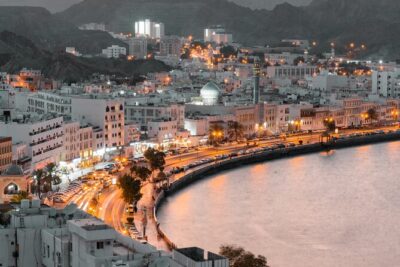
Muscat is spread out. Its major sights sit between mountains, broad roads, residential districts, and the old harbor, so a short visit can become a string of disconnected taxi rides. This tour solves that problem with a private vehicle and a route that gives you a useful first look at the capital.
The experience begins at 3:00 pm. That timing suits a cruise passenger with an afternoon ashore, someone arriving at a Muscat hotel, or anyone who wants sightseeing after the morning heat. It also gives the tour a pleasant rhythm: impressive modern buildings first, then the market, forts, and palace area near the water.
The listed duration is not perfectly clear. The product is sold as a half-day outing, but the eight scheduled stops total about 3 hours and 15 minutes before driving time is counted. Some stops are quick photo visits, while the souq and opera house take longer. I would reserve at least half a day and confirm the exact return time if you have a flight, transfer, or dinner booking.
A few more Muscat trips to weigh up
- Full-Day Private Wahiba Sands Desert and Wadi Bani Khalid Tour
★ 5.0 · 291 reviews - Half-Day Private Muscat City Tour – Top Landmarks in Just 4 Hours
★ 5.0 · 256 reviews - Oman: Private Muscat City Tour With Pick-up/ Drop-off
★ 4.4 · 234 reviews
Sultan Qaboos Grand Mosque: a photo stop in the afternoon
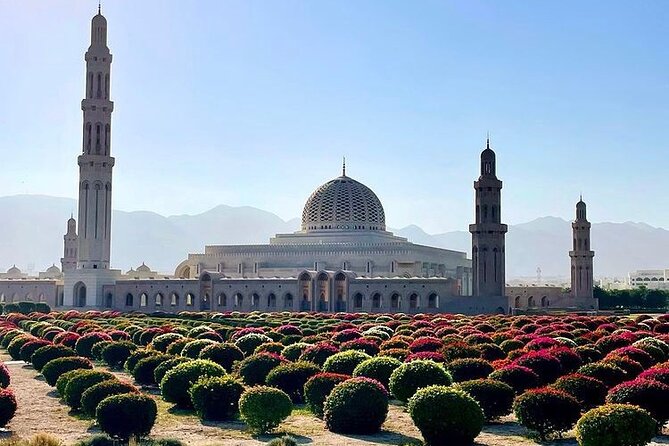
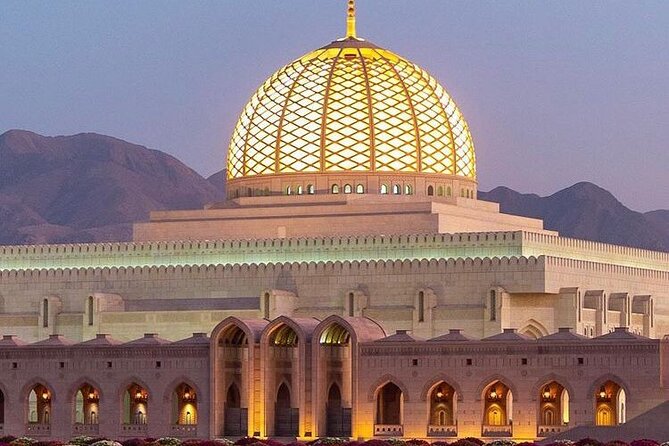
The Sultan Qaboos Grand Mosque is one of Muscat’s essential sights, even when you cannot go inside. The tour pauses for about 15 minutes so you can admire and photograph the exterior.
The mosque is also associated with a remarkable handmade Iranian carpet. The carpet weighs 21 tons and can accommodate up to 20,000 worshippers. That detail gives you a sense of the building’s scale, though the afternoon schedule means you should not expect to see the carpet itself.
This is the first place where timing matters. The mosque is open only from 8 to 11 am for interior visits, so the 3:00 pm tour cannot provide the full mosque experience. If seeing Islamic art and the famous carpet inside is a priority, arrange a separate morning visit or ask the operator if a morning option is available.
You should also treat this stop as a respectful cultural visit, not just a quick architectural backdrop. Your guide can help explain the building and local customs, while you get your camera ready for the exterior details.
Mohammed Al Ameen Mosque in Bawshar
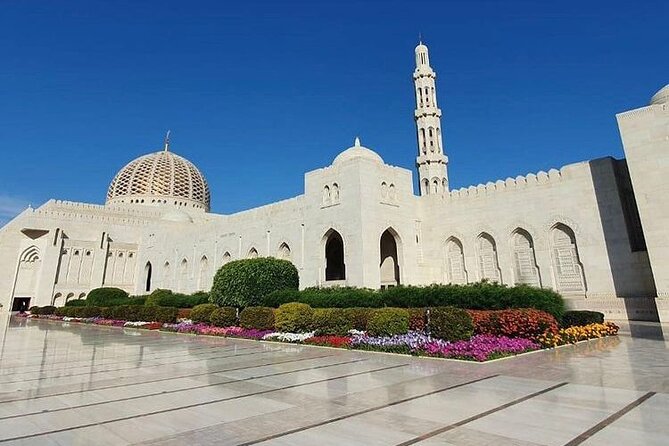
The second mosque stop takes you to Mohammed Al Ameen Mosque in Bawshar, a Muscat district. The mosque opened in June 2014 and is also called Bahwan Mosque or Bawshar Mosque.
The scheduled stop lasts about 20 minutes and admission is free. Compared with Sultan Qaboos Grand Mosque, this is a shorter and more focused stop, useful for seeing another example of Omani religious architecture in a different part of the city.
The itinerary does not promise interior access here, so you should think of it mainly as an exterior visit unless your guide confirms otherwise. The value lies in comparison. Seeing two mosques on the same route helps you notice how religious buildings fit into both Muscat’s newer districts and its older ceremonial spaces.
Royal Opera House Muscat and the ministries district
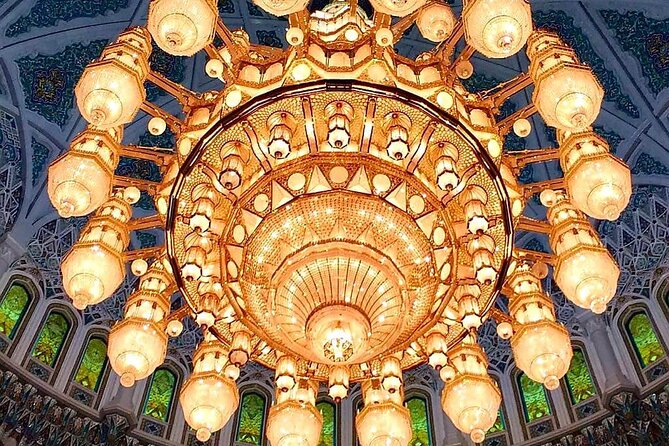
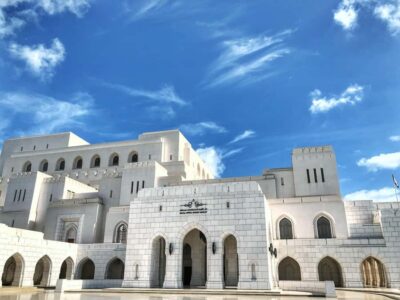
The route continues through the ministries area and the Royal Opera House district. The opera house is Oman’s leading organization for arts and culture, and its stated purpose is to connect Oman with cultural work from around the world.
You get about 45 minutes here, the longest sightseeing stop after Mutrah Souq. That gives you enough time to see the building properly rather than only passing it from the vehicle. The architecture is a strong counterpoint to the forts and palace later in the afternoon: polished, formal, and modern while still drawing on Islamic design.
Admission is not included. The additional charge is $8, so check at booking whether your plan includes only the exterior or an entrance visit. This extra fee is modest, but it matters when you are comparing the $115 tour price with other city outings.
I like this stop because it shows that Muscat is not only about old walls and royal symbols. The city also presents itself as a place for music, theater, and international cultural exchange. If you prefer markets and old buildings to formal cultural venues, though, this may feel less essential than the souq.
Same coast and mountains, a completely different day out:
- Muscat: Daymaniat Islands Snorkeling Trip with Brunch
★ 4.7 · 2,317 reviews - From Muscat: Wadi Shab & Bimmah Sinkhole Full-Day Tour
★ 4.8 · 1,862 reviews - Muscat: Wahiba Desert and Wadi Bani Khalid Guided Group Tour
★ 4.8 · 820 reviews - Muscat: Half-Day Sightseeing Essentials Tour and Audio Guide
★ 4.2 · 598 reviews
Mutrah Souq: the afternoon’s best browsing stop
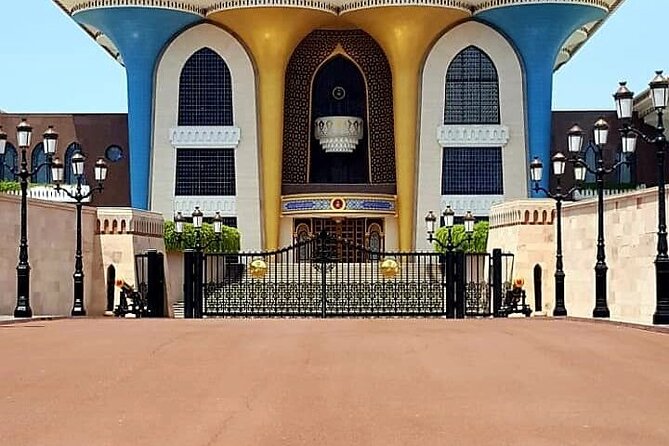
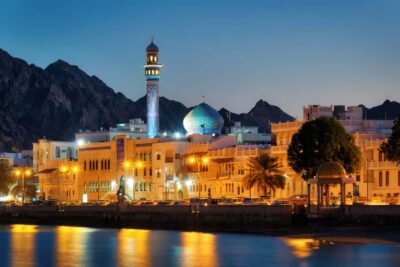
Mutrah Souq is where the tour becomes more tactile. You have about one hour to walk through one of Oman’s oldest marketplaces, with a history reaching back roughly two centuries.
This is the stop where you can slow down, look closely, and shop for souvenirs. The available description does not specify particular products, so I would treat the souq as a place to browse rather than arrive with a fixed shopping list. You might find the usual range of Omani keepsakes, but the pleasure is in seeing the market lanes and getting a feel for Mutrah’s commercial life.
An hour is useful here. It gives you time to compare items, ask your guide about local customs, and avoid turning the market into a hurried photo stop. If you are not interested in shopping, you can still use the time to walk through the old marketplace and observe the setting.
The souq can also be one of the more personal parts of the route. Grand mosques and palaces show official Oman. The market shows a more everyday side, where trade, conversation, and local traditions meet. I would save some energy for this stop and avoid spending all your time taking pictures at the earlier buildings.
Mutrah Fort above the natural harbor
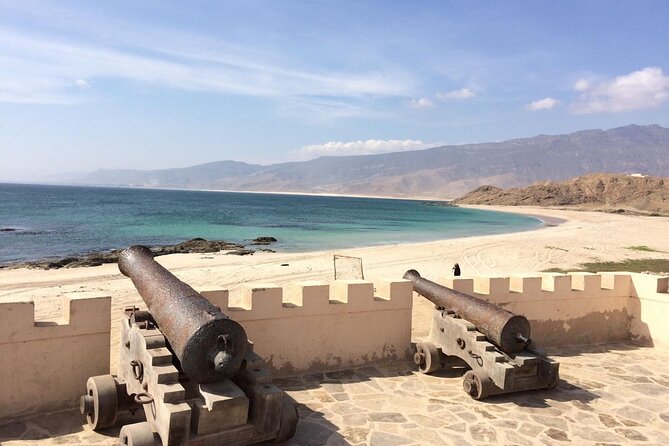
After the souq, the vehicle takes you to Mutrah Fort for about 15 minutes. The fort occupies a high position above the natural harbor, giving it a clear view over Mutrah and the surrounding territory.
Its location explains its purpose. From the hills, defenders could watch the harbor and approach routes, while the elevated position made the fort difficult to attack. You are not given an extended fort visit, so expect a brief stop for views and photographs rather than a long exploration of the interior.
This short pause works well after the souq. It shifts your attention from market lanes to the geography of the harbor and hills. You can better understand why Mutrah developed where it did, and why control of this inlet mattered.
If you want a detailed fort visit, the 15-minute schedule may feel tight. For a first orientation to Muscat, it is enough to see the site and hear its purpose from the guide.
Al Alam Palace in Old Muscat
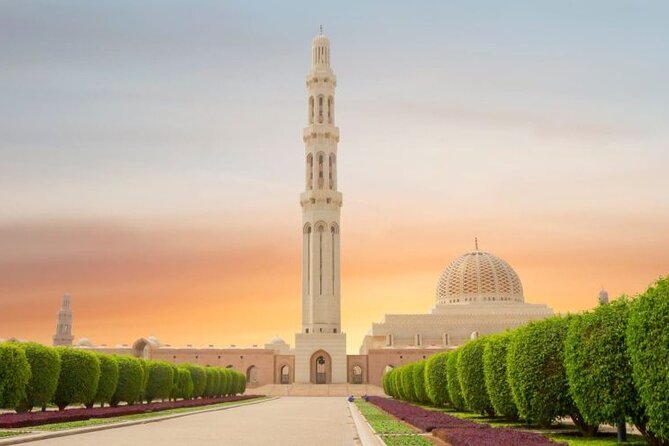
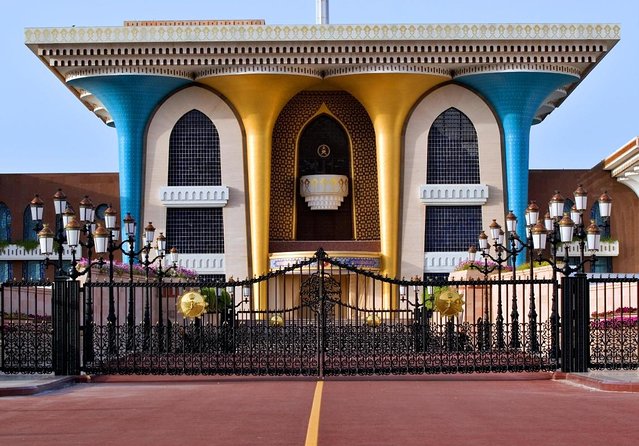
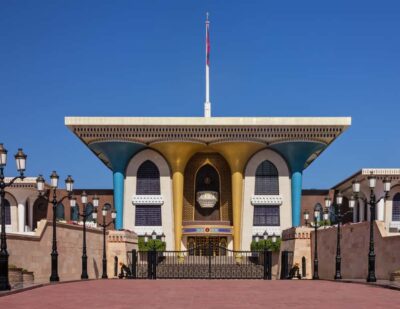
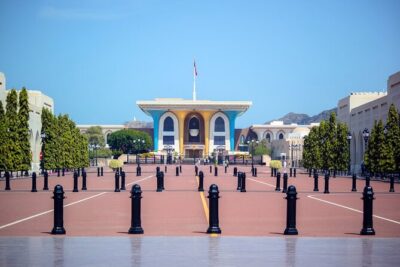
The route then enters Old Muscat for a 20-minute stop at Al Alam Palace, also called the Palace of the Flag. It served as a ceremonial palace for Sultan Qaboos and is one of six sultanic residences.
The palace has more than 200 years of history and was built during the rule of Imam Sultan bin Ahmed, described as the seventh direct grandfather of Sultan Qaboos. Its role is ceremonial, so the exterior is the focus of the visit.
This stop gives the tour a strong sense of Oman’s royal identity. The palace is not presented as an ordinary residence or a museum, and you should not expect to wander through its rooms. Instead, you see the setting, the formal architecture, and the position of the palace within Old Muscat.
A guide is especially useful here because the building’s meaning is tied to Oman’s modern royal era as well as its earlier rulers. The stop is short, but it connects the city’s present-day identity with its long line of leadership.
Al Jalali and Mirani forts at the harbor
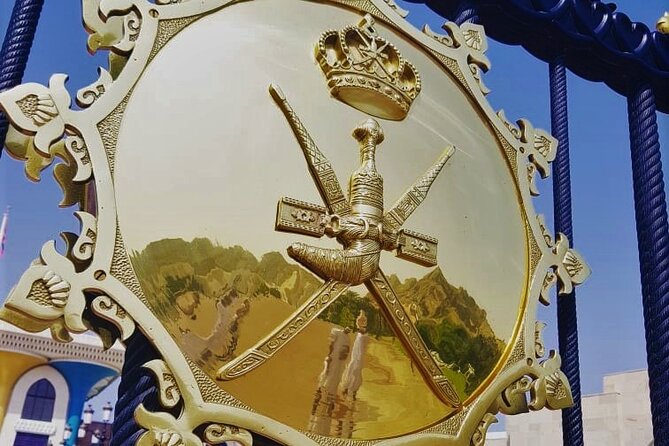
The final two stops are Al Jalali Fort and Mirani Fort, both in the harbor area of Old Muscat. Each receives about 10 minutes, so this is a paired photo and explanation stop rather than a full fort tour.
Al Jalali Fort, also known as Ash Sharqiya Fort, was built by the Portuguese in the 1580s to protect the harbor after Muscat had been attacked twice by Ottoman forces. Omani forces took it in 1650, and it was later rebuilt after periods of conflict that included Persian captures in the 18th century.
Fort Al-Mirani was also originally built by the Portuguese. Together, the two forts frame the harbor and show how strongly Muscat’s position shaped its past. Their walls were not placed at random. They guarded the entrance to a valuable port and watched over the old city.
The drawback is access. The schedule gives you only 10 minutes at each fort, and the supplied details do not state that you can enter either one. Plan to view them from the permitted public area and listen to the guide’s explanation. The reward is the setting: these are among Muscat’s most striking historic views, especially when seen as a pair.
What the guide and vehicle add
The tour includes an English-speaking Omani guide, bottled water, fuel, and transport in a comfortable four-wheel-drive vehicle. A salon car is listed for groups of two. Pickup and drop-off are available at hotels, the port, and the airport within the Muscat area.
The private format is important. You can ask questions about the mosques, forts, royal buildings, and local customs without trying to hear over a large group. You may also have more control over photo pauses, though the published stop lengths still provide the basic framework.
Several guides are associated with especially strong service on this experience. Said Al Kiyumi is described as friendly, clear, and entertaining. Saif Al Mayyahi is praised for his warm manner and explanations of Muscat and Mutrah. Waleed is associated with patient, thorough introductions to the city, while Mohammed is described as prompt, hospitable, and strong on the history of each place. Abdul is also associated with explanations of Muscat’s buildings and local tea and bread.
You cannot assume a particular guide will be assigned, so ask when booking if a named guide matters to you. The guide’s personality will shape the tour, especially because several stops are brief and depend on spoken explanation rather than long independent visits.
The practical service also extends beyond sightseeing. One guide helped a family find a restaurant before returning them, and another stayed beyond the expected time to help with a later transfer. Those gestures are not guaranteed, but they show why a private tour can be useful when your schedule is complicated.
Is $115 per person fair value?
At $115 per person, this is not the cheapest way to see Muscat. It includes a private vehicle, an English-speaking Omani guide, fuel, bottled water, and pickup and drop-off within the Muscat area. Those inclusions matter if you would otherwise pay for several separate taxis or arrange a private driver yourself.
The value is strongest for first-time visitors, cruise passengers, families, and people with only one afternoon. You get a sensible sweep of the city without spending time negotiating transport. A private group also makes the price easier to justify when several people share the vehicle, though the published rate is per person.
You must add $8 if you want the Royal Opera House admission. Also remember that the Sultan Qaboos Grand Mosque is only a photo stop on this afternoon departure. If you want a long museum visit, extensive shopping, or interior access at every site, this route will feel more like an orientation than a full cultural program.
The tour is often booked about 35 days ahead, which is a useful sign for planning. I would reserve early if your Muscat stay is short, then confirm pickup details and the exact timing before arrival.
Who should book this afternoon tour?
I would choose this tour if you want a broad first look at Muscat and prefer having an Omani guide explain what you are seeing. It suits families particularly well because the private vehicle removes the strain of moving children between distant sites, and the guide can adjust the pace more easily than a large group outing.
It is also a good fit for port and airport schedules because pickup and drop-off are offered in the Muscat area. Still, give yourself a safety margin. The listed stops take several hours before driving time, and traffic or an extended conversation can affect the finish.
You may want a different plan if the inside of Sultan Qaboos Grand Mosque is your top goal. An afternoon tour cannot provide that. You may also prefer a longer dedicated souq visit or a fort-focused tour if you want to explore fewer places in greater detail.
Free cancellation is available up to 24 hours before the 3:00 pm start for a full refund. Changes made within 24 hours are not accepted, and poor weather or failure to meet the minimum number of participants can lead to a different date, another experience, or a refund.
Should you book it?
Book this Muscat city tour if you value private transport, local explanation, and efficient sightseeing more than long visits inside individual monuments. The route gives you mosques, modern culture, an old market, royal buildings, and Portuguese forts in one afternoon.
I would book it for a first visit, a short stop in Muscat, or a family group that wants practical help. I would skip it only if you need the Grand Mosque interior, a slow market expedition, or extensive time at the forts. For most short stays, it is a useful city introduction, provided you understand that the afternoon mosque visit is for photographs only.
FAQ
What time does the tour start?
The tour starts at 3:00 pm local time.
How long does the tour last?
It is sold as a half-day tour. The scheduled stop times add up to about 3 hours and 15 minutes, before driving time between locations is included.
Is the Sultan Qaboos Grand Mosque open during this tour?
The mosque is open only from 8 to 11 am for visits, so the afternoon tour includes a photo stop rather than an interior visit.
Is the Royal Opera House admission included?
No. Admission to the Royal Opera House costs an additional $8.
What is included in the price?
The price includes bottled water, an English-speaking Omani guide, pickup and drop-off within the Muscat area, a comfortable four-wheel-drive vehicle, fuel, and a salon car for two people.
Where can pickup and drop-off take place?
Pickup and drop-off are offered at hotels, the port, and the airport in the Muscat area.
Is this a private tour?
Yes. Only your group participates in the activity.
Can most people participate?
The activity states that most people can participate and that it is near public transportation.
How much does the tour cost?
The listed price is $115 per person.
Can I cancel for a full refund?
Yes. You can cancel at least 24 hours before the start time for a full refund. Cancellations or changes made less than 24 hours before the start time are not refunded or accepted.
Just added around Muscat
- Wadi Shab &Bimmah Sinkhole &Heart shaped Cave &Pebble Beach★ 5.0 · 5 reviews
- Wahiba Sands and Wadi Bani Khalid Full-Day Tour from Muscat★ 4.6 · 3 reviews
- Try scuba Diving Tours To Daymaniyat Islands.★ 5.0 · 12 reviews
- Watching Sunrise in Wahiba Sand Desert – Early Morning Tour★ 5.0 · 7 reviews
- Wahiba Sands&Wadi Bani Khalid desert Safari(Muscat tours)★ 4.5 · 6 reviews
- From Muscat Wadi Shab and Bimmah Sinkhole Tour★ 5.0 · 6 reviews
- Wahiba Sands and Desert Safari from Muscat★ 5.0 · 3 reviews
- Wahiba Sands&Wadi Bani Khalid desert Safari(Muscat tours) : Private tours★ 4.5 · 6 reviews
City Tours, compared.
Half-Day Private Muscat City Tour – Top Landmarks in Just 4 Hours
Read our review →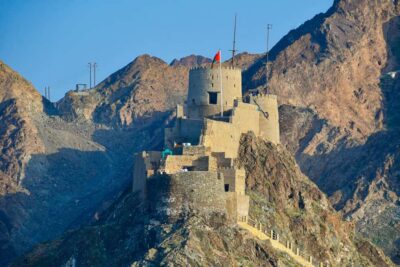

Half-Day Private Muscat City Tour- with a local guide
Read our review →Browse the lists this tour appears in