
Reviewed · CITY TOURS
Historical Salalah City Tour
Salalah’s story is easier to understand when you connect its frankincense trade with its mosques, royal sites, markets, and fruit plantations. This half-day outing does exactly that, moving from Sultan Qaboos Mosque to the Al Baleed archaeological area, Sultan Qaboos Palace, Al Hosn Souq, and Salalah’s fruit stalls.
I like the local English-speaking guide, especially when you are paired with someone such as Salem, Amin, or Rashid, all praised for clear explanations and a strong knowledge of Salalah. I also like the chance to taste a fresh coconut drink rather than spending the whole morning looking at monuments. The main drawback is that the tour can feel rushed, and one reported outing lasted about two and a half hours on site, plus roughly an hour of hotel transfers.
Key points at a glance
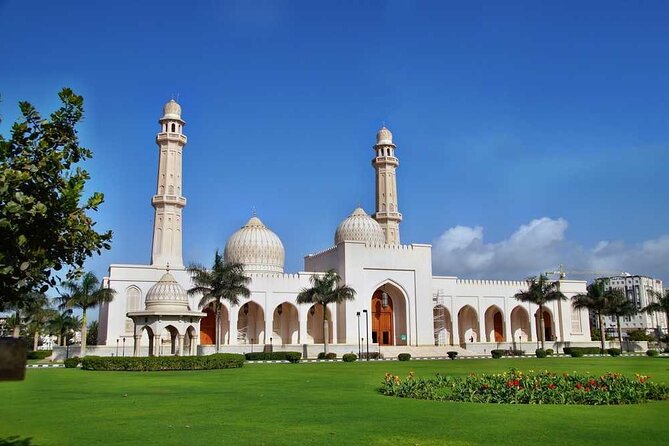
- Sultan Qaboos Mosque: Visit during its Saturday to Thursday opening period, from 8:30 to 11:00, with strict clothing rules.
- Al Baleed and the Frankincense Land Museum: Connect Salalah’s ancient trading past with the development of modern Oman.
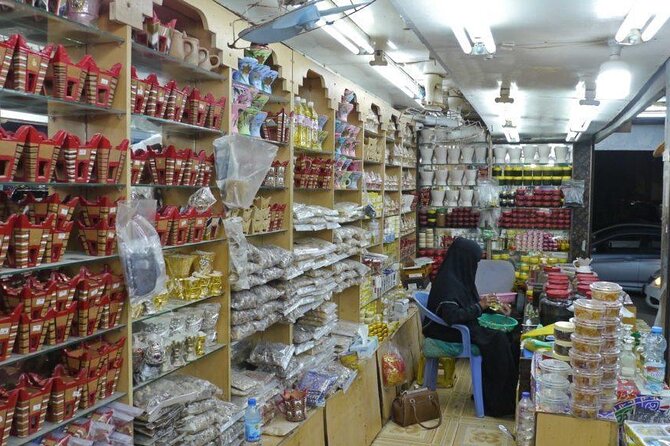
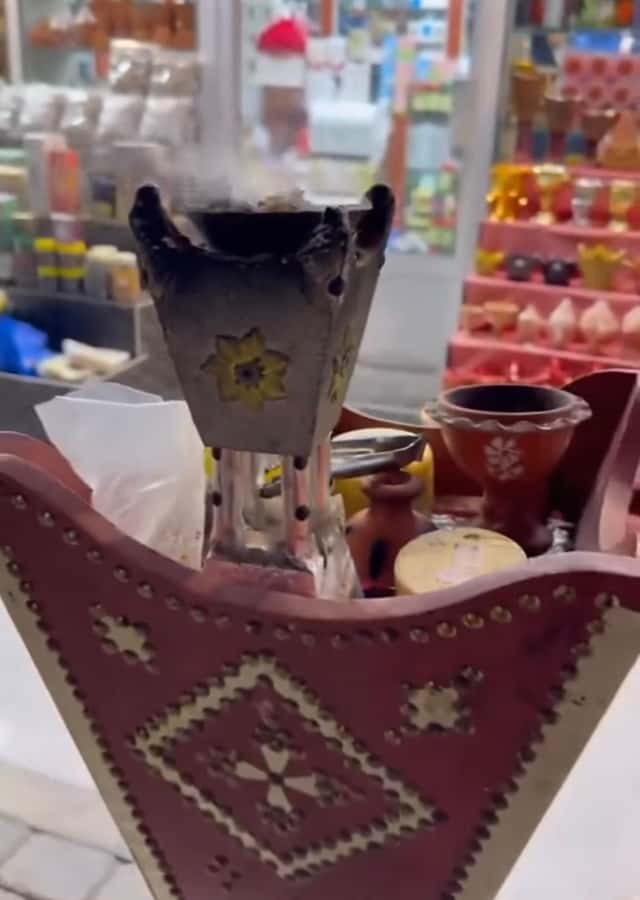
- Al Hosn Souq: Shop for frankincense and handmade gifts in Salalah’s oldest local market.
- Royal Salalah: Stop outside Sultan Qaboos Palace for photographs and pass Al Nahdhah Tower.
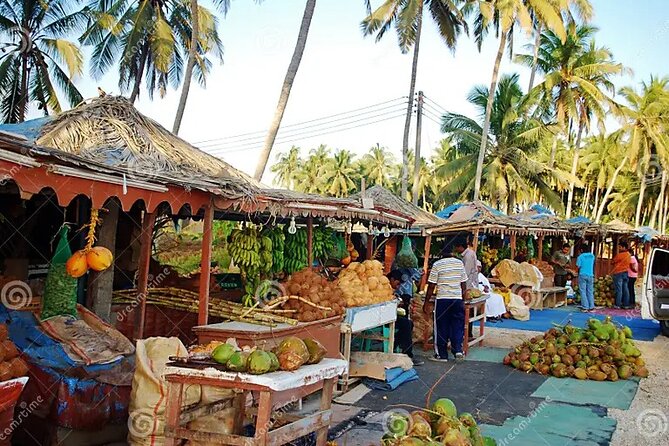
- Local flavor: Drive through fruit plantations and finish with a complimentary coconut drink.
- Flexible booking: You can reserve now and pay later, with cancellation up to 24 hours before departure for a full refund.
What this Salalah tour is really about
This is not a wilderness trip into Dhofar’s mountains. It is a compact introduction to Salalah’s city life and cultural landmarks, designed for a half-day schedule.
The route brings together places that can feel unrelated if visited separately. The mosque shows present-day religious life. The palace recalls Oman’s recent royal era. The souq reflects the trade that helped make Salalah famous. Al Baleed provides the ancient chapter, while the fruit market gives you a taste of everyday local commerce.
That mix gives the tour its value. You are not only ticking off a mosque, museum, and market. You are seeing how religion, royal rule, trade, archaeology, and agriculture fit into one city.
The guide is important here. An English-speaking local guide can explain customs at the mosque, describe the meaning of frankincense, and give context to the palace and museum. The strongest guide reports describe Salem, Amin, and Rashid as friendly, clear, and willing to answer questions. The quality of the day will depend partly on which guide you receive, so ask questions early and make it clear which stops matter most to you.
A few more Salalah trips to weigh up
- Salalah City Tour with History, Culture, Souq Shopping, Halwa
★ 4.5 · 39 reviews - Historical Salalah City Tour with Culture, Food & Shopping
★ 4.6 · 20 reviews - Historical Salalah City Tour
★ 5.0 · 4 reviews
Starting at Sultan Qaboos Mosque
The mosque is usually the first major stop, and it sets the tone for the cultural side of the morning. Your guide explains local traditions and how prayer takes place, then you have some time to look around independently.
The visit is only possible from Saturday through Thursday, 8:30 to 11:00. The mosque is closed to visitors on Fridays, so check your chosen date before booking. If the tour falls outside the visiting window, this part of the program may not work as planned.
Clothing is not a minor detail. Men and women must wear fully covered clothing. Bring a scarf, long-sleeved shirt, and long pants. Shorts, short skirts, tight clothing, and see-through clothing are not allowed. Women should have a scarf available, along with long sleeves and trousers or another fully covering outfit.
I would dress for the mosque before leaving your hotel rather than carrying a last-minute change of clothes. This saves time and avoids being turned away. The clothing rules also make this a useful introduction to local religious etiquette, not simply a photo stop.
A reported visit allowed about 20 minutes of free time after the guide’s explanation. That is enough for a look around, but not an extended architectural study. If you want a long, quiet visit, this tour may not provide it.
Sultan Qaboos Palace and Salalah’s royal past
The next stop is Sultan Qaboos Palace, seen from outside. You should think of this as a photograph and brief explanation stop, not a palace tour. The guide shares information about Sultan Qaboos, his successor, and the royal emblem.
Sultan Qaboos was born in 1940, and the palace adds a modern political layer to the older trading history you will encounter later at Al Baleed. Since the interior is not part of the visit, the stop works best if you want a quick look at Salalah’s royal setting and a little context about Oman’s recent leadership.
You may also pass Al Nahdhah Tower during the city drive. These short driving sections matter because they help you see Salalah as a working city rather than a collection of isolated attractions.
Do not expect a long palace presentation. The stop is brief, and its value comes from the guide’s explanation and the contrast with the archaeological site later in the day.
Frankincense at Al Hosn Souq
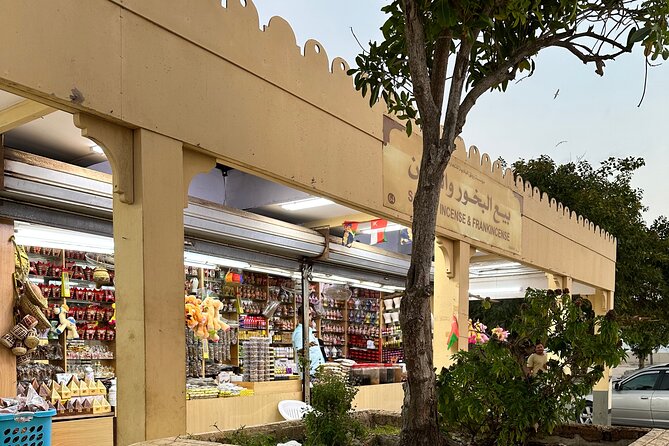
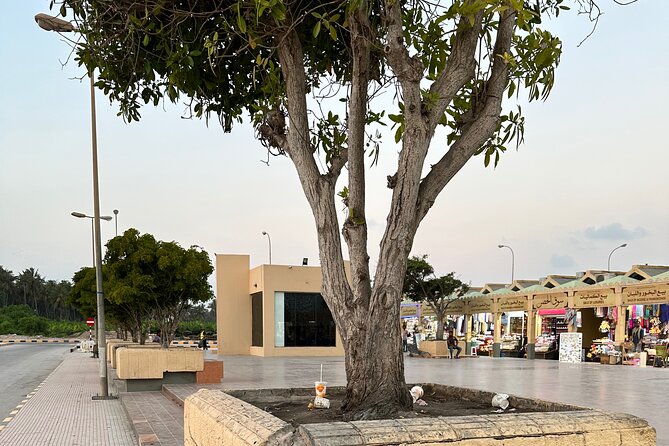
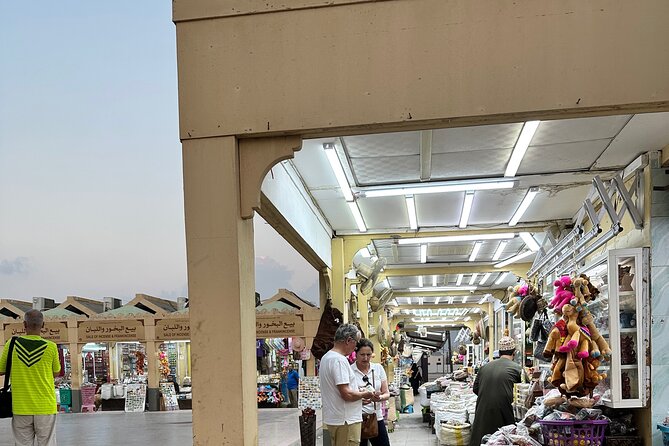
Al Hosn Souq, also called Haffa Souq in the tour description, is the shopping stop. It is described as Salalah’s oldest local market for frankincense and handmade gifts.
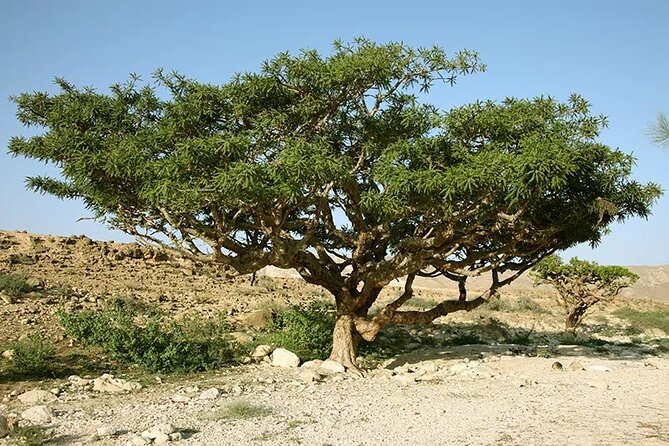
Frankincense is central to Dhofar’s identity. The resin comes from trees in southern Oman and has been traded for centuries. At the souq, you can browse different frankincense products and local items while your guide explains how the material is used and why it matters to the region.
There may also be tea during the market visit. You receive some free time to browse, but the amount can vary. One account describes about 15 minutes of independent time, which is enough for a quick look but may feel short if you want to compare products or shop carefully.
This is where I would keep your expectations practical. The souq is useful for seeing local commerce and buying a small gift, but it is not presented as a long shopping session. If you find something you want, ask about the price and allow yourself enough time to decide.
The tour may also pass Al Haffa Beach or the nearby market area. The exact balance between the market, beach, and other city sights depends on the day’s timing, so treat these as part of the drive and city orientation rather than guaranteed long stops.
Same coast and mountains, a completely different day out:
- East Salalah Mountain Safari, Wadi Darbat, Beach, Camels, Dunes
★ 5.0 · 206 reviews - Salalah: Wadi Darbat, Jabal Samhan, Baobab, Mirbat Sand Dune
★ 4.6 · 178 reviews - Mountain Safari Private Tour
★ 5.0 · 105 reviews - Sunset Desert Safari Salalah Tour in Rub Al Khali – Empty Quarter
★ 5.0 · 91 reviews
Al Baleed Archaeological Site and Museum
The Al Baleed stop gives the tour its strongest historical anchor. The site is part of the UNESCO-listed Land of Frankincense, and the Museum of the Land of Frankincense explains Oman’s past and its connection to the frankincense trade.
This is more than a small local museum visit. The guide is expected to help you connect ancient Oman with the modern country, including the difference between older ways of life and present-day Oman. That explanation can make the displays easier to understand, particularly if you do not already know why Dhofar played such an important role in regional trade.
You will have time to explore the museum and archaeological area, though the exact amount is not fixed in the supplied details. One account found the museum especially useful for understanding how Oman developed, but also noted that the guide encouraged the group to return sooner than expected. That is a fair warning: if the museum is your main reason for booking, tell the guide at the start.
The site is best for you if you like context and archaeology more than entertainment. It may feel less exciting than the souq or fruit market, but it is the stop that explains why Salalah has such a strong connection with perfume, trade, and frankincense.
Fruit plantations and the coconut stop
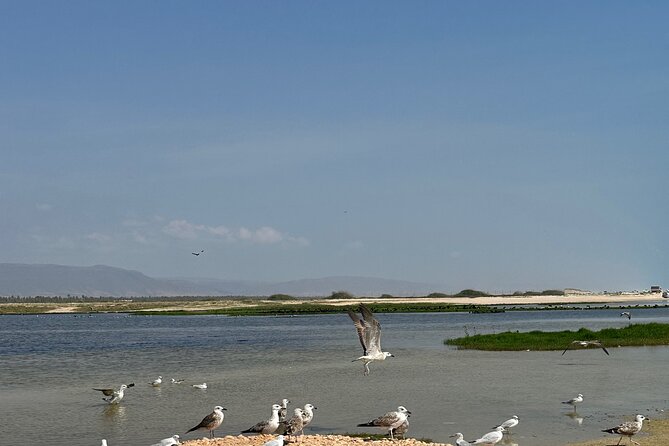
The drive through Salalah’s plantations adds a welcome change of pace. The route includes fruit-growing areas and may pass plantations such as Ain Razat. The city is known for coconut and other tropical produce, and these drives show a side of Dhofar that you will not see in the museum.
The tour ends with a complimentary coconut drink at Salalah Fruit Market. This is a small inclusion, but it gives the day a more direct local flavor. Instead of only hearing about agriculture, you get to taste one of the products associated with the area.
The setting may be simple. One account described a rough stall area and a less polished stop, so do not expect a stylish café or organized food attraction. That is part of the trade-off: the stop may feel informal, but it is closer to a working local refreshment point than a carefully staged tourist venue.
The itinerary also refers to beautiful fruit plantations and fruit shops. Ain Razat is mentioned in the driving route, but the exact length of the plantation visit is not specified. I would regard this as a scenic portion of the transfer, with the coconut drink as the clearer hands-on experience.
Guide quality and the shape of the day
The guide can make this tour either a useful introduction or a quick ride between stops. The best fit is someone who explains rather than simply points. Specific guide names connected with strong experiences include Salem, Amin, and Rashid. Descriptions of their work emphasize clear English, local knowledge, patience, and careful answers to questions.
The company promises an experienced English-speaking guide and newer vehicle models with comfort features. That matters in Salalah, where even a city tour includes driving between separate sites. The vehicle is meant to keep the half-day comfortable, though the supplied information does not specify the exact vehicle type or group size.
A particularly positive feature is the chance to have a small group. One reported outing had only two participants plus the driver. That can make it easier to ask questions and adjust the pace, but it also means the guide may not always be the person driving or leading every stop.
The schedule can be compact. The advertised format is half a day, while one account described about two and a half hours of touring, followed by around an hour spent going to and from the hotel. That is not necessarily a problem if you want a short orientation, but it is worth knowing if you expect a full morning at every attraction.
I would speak up if you want more time at Al Baleed or the souq. The itinerary covers several stops, and the only way to fit them into a half-day is to keep each visit fairly controlled.
Is $104 per person a fair price?
At $104 per person, this is not the cheapest way to see Salalah. The value depends on what is included in your alternative.
You are paying for a private or small-group style city experience with an English-speaking local guide, hotel transport as part of the outing, a mosque visit, palace photo stop, souq, museum, plantation drive, and coconut drink. The guide’s explanations are the main reason to choose it over arranging independent taxi rides.
The price is easier to justify if you have limited time, want help with mosque etiquette, or prefer someone else to arrange the route. It also suits you if the history of frankincense matters as much as the sightseeing.
The value is weaker if you mainly want a long museum visit or extended souq shopping. A short day with limited free time can feel expensive, especially if your group spends a large share of the schedule driving to and from the hotel.
Before booking, decide what you want from Salalah. For a first look at the city and its main cultural stops, the package is reasonably focused. For a slow, detailed exploration, you may want a longer or more specialized outing.
You can reserve now and pay later, which helps if your schedule is still changing. Cancellation is allowed up to 24 hours before departure for a full refund. Those terms reduce the risk, but they do not change the need to check the mosque opening day and dress requirements.
Who should book this experience?
I would choose this tour if you are visiting Salalah for the first time and want a single cultural overview rather than separate transport arrangements. It is also a good fit for anyone interested in frankincense, Omani history, religious customs, and local food products.
The tour works well for people who prefer a guide to explain what they are seeing. It is less suited to you if you want to set your own pace, spend an hour shopping, or linger over every museum display.
Families and mixed-interest groups may like the variety. The mosque, palace, market, museum, and coconut stop provide different kinds of experiences, so the day does not depend on one attraction.
You should be comfortable with a fairly brisk schedule. The tour is designed to show several places in limited time, not to provide long stays at each one.
Should you book the Historical Salalah City Tour?
Book it if you want a guided introduction to Salalah that links religion, royal history, frankincense, archaeology, and agriculture in one half-day. The strongest reasons are the local guide, the Al Baleed museum and archaeological site, and the chance to see everyday market life rather than only major monuments.
Think twice if $104 feels high for a short tour, or if you want lengthy free time at the souq and museum. Ask at the start for the stops you value most, and arrive dressed for the mosque with a scarf, long sleeves, and long pants.
For a first visit with limited time, this is a practical way to get your bearings and understand what makes Salalah different from other Omani cities. Just treat it as a well-packed introduction, not a slow, full-day study of Dhofar.
FAQ
How long is the Historical Salalah City Tour?
It is advertised as a half-day city tour. One reported outing included about two and a half hours of touring plus roughly one hour of hotel transfers.
What language is the tour offered in?
The tour is offered in English with an English-speaking local guide.
Which mosque does the tour visit?
The tour visits Sultan Qaboos Mosque, where the guide explains local traditions and religion.
When is Sultan Qaboos Mosque open for this visit?
The mosque is open for this tour from Saturday to Thursday, between 8:30 and 11:00. It is closed on Fridays.
What clothing should I wear to the mosque?
Bring a long-sleeved shirt, long pants, and a scarf. Shorts, short skirts, tight clothing, and see-through clothing are not allowed.
Can women enter the mosque without a scarf?
No. Women should bring a scarf and wear fully covering clothing, including long sleeves and pants.
Is Sultan Qaboos Palace open for an interior visit?
No. The palace is visited from outside as a photo stop, with information about Sultan Qaboos, his successor, and the royal emblem.
What is included at Al Hosn Souq?
You visit the old local market for frankincense and handmade gifts. Tea may also be provided during the souq visit.
Does the tour include a drink?
Yes. The tour includes a complimentary coconut drink at Salalah Fruit Market.
Can I cancel the tour for a full refund?
Yes. You can cancel up to 24 hours in advance for a full refund. You can also reserve the tour and pay later.
Just added around Salalah
- West of Salalah private tour – fascinating mountains and beaches★ 5.0 · 9 reviews
- West Salalah Beaches and Blowholes★ 5.0 · 7 reviews
- Where Sea Meets Rock: A Scenic Journey to West Salalah’s Shores★ 5.0 · 5 reviews
- Private tour – Empty Quarter desert adventure – Wadi Dawka + Ubar★ 5.0 · 5 reviews
- West Salalah Tour by VisitSalalah★ 5.0 · 6 reviews
- Salalah City Tour: Discover Salalahs Treasures with a Local Guide★ 5.0 · 4 reviews
- Full-Day Private Salalah West Tour with Lunch★ 5.0 · 12 reviews
- Explore Samhan Mountain – Half-Day Getaway with Lunch Included.★ 5.0 · 10 reviews
City Tours, compared.
Half-Day Private Muscat City Tour – Top Landmarks in Just 4 Hours
Read our review →

Half-Day Private Muscat City Tour- with a local guide
Read our review →Browse the lists this tour appears in