
Reviewed · EMPTY QUARTER TOURS
Empty Quarter Desert Sunset tour
The best part of this Salalah outing is the change in scenery. You begin among the ancient frankincense trees of Wadi Dawkha, continue to the mysterious ruins of Ubar, then finish where the road gives way to enormous dunes and a wide-open sunset.
I like the variety here, and I like the fact that this is a private tour rather than a set group excursion. Guides including Mohamed, Alawi, Abdullah, and MO Baomar are praised for friendly service, family care, photography help, and flexibility. The main drawback is the long day in a vehicle. You spend about eight hours on the road, and Ubar is best appreciated with a guide who can bring its story to life.
At a glance: what makes this day special
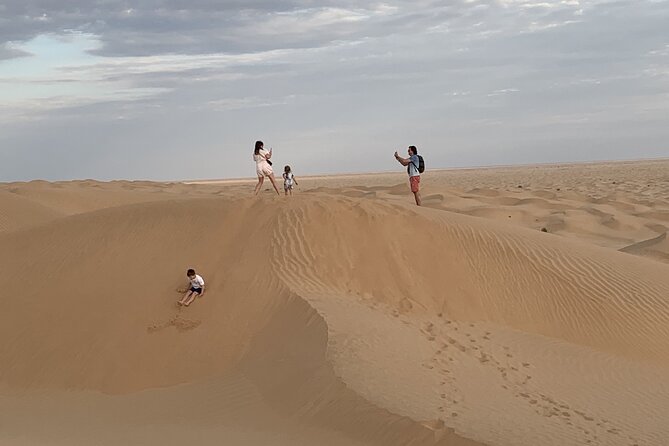
- Three very different settings: See protected frankincense groves, an archaeological site, and the giant dunes of the Rub’ al Khali in one day.
- Private travel: Only your group takes part, making it easier to adjust the pace and give special attention to children or older family members.
- A real sunset finish: The Empty Quarter is the main event, with 4×4 driving across sand and broad views as the light fades.
- Frankincense in its home region: Wadi Dawkha helps explain why this small tree resin shaped trade, worship, perfume, and medicine for centuries.
- Possible camel encounters: Several accounts describe baby camels, a camel farm, and a taste of fresh camel milk.
- Good guide support: Mohamed, Alawi, Abdullah, and MO Baomar are names associated with the operation and are noted for warmth, local explanations, and taking photographs.
Why the Empty Quarter feels different from other Oman deserts
Oman has more than one desert experience, and the Empty Quarter is not simply a repeat of Wahiba Sands. The Rub’ al Khali is one of the world’s largest continuous sand deserts, spreading across Oman, Saudi Arabia, Yemen, and the United Arab Emirates.
The Omani section near Salalah is known for very large dunes. Some rise as high as 800 feet, or about 240 meters. That scale changes the feeling of the trip. Instead of a few soft ridges beside a camp, you get long lines of sand stretching toward the horizon.
I like this tour because the desert is saved for the end. By then, you have already seen the trees that made Dhofar famous and the settlement linked to old trade routes. The sunset is not an isolated photo stop. It becomes the final scene in a day about water, trade, survival, and the movement of frankincense across Arabia.
The private format also matters. A good desert day depends on timing and mood. You may want more time for photographs, less time at a stop, or a gentler pace for a child. A private vehicle gives your guide more room to respond than a large coach tour.
More Empty Quarter Tours in Salalah:
- Sunset Desert Safari Salalah Tour in Rub Al Khali – Empty Quarter
★ 5.0 · 91 reviews - Salalah: Sunset Desert Safari – Rub Al Khali – Empty Quarter
★ 4.6 · 79 reviews - Desert Safari, Sunset & Sand Bashing (Rub Al Khali Desert)
★ 5.0 · 44 reviews
Wadi Dawkha: seeing the frankincense tree up close
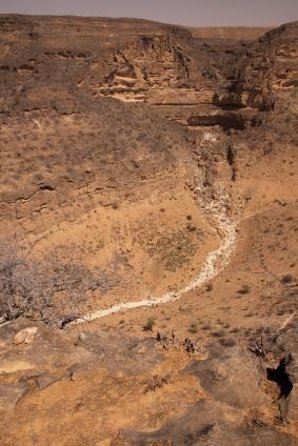
The first major stop is Wadi Dawkha, a protected frankincense tree reserve near Salalah. It forms part of the Land of Frankincense World Heritage property and is sometimes called Frankincense Park.
This is not a polished city park with cafés and amusements. It is a natural area set aside to protect Boswellia sacra, the tree that produces frankincense resin. The trees can look modest and weathered, which is part of the lesson. A small, hardy tree supported a major regional trade for centuries.
Frankincense was used in religious ceremonies, perfumes, traditional medicine, and other daily practices. At Wadi Dawkha, I would pay attention to the shape of the trees and the dry ground around them rather than expect a grand monument. The value is in seeing the source of a material you may have encountered only as incense or perfume.
The scheduled visit is about two hours, which gives the stop real weight. You should have time to walk among the groves, take photographs, and hear about the tree’s place in Dhofar’s economy and culture. If your guide is Mohamed, Alawi, Abdullah, or another member of the same team, ask questions here. This is the stop where local explanation adds the most.
The practical point is simple: bring water, sun protection, and shoes suited to uneven outdoor ground. Admission is listed as free, but the stop still matters because it provides the cultural setting for the rest of the day.
Ubar: ruins, wells, and the story of a lost city
The next stop is Ubar, an archaeological site connected with the legendary city mentioned in ancient texts. The site is believed to contain the remains of a settlement tied to frankincense trade routes.
You will see the remains of buildings, walls, and wells. These fragments suggest a working settlement rather than a decorative ruin. Ubar’s importance comes from what it tells you about movement through the desert: people, goods, water, and ideas all had to travel across difficult ground.
The site is also a good counterpoint to Wadi Dawkha. At the reserve, you see the natural source of frankincense. At Ubar, you see the kind of place that may have handled or benefited from that trade. Together, the two stops give the desert a human story.
About three hours are allowed for Ubar, so this is not a quick roadside photograph. That length may appeal to anyone interested in archaeology, but it could feel slow if your only goal is the sunset. I would use the time to ask your guide what is known, what is uncertain, and how the site fits into the old trade network.
The word legendary can create unrealistic expectations. Ubar is not presented as a complete buried city waiting under the sand. You are visiting archaeological remains and learning about the research and theories connected with them. The pleasure is in separating the old stories from the evidence still visible on the ground.
Admission is free. Since the site is remote and the desert portion comes later, comfortable clothing and water remain useful.
Camels, camel milk, and a family-friendly pause
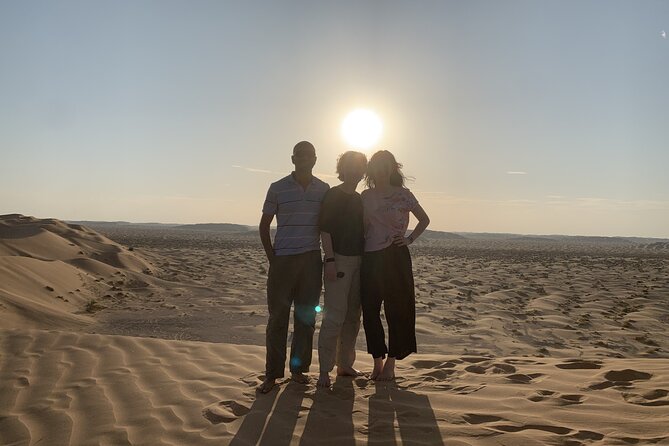
Although the core schedule lists Wadi Dawkha, Ubar, and the Empty Quarter, several accounts of the outing also describe a camel farm or camel stop. Baby camels were a particular hit with children, and some people tasted fresh camel milk.
I would treat this as a possible part of the day rather than a guaranteed feature. The supplied tour details do not give a fixed camel-farm duration, so ask for confirmation when you book if this is important to you.
For families, this can be a welcome change from ruins and long drives. A child may connect more quickly with a young camel than with an archaeological explanation. Adults get a small look at a living part of desert culture rather than only a scenic drive.
The camel milk tasting is also a local detail that makes the day feel less like a generic dune excursion. Still, tastes vary, and nobody should book the tour solely for this stop. The main promise is the desert, frankincense reserve, and Ubar.
A few more Salalah trips to weigh up
- Sunset desert safari tour in Salalah(private tour)
★ 5.0 · 58 reviews - Magical Night Stay in Rub Al Khali Empty Quarter Desert Salalah
★ 5.0 · 35 reviews - Salalah: Sunset desert safari tour in salalah(private tour)
★ 4.9 · 21 reviews - Desert Sunset Magic – Salalah Empty Quarter Experience
★ 5.0 · 19 reviews
Crossing the Empty Quarter by 4×4
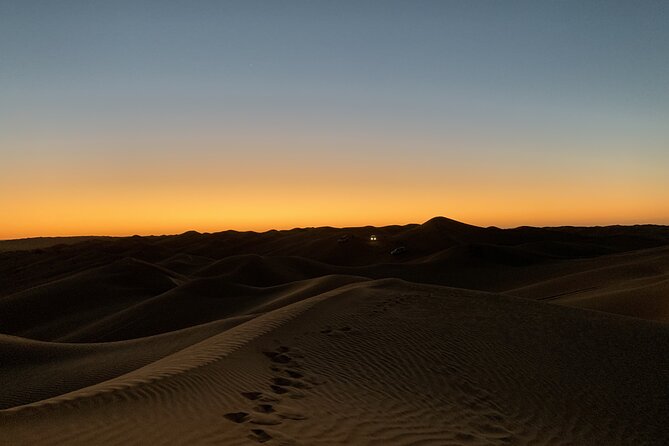
The final major stop is the Empty Quarter, with about three hours in the desert. This is where the tour shifts from history to motion and open space.
The 4×4 drive across the dunes is one of the most memorable parts of the day. Sand driving can be playful and exciting as the vehicle climbs and descends the slopes, but the exact style depends on the driver, conditions, and what your group wants. If you prefer a calm ride, say so. If you want more of the dune-driving element, ask your guide what is suitable.
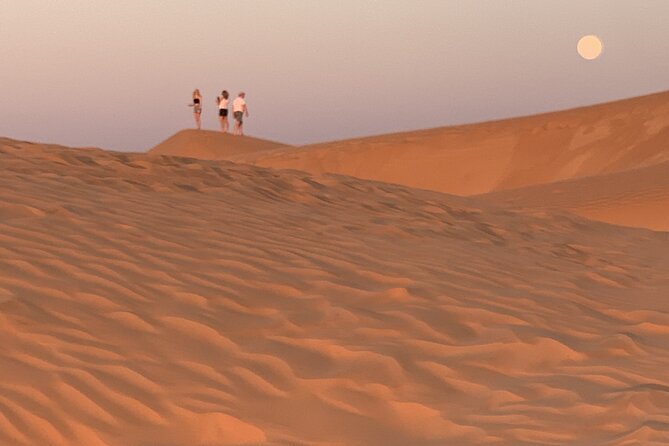
The dunes may rise to about 800 feet, creating views that are far larger than those around town. Light changes quickly on sand. A ridge that looks pale in the afternoon can turn gold, orange, and then muted pink as the sun drops.
Photography is a major strength of this experience. Several people describe guides taking excellent pictures and even arranging turbans for photographs. That is a useful service because it lets you enjoy the setting instead of spending the whole sunset managing a phone.
The desert can also be physically demanding. You may be stepping onto soft sand, climbing a dune, and sitting outside as temperatures change after sunset. I would wear closed shoes, carry water, protect your head from the sun, and keep a light layer handy for the return journey.
The Empty Quarter is not a place for a rushed photo and immediate departure. The schedule allows roughly three hours, so you can enjoy the dunes, wait for the sunset, and take in the stillness after the vehicle stops.
The sunset: the emotional center of the trip
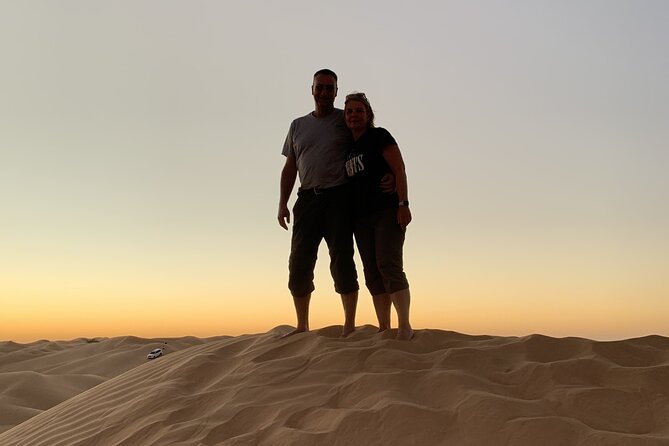
The sunset is the reason many people choose this tour instead of a daytime desert drive. In the Empty Quarter, there are few visual distractions. The sun appears to sink into layers of sand, and the changing shadows make the dunes look different from one minute to the next.
I like that the sunset comes after the earlier stops. You have had time to learn why frankincense mattered and why an ancient settlement could exist in such a dry place. By evening, the empty horizon feels less empty. It connects the modern drive with the people who crossed these routes long before air-conditioned vehicles.
After dark, the sky may be another highlight. Accounts of the experience include seeing stars, though the exact conditions will depend on weather and visibility. Do not treat this as an astronomy tour, but do keep your eyes up once the sun is gone.
A sunset is never fully guaranteed. Clouds, dust, or weather can change the view, and the activity requires good weather. If conditions force a cancellation, you can choose another date or receive a full refund.
Guide quality and the value of a private vehicle
The strongest human element is the guide service. Mohamed is repeatedly singled out for kindness, patience, organization, and help with photographs. Alawi is also associated with a family-friendly desert day, while Abdullah and MO Baomar are named as guides who made the outing comfortable and enjoyable.
That matters because the sites are spread out and the day involves more than driving. You need someone who can explain a frankincense tree, give context at Ubar, manage the desert route, and adapt to the needs of your group.
The private setup is especially useful if you are traveling with a parent or child. One account describes a mother and son being carefully driven and supported throughout the day. That does not mean the tour is effortless, but it does suggest that the pace can be handled with personal attention.
A private tour also avoids the social compromise of a large group. You do not have to wait for strangers at every photograph stop, and you can ask for more time where your interest is strongest. The tradeoff is price. At $152.10 per person, this is not the cheapest way to see dunes, especially for a solo visitor. For a small group, the cost may feel more reasonable because the vehicle, guide, and full-day route are shared only within your party.
Who should book, and who may want another plan
I would recommend this tour to you if you want more than a dune ride. It suits people who enjoy combining nature, archaeology, local culture, photography, and a dramatic sunset in one long day.
It is a strong choice for:
- Families who want camels and flexible attention
- Couples looking for a sunset setting
- First-time visitors to Salalah who want several major sights in one outing
- Photographers interested in trees, ruins, dunes, and changing light
- Visitors who prefer a private vehicle to a large group excursion
I would think twice if you dislike long drives or want a slow, resort-style afternoon. The day lasts about eight hours, and the route covers remote places. The three-hour Ubar stop may also feel too long if archaeology is not your interest.
The tour is listed as suitable for most people, but the supplied information does not give a detailed accessibility statement. If you have mobility concerns, contact the operator before booking and explain what you need.
Price, timing, and booking advice
The price is $152.10 per person. I see the value in it when you consider the private format, pickup option, guide service, long duration, and number of major stops. Admission is free at the listed sites, so you are paying mainly for transport, local guidance, time, and access to a remote desert setting.
You should expect to spend most of the day with your guide. The order is logical: frankincense first, archaeology next, and the Empty Quarter at sunset. The tour is booked, on average, 18 days ahead, so I would reserve early if your Salalah dates are fixed.
Confirmation is provided at booking, and a mobile ticket is available. Pickup is offered, but the exact pickup details should be checked when you reserve.
Free cancellation is available up to 24 hours before the start time for a full refund. Cancellations or changes made less than 24 hours before the start are not accepted for a refund. The weather rule is helpful: if poor weather cancels the outing, you can move to another date or receive a full refund.
Should you book the Empty Quarter sunset tour?
Book it if you want the full southern Oman story, not just a quick desert photograph. Wadi Dawkha gives you frankincense trees, Ubar gives you ancient trade and unanswered questions, and the Empty Quarter supplies the big finish with 4×4 dunes and sunset light.
The price makes the most sense for couples, families, or small groups who value a private guide and flexible attention. If you are willing to give up most of a day for the road, this is one of the more complete ways to experience the desert beyond Salalah.
FAQ
Where does the Empty Quarter Desert Sunset tour take place?
The tour begins in Salalah and visits Wadi Dawkha, Ubar, and the Empty Quarter in Oman’s Dhofar region.
How long does the tour last?
The full experience lasts approximately eight hours.
Is hotel pickup available?
Pickup is offered. Check the exact pickup arrangements when booking.
Is this a private tour?
Yes. Only your group participates in the activity.
What is the price?
The listed price is $152.10 per person.
Are admission tickets included?
Admission is listed as free for Wadi Dawkha, Ubar, and the Empty Quarter.
Will I see frankincense trees?
Yes. Wadi Dawkha is a protected reserve for Boswellia sacra frankincense trees and forms part of the Land of Frankincense World Heritage property.
Does the tour include camel encounters?
Several accounts describe a camel farm or camel stop, baby camels, and camel milk. Confirm the exact inclusion with the operator before booking if this is important to you.
What happens if bad weather cancels the tour?
You can choose a different date or receive a full refund if poor weather causes the experience to be canceled.
Just added around Salalah
- West of Salalah private tour – fascinating mountains and beaches★ 5.0 · 9 reviews
- West Salalah Beaches and Blowholes★ 5.0 · 7 reviews
- Where Sea Meets Rock: A Scenic Journey to West Salalah’s Shores★ 5.0 · 5 reviews
- Private tour – Empty Quarter desert adventure – Wadi Dawka + Ubar★ 5.0 · 5 reviews
- West Salalah Tour by VisitSalalah★ 5.0 · 6 reviews
- Salalah City Tour: Discover Salalahs Treasures with a Local Guide★ 5.0 · 4 reviews
- Full-Day Private Salalah West Tour with Lunch★ 5.0 · 12 reviews
- Explore Samhan Mountain – Half-Day Getaway with Lunch Included.★ 5.0 · 10 reviews
Empty Quarter Tours, compared.
Desert Safari, Sunset & Sand Bashing (Rub Al Khali Desert)
Read our review →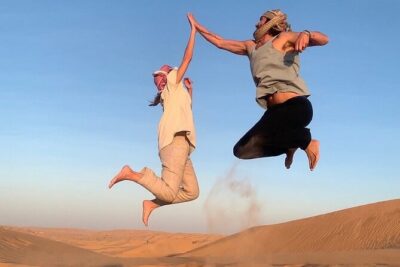
Magical Night Stay in Rub Al Khali Empty Quarter Desert Salalah
Read our review →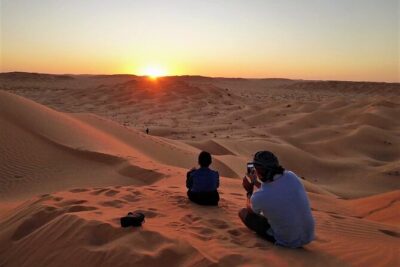
Desert Sunset Magic – Salalah Empty Quarter Experience
Read our review →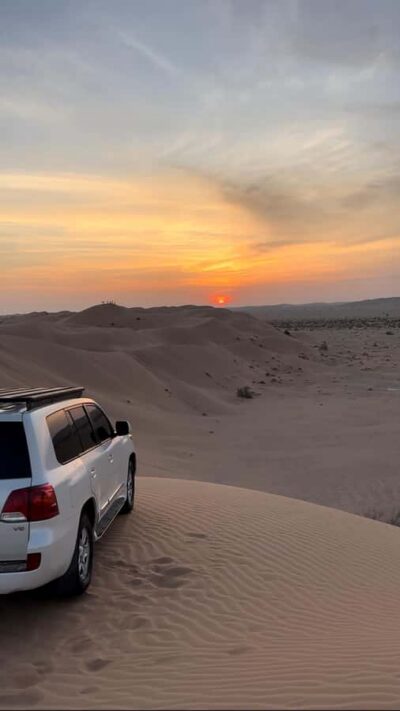
Magical Desert Safari By Land Cruise in Empty Quarter
Read our review →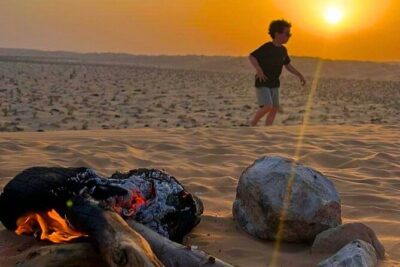
Private Sunset Experience in Empty Quarter Desert
Read our review →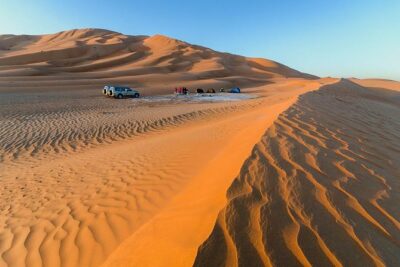
Desert Safari, Sunset & Sand Bashing (Rub Al Khali Desert)
Read our review →
Golden Dunes Getaway: Overnight Safari in Salalah’s Empty Quarter
Read our review →Browse the lists this tour appears in