
Reviewed · SALALAH TOURS
8 Hours of Salalah Best: East & West Private Tour
Salalah’s great advantage is variety, and this private drive packs a lot of it into one day. You move from an old fishing town and an ancient frankincense port to green valleys, sea cliffs, springs, and a beach where waves shoot through rock. It is a strong first look at Dhofar without spending several days arranging separate rides.
I like the private format, which lets you ask for more time at a favorite stop and gives families or small groups their own vehicle. I also like the mix of culture and nature: Taqah Castle and Sumharam give the day a purpose beyond pretty views, while Wadi Darbat and Mughsail supply the big scenery.
The main consideration is pace. Six stops, plus the west and east sides of Salalah, can make this feel like a greatest-hits outing rather than a slow visit. Also check the entrance-fee details before you go, since the information supplied gives different indications about whether Taqah Castle and Sumharam admission is included.
Key points at a glance
- Two sides of Salalah in one outing: The route combines eastern Dhofar sights around Taqah and Sumharam with western Mughsail Beach.
- A private vehicle and guide: Only your group participates, with pickup offered and bottled water provided.
- The best seasonal stop: Wadi Darbat is especially green and busy during the Khareef monsoon.
- Frankincense beyond the museum shelf: You can see frankincense trees growing in dry valleys and walk among them.
- A useful guide-dependent experience: Ahmed, Mehmood, Saeed, and Salim are among the guides named in the supplied feedback, with flexibility and local food suggestions praised.
- Budget for extras: A 3 OMR entrance charge for Taqah Castle and Sumharam is noted in the tour details, but another section marks the stops as free.
Why this Salalah tour works as a first day
Salalah is not a city where every major sight sits around one compact center. The most rewarding places spread across the Dhofar coast and nearby hills. That makes a private full-day drive useful, especially if you want both the eastern and western sides without learning several routes yourself.
This outing lasts about six to eight hours. That is long enough to see the main attractions, but not so long that the day becomes an endurance test for most people. The exact rhythm depends on driving time, how long you linger, and conditions at the beach or wadi.
I see the tour as a sampler with real substance. You get ancient trade, local architecture, coastal scenery, mountain greenery, and frankincense in one loop. It is not designed for a single deep visit to one archaeological site, nor does it promise a long hike. Instead, it gives you a broad sense of why Dhofar feels different from other parts of Oman.
The private setup matters. You are not waiting for strangers at every photo stop, and you can ask your guide to adjust the order or spend extra time somewhere when conditions allow. The supplied feedback repeatedly points to guides being punctual, friendly, patient, and flexible. Ahmed is named several times, along with Mehmood, Saeed, and Salim. That does not guarantee which guide you will receive, but it suggests the human side of the experience is an important part of its appeal.
A few more Salalah trips to weigh up
- Mountain Safari Private Tour
★ 5.0 · 105 reviews - Sunset desert safari tour in Salalah(private tour)
★ 5.0 · 58 reviews - Private Guided Tour to West Beaches of Salalah
★ 5.0 · 50 reviews
Taqah, where fishing life meets the old Dhofari style
The eastern part of the day begins around Taqah, an old fishing village known for dried sardines and traditional Dhofari houses. This is a useful introduction to local life because it gives you more than a postcard view of Salalah. Fishing, preserved seafood, and older homes help explain the town’s character.
The traditional houses are the kind of detail that can slip past you if you simply drive through. Ask your guide to point out what remains of the older building style and how Taqah differs from modern Salalah. The town’s appeal is not polished spectacle. It is the sense of an active coastal settlement with a long working past.
Taqah is also a good place to pay attention to the contrast between the coast and the plateau. Later, you reach a viewpoint over Taqah Beach and its cliffs, so the day gives you both the human scale of the town and the wider coastal setting.
Taqah Castle and the story of the Wali
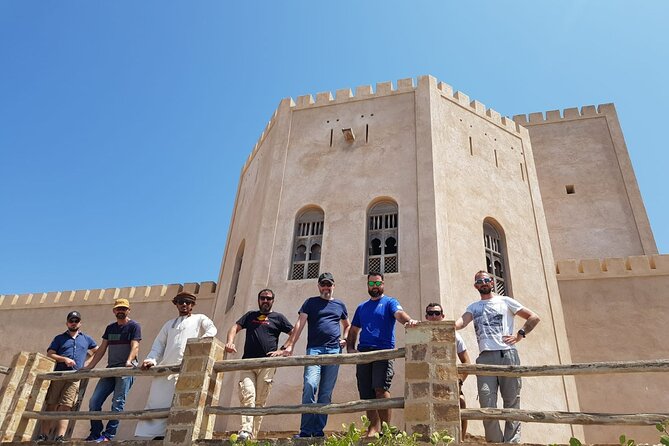
Taqah Castle was built in the 19th century and served as the office and residence of the Wali of Taqah until 1970. In plain terms, this was not just a defensive ruin. It was a seat of local administration and a home tied to the region’s former political structure.
I like this stop because it puts Dhofar’s recent past beside its much older trading history. Sumharam takes you back to the ancient incense route, while Taqah Castle connects you with the era before modern government buildings and paved sightseeing routes reshaped the region.
Allow about 30 minutes here according to the planned timing. That is enough for a focused visit, but you will not have time for a long, unhurried study of every room. If architecture and local government history interest you, tell your guide early that you would like clear explanations rather than a quick photo stop.
There is a small money question to settle before departure. The main tour information says entrance to Taqah Castle and Sumharam costs 3 OMR and is not included. The stop details separately show no admission charge. Since these statements do not match, ask for the current policy and carry a little Omani currency just in case.
Sumharam, the ancient frankincense port at Khor Rori
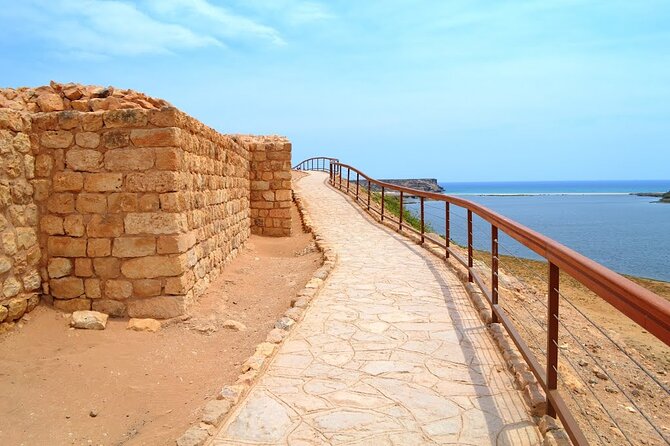
The ruins of Sumharam, also called Khor Rori, are the historical heart of the eastern route. This ancient city was the easternmost outpost of the Hadramawt Kingdom and sat on the old incense route linking the Mediterranean, the Persian Gulf, and India.
Frankincense made Dhofar part of a much larger trading world. At Khor Rori, you are looking at the remains of a port that helped move this prized resin by sea and land. It is also part of the UNESCO World Heritage listing connected with the Land of Frankincense sites.
The planned stop is about 30 minutes. Use that time to look at the ruins in relation to the water and the surrounding hills, not only at individual stones. The setting helps explain why this place mattered. It was a harbor and trading point, not an isolated settlement in the middle of nowhere.
I would not expect a long archaeological tour here. The visit is brief, and the value depends on your guide explaining the trade route and the role of frankincense. If that subject interests you, ask questions. The site becomes much more meaningful when you connect the remains to ships, cargo, and the old routes across Arabia.
Same coast and mountains, a completely different day out:
- East Salalah Mountain Safari, Wadi Darbat, Beach, Camels, Dunes
★ 5.0 · 206 reviews - Salalah: Wadi Darbat, Jabal Samhan, Baobab, Mirbat Sand Dune
★ 4.6 · 178 reviews - Sunset Desert Safari Salalah Tour in Rub Al Khali – Empty Quarter
★ 5.0 · 91 reviews - Salalah: Sunset Desert Safari – Rub Al Khali – Empty Quarter
★ 4.6 · 79 reviews
Wadi Darbat, Salalah’s greenest pause
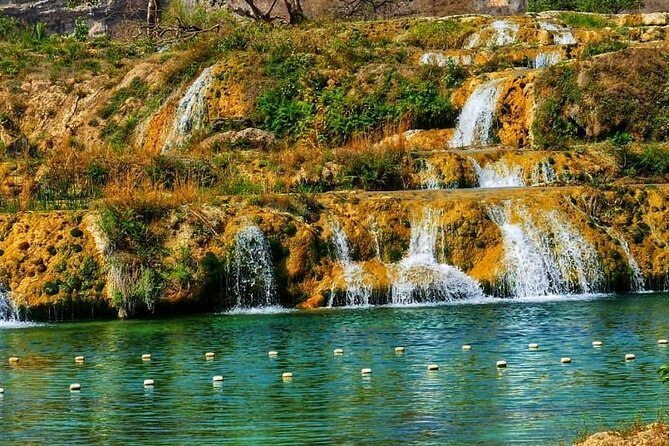
Wadi Darbat changes the mood completely. The valley has a river running through it, with hills, small caves, and open ground suited to a short stroll. During the Khareef monsoon season, it becomes especially green and draws local families and visitors enjoying the cooler, wetter conditions.
The stop is listed at about 30 minutes, with no admission charge. That gives you time to walk along the wadi bed, take photographs, and watch the animals that gather in the area. Camels, goats, and cattle are part of the scene, making this feel less like a formal garden and more like a shared pastoral place.
I like Wadi Darbat for its change of scale. After the walls of Taqah Castle and the stone remains at Sumharam, you have room to stretch your legs. The hills also offer the possibility of short walks toward small caves, but the supplied tour details do not promise a longer hike. Keep your outing modest unless your guide confirms extra time.
Season matters a great deal here. During Khareef, the valley can be lush and wet. Outside that period, you may find a drier setting, though the valley and river still give the stop its appeal. If your main reason for booking is green scenery, check the season before you commit.
Frankincense trees in their natural setting
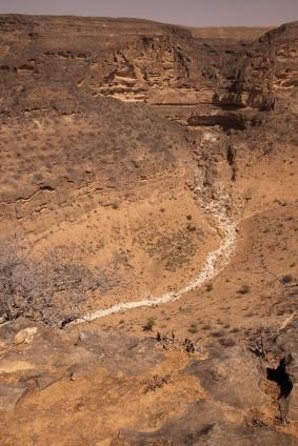
One of the most worthwhile parts of the day is the chance to see frankincense trees growing in the wild. They appear in dry valleys and rough, rocky countryside rather than in a neat park display.
You can take a short walk into the valleys and smell the resin associated with Dhofar’s old trade. This is a small experience, but it connects the plants directly to Sumharam and to the wider story of the region. You are not merely hearing about frankincense as an export. You are seeing the tree that produced it.
The walk is described as short, so this should suit most people who can manage an easy stroll. Still, wear shoes you are comfortable using on uneven ground. The setting is dry and craggy, and there is no reason to treat this as a formal paved attraction.
This is also a place where a local guide can add real value. A guide who takes time to explain the tree, the resin, and its place in Dhofar’s past will make the stop far more memorable than a quick roadside photograph.
Mughsail Beach and the force of the sea
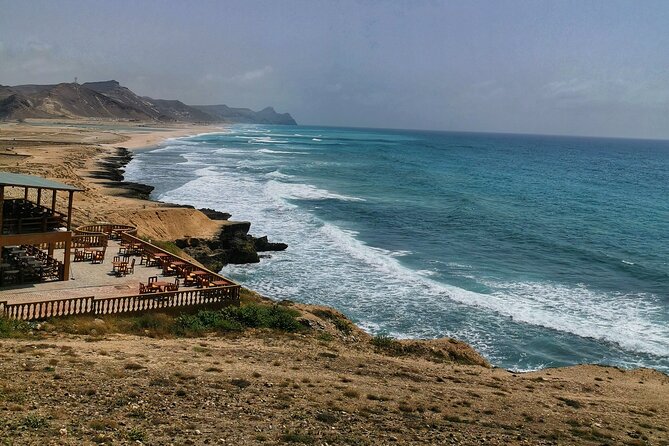
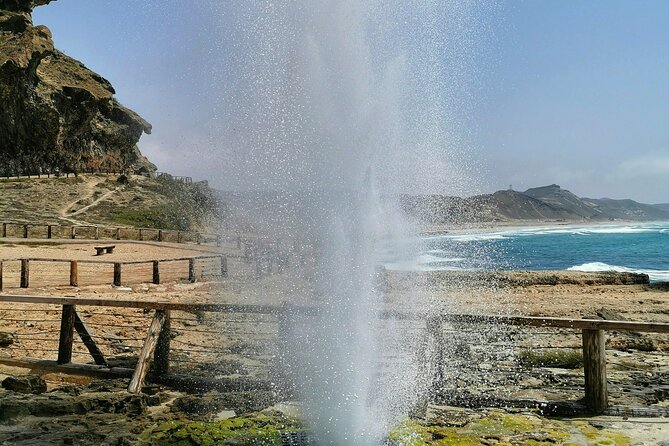
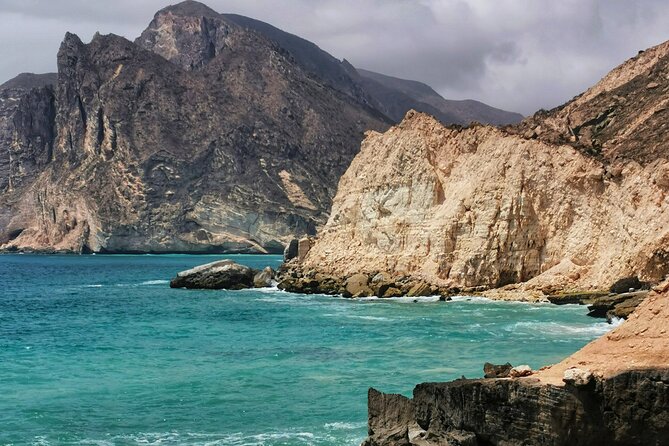
The western portion of the tour reaches Al Mughsail Beach, a white-sand stretch about five kilometers long. The sea here is the main event: deep blue water, a broad beach, and rocky sections at the far end where waves can burst through natural blowholes.
The blowholes are fountains formed near the Mughsail area. Their power depends on the sea and tide, so you should not expect the same display at every visit. The sight is best treated as a natural feature with changing conditions, not a timed performance.
The planned beach stop lasts around 40 minutes. That is enough for views, photographs, and a walk along part of the shore. It is not a beach day, and swimming time is not listed as part of the outing. If you want to spend hours beside the water, a separate visit would suit you better.
I like the west coast stop because it prevents the tour from becoming too focused on ruins and valley scenery. Mughsail gives you open space and dramatic coastal rock. The contrast between the long pale beach and the rough blowhole area makes this one of the day’s strongest photo stops.
Use care around the rocks and the blowholes. The tour details do not provide safety rules, so follow your guide’s directions and keep a sensible distance from the surf.
Ayn Sahalnoot and the Taqah plateau
Ayn Sahalnoot adds a spring to the route. The stop is described as natural spring water and is planned for about 30 minutes. It is a simple visit, but it gives you another look at how water shapes life in this dry part of Oman.
Do not expect a major developed attraction based on the information provided. The appeal is the spring itself and the chance to pause between longer drives. As with Wadi Darbat, conditions can affect how impressive the setting feels, so keep your expectations flexible.
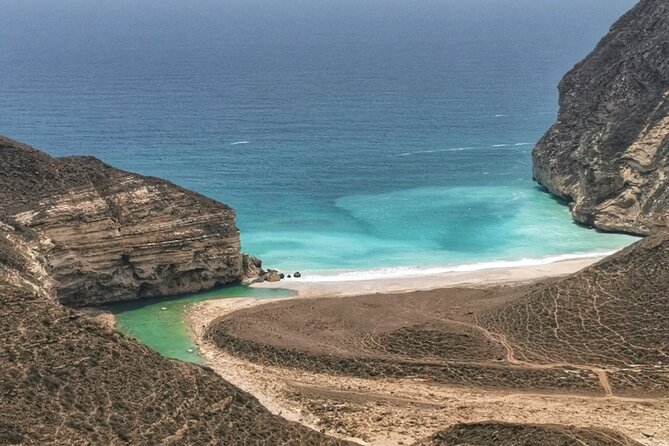
The final Taqah plateau stop lasts about 20 minutes and offers views of Taqah Beach and the cliffs. This is a short lookout rather than a long walk. It works well near the end of the day because it gathers the coast, hills, and town into one broad view.
I would use this stop to take stock of the route. From Taqah’s old houses to Mughsail’s sea spray, the tour has shown you several sides of Dhofar in a compact span.
Guides, food, and the private-tour advantage
The supplied feedback gives the strongest praise to the guides. Ahmed is described as friendly, accommodating, punctual, and good at shaping the day around personal interests. Mehmood is praised for patience and for starting on time, while Saeed is associated with a varied east-side outing. Salim is noted for explaining Dhofari culture and the importance of the sights in good English.
Those details matter because this route has several stops where context makes the difference. A castle can feel like an empty old building if nobody explains its role. A frankincense tree can seem like an ordinary plant unless you understand why it once supported trade across distant regions.
Food is not included in the stated inclusions. One account describes a local lunch, and other feedback notes that guides recommended good places to eat. Treat that as a possible guide suggestion, not a guaranteed part of the package. Ask before the day begins if lunch is planned, and budget separately.
The vehicle is described in the feedback as a comfortable Land Cruiser, though the formal inclusions only guarantee bottled water and do not specify a vehicle model. Pickup is offered, and the tour is available as a private activity for your group alone.
Is $180 per person good value?
At $180 per person, this is not the cheapest way to see Salalah. The price makes more sense for people who value a private vehicle, hotel pickup, a guide, and the convenience of covering both sides of the city in one day.
For a small group, the value improves because you are paying for a private outing rather than joining a large shared bus. Group discounts are offered, though the exact price depends on the size of your party. Ask for the full group rate before booking.
The price does not include all fees and taxes. Bottled water is included, but food is not listed, and the entrance-charge information for Taqah Castle and Sumharam needs clarification. These are not large problems, but they affect the final cost.
I would compare this tour with the cost of hiring a car, fuel, parking, and arranging a guide or learning the route yourself. If you already plan to rent a car, you may prefer the freedom of setting your own pace. If you want someone else to handle the driving and explain the places, the private format earns its price more easily.
Who should book this outing?
I would recommend it to first-time visitors with one free day who want a broad introduction to Salalah. It also suits families, couples, and small groups who prefer their own schedule and do not want to coordinate several separate trips.
The route works for people who like variety. You get archaeology, local buildings, a spring, a green valley, coastal views, and frankincense trees. It is also a good fit for solo visitors who want a more structured and stress-free day, with pickup and a private guide.
I would hesitate if your priority is a long hike, extended beach time, or a slow archaeological study. The stops are well chosen, but the day covers a lot of ground. You should also confirm the guide’s language, the current vehicle arrangement, lunch plans, and entrance fees before paying.
Free cancellation is available up to 24 hours before the start time for a full refund. Changes or cancellations made within 24 hours are not accepted for a refund, and the cut-off follows Salalah local time.
Final call: a strong Salalah sampler with a brisk pace
Book this tour if you want Salalah’s major east and west sights in one private day and value a guide who can explain the places along the way. Its best moments come from the contrasts: Taqah’s fishing-town character, Sumharam’s old port, Wadi Darbat’s seasonal greenery, and Mughsail’s rough coast.
I would book it early, since it is commonly reserved about nine days ahead. Before confirming, ask two practical questions: Is the 3 OMR charge for Taqah Castle and Sumharam payable on the day, and is lunch planned or separate? With those details clear, this is a convenient and varied introduction to Dhofar.
FAQ
How long does the Salalah private tour last?
The experience lasts approximately six to eight hours.
Does the tour include pickup?
Yes. Pickup is offered.
Is this a private activity?
Yes. Only your group participates in the activity.
What is included in the tour price?
Bottled water is included.
Are entrance fees included?
The tour information says that a 3 OMR entrance fee for Taqah Castle and Sumharam is not included. Another section lists the stop admission as free, so you should confirm the current policy before departure.
Does the tour include lunch?
Lunch is not listed among the inclusions. A guide may recommend or arrange a local restaurant, but you should confirm this and plan to pay separately.
Can I cancel for a full refund?
You can cancel up to 24 hours before the experience start time for a full refund. Cancellations or changes made less than 24 hours before the start time are not accepted for a refund.
Just added around Salalah
- West of Salalah private tour – fascinating mountains and beaches★ 5.0 · 9 reviews
- West Salalah Beaches and Blowholes★ 5.0 · 7 reviews
- Where Sea Meets Rock: A Scenic Journey to West Salalah’s Shores★ 5.0 · 5 reviews
- Private tour – Empty Quarter desert adventure – Wadi Dawka + Ubar★ 5.0 · 5 reviews
- West Salalah Tour by VisitSalalah★ 5.0 · 6 reviews
- Explore Samhan Mountain – Half-Day Getaway with Lunch Included.★ 5.0 · 10 reviews
- Salalah City Tour: Discover Salalahs Treasures with a Local Guide★ 5.0 · 4 reviews
- Full-Day Private Salalah West Tour with Lunch★ 5.0 · 12 reviews
Salalah Tours, compared.
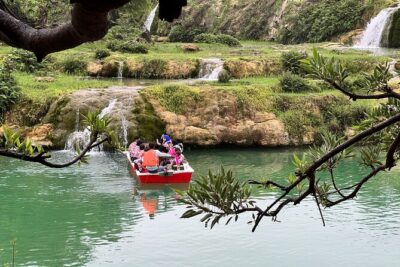
East Salalah Mountain Safari, Wadi Darbat, Beach, Camels, Dunes
Read our review →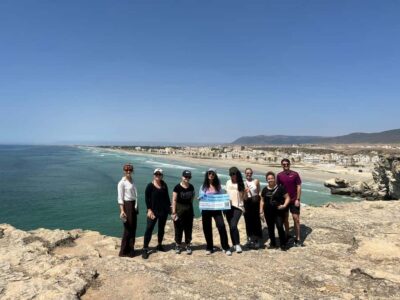
Wadi Darbat, Jabal Samhan, Baobab, Mirbat Sand Dune
Read our review →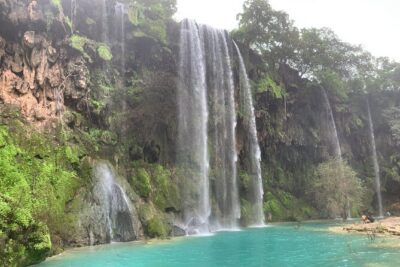
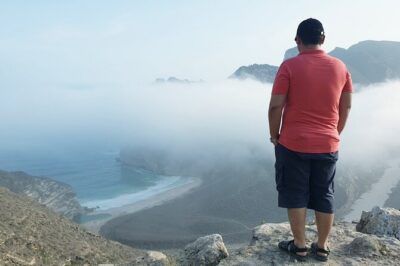
West Salalah Tour – Caribbean of Orient – Fazayah Beach with City
Read our review →
Salalah City Tour: Discover the Best of Oman’s Coastal Gem
Read our review →
Sunset desert safari tour in Salalah(private tour)
Read our review →
East & West Salalah Combination Tour – Darbat Waterfall, Mughsail
Read our review →
Browse the lists this tour appears in