Reviewed · PRIVATE
4-Days Private Jamila Sightseeing Tour
Oman packs an astonishing range of scenery into four days: turquoise pools at Wadi Shab, turtle beaches near Ras Al Jinz, orange dunes at Wahiba Sands, and high mountain villages around Nizwa. This private tour gives you a comfortable four-wheel-drive vehicle and a guide to connect those places into one long, varied journey.
I like the private format, since your group can travel at its own pace rather than follow strangers through every stop. I also like the mix of nature and culture: swimming in a wadi one day, watching dhow building in Sur, then exploring Nizwa Fort and old Al Hamra.
The main consideration is the pace. You cover a lot of Oman in four days, and several days involve long drives, early starts, hiking, swimming, or rough mountain roads. At $1,400 per person, it offers strong convenience, but it makes the most sense for people who want a broad first look at Oman rather than a slow stay in one place.
Key points to know before booking
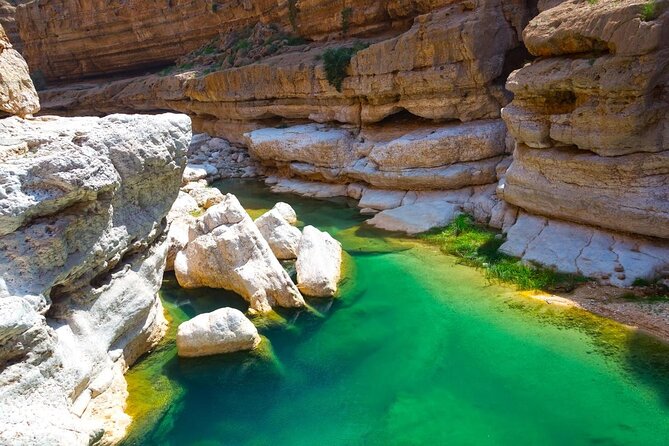
- Wadi Shab is the active centerpiece: Expect about a 35-minute walk through a canyon, swimming between pools, and a final swim into a narrow cave.
- The route covers coast, desert, and mountains: You see Bimmah Sinkhole, Ras Al Jinz, Wahiba Sands, Jebel Akhdar, Nizwa, Al Hamra, and Jebel Shams.
- Three nights and three dinners are included: Breakfast, bottled water, transport, entry fees, and accommodation are built into the package.
- The tour is genuinely private: Only your own group participates, with pickup from a Muscat hotel, port, or airport.
- The guide shapes the experience: English-speaking Omani guides have included Ahmed, Said, Hamood, and Mohammed on different departures.
- Lunch is your responsibility: It is the chief extra cost to plan for, along with personal purchases and any optional desert activities.
A four-day route through Oman’s changing scenery
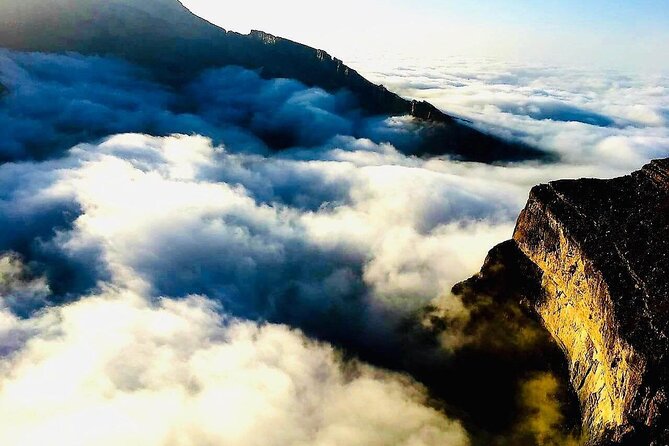
This is not a city sightseeing circuit. Muscat is the starting point, but much of the time is spent outside the capital, following Oman’s eastern coast and then turning inland toward the desert and Hajar Mountains.
That route is the tour’s great strength. You are not seeing four similar forts or four versions of the same market. The scenery keeps changing, and the cultural stops help explain how Oman’s coast, farms, villages, and mountain settlements fit together.
The trade-off is mileage. The tour begins at 8:30 am, and the schedule is full. You should expect active days, not leisurely mornings followed by one attraction.
A few more Muscat trips to weigh up
- Full-Day Private Wahiba Sands Desert and Wadi Bani Khalid Tour
★ 5.0 · 291 reviews - Half-Day Private Muscat City Tour – Top Landmarks in Just 4 Hours
★ 5.0 · 256 reviews - Oman: Private Muscat City Tour With Pick-up/ Drop-off
★ 4.4 · 234 reviews
Day one: Bimmah Sinkhole, Wadi Shab, and turtle country
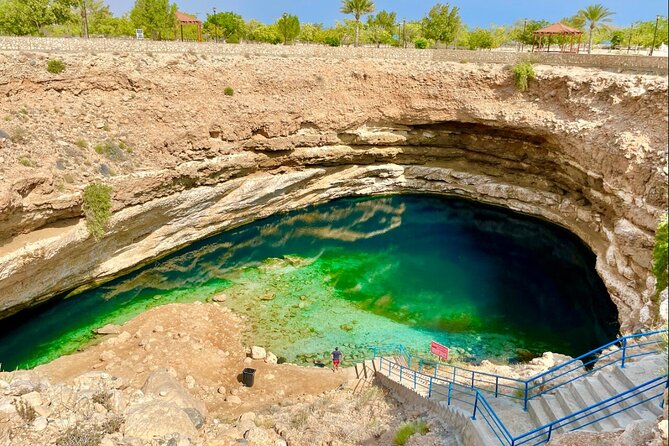
The first day heads south from Muscat toward the coast. Bimmah Sinkhole is a short photo stop, with about an hour allowed. It is a useful early break and a striking place to photograph, but the description presents it as a quick visit rather than a long swim or exploration.
The main event is Wadi Shab, where a canyon lined with palms leads toward clear pools. The walk into the wadi takes about 35 minutes, and the full stop lasts roughly four hours. That time matters because this is more than a roadside viewpoint.
You walk through the gorge, reach a series of pools, and swim from one to another. The final section leads through an opening in the rocks into a narrow cave with a small waterfall. Sunlight reaches the water through the rock above, creating the tour’s most memorable natural scene.
You should be comfortable walking for part of the day and swimming in warm water. Wadi Shab is not ideal if you want a purely vehicle-based tour, and the cave section requires confidence in the water. The included Wadi Shab boat entry removes one small practical concern, though you should still bring suitable swimwear and footwear for an active wadi visit.
Wadi Tiwi follows as a 45-minute photo stop. Its plantations give it a greener appearance than many dry wadis, and the contrast is worth noticing. This is a brief stop, so treat it as a scenic pause rather than a full village visit.
The day ends at Ras Al Jinz Turtle Reserve, where the beaches near Ras Al Hadd and Ras Al Jinz are known breeding grounds for green sea turtles. Turtle watching is included, and the visit lasts about two hours. The schedule gives you a chance to see an important part of Oman’s coastal wildlife without arranging a separate excursion.
Because the tour spends the night in turtle country, the first day feels well planned. You are not racing back to Muscat after the wadi. Still, the combination of walking, swimming, driving, and nighttime turtle watching can make for a long day.
Day two: Sur’s shipyards and the Wahiba Sands sunset
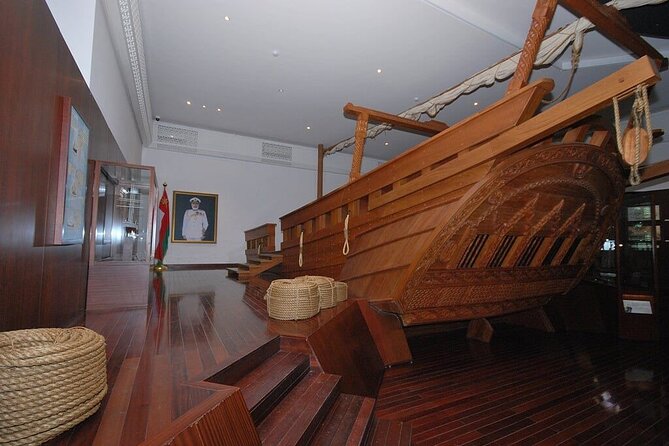
Day two begins around Sur, a port city with a strong connection to Oman’s seafaring past. The dhow factory is the most distinctive stop. Here you can see traditional wooden vessels being built, a hands-on reminder that Oman’s maritime culture is not only a museum subject.
The stop lasts about 45 minutes and includes entry. The visit is short, but the working setting gives it more character than a standard historical display. You can watch the craft of boatbuilding and then continue into the city, where old fortifications add another layer to Sur’s past.
The route then passes through Al Kamil Wal Wafi for a 30-minute visit to an Omani ghazal farm, identified as Asilel Farm. This is a small stop, but it breaks up the drive and offers a look at an aspect of local life that many fast-moving sightseeing routes would miss.
Wadi Bani Khalid provides the day’s next major pause. A short walk leads to large emerald pools surrounded by dry canyon walls. You can swim, sunbathe, relax, or have a picnic here, with about two hours allocated.
Compared with Wadi Shab, Wadi Bani Khalid is presented as a more relaxed water stop. You have time to sit by the pools rather than focus on a long canyon walk and cave swim. If you want to swim, pack your gear where you can reach it easily instead of burying it in your luggage.
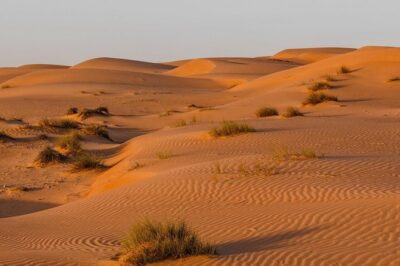
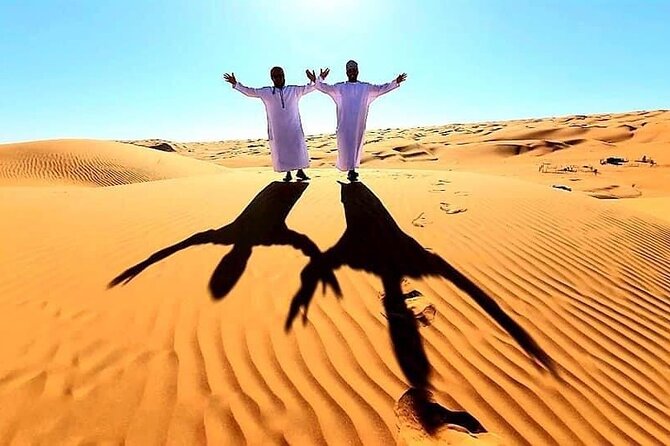
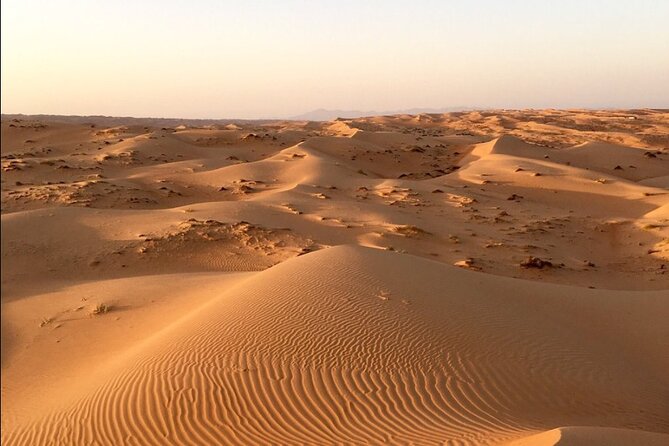
The afternoon turns toward Wahiba Sands. At the desert camp, you can relax or take part in a four-wheel-drive ride over the dunes. The listed tour includes the desert camp portion, but it does not clearly state that every optional activity, such as a camel ride or dune drive, is included in the $1,400 price. Ask the operator before booking if those activities matter to you.
Sunset on a large dune is the visual payoff. Dinner is included, followed by time around a campfire. Three dinners and three breakfasts are part of the package, which adds useful value on a route where arranging meals each evening would be inconvenient.
The desert night is also one of the tour’s most romantic moments, but it may not suit everyone. You should confirm the exact room or camp arrangement before paying, especially if privacy or comfort is important to you. The accommodation information specifies standard double rooms for two, a double room with an extra bed for three, and two standard double rooms for four.
Day three: sunrise, Bronze Age tombs, and the Green Mountain
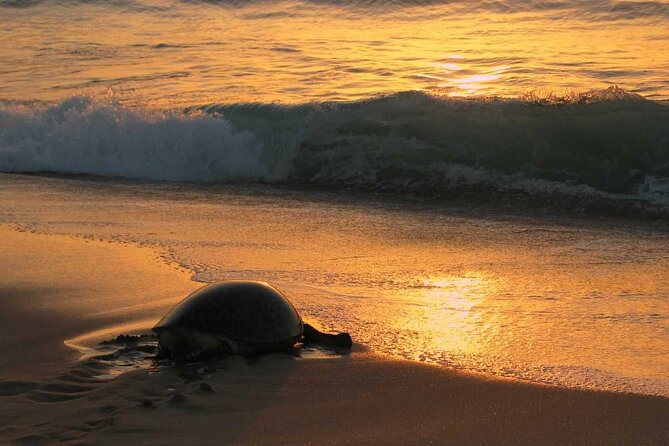
Day three starts early with sunrise from the Wahiba Sands dunes, followed by breakfast. The sunrise stop is only about 30 minutes, so it is a quick moment rather than a full desert morning. Even so, seeing the sand change color at first light gives the desert stay a second character beyond the previous evening’s sunset.
The route then heads inland to the Zukait Tower Tombs near Izki. These beehive-shaped tombs date to the Bronze Age and form part of a site recognized by UNESCO in 1988. The stop lasts about an hour and provides a strong historical counterpoint to the desert and wadis.
The tombs are especially useful for anyone who wants more than scenery. They connect Oman to a much older past, and their simple stone forms make the site easy to appreciate without a long museum visit. The information provided does not specify extensive on-site interpretation, so your guide’s explanation will be important here.
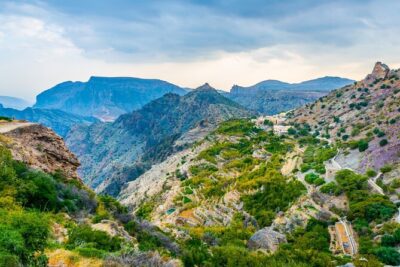
Next comes Jebel Akhdar, or the Green Mountain, part of the Hajar range. The high plateau rises to about 2,980 meters, with the Saiq Plateau around 2,000 meters above sea level. The two-hour stop gives you time to appreciate the cooler mountain setting and the change from desert sand to rocky high country.
Jebel Akhdar is not simply another viewpoint. It shows how dramatically Oman’s climate and vegetation can change with altitude. The route also passes through Birkat Al Mouz, a mountain village whose name translates as Banana Pool, a reference to its banana plantations.
Birkat Al Mouz gets about 30 minutes. That is enough for a quick look at the old village and its setting, but not enough for a long walk through every corner. The following half-hour stop concerns Oman’s aflaj irrigation systems, five of which are included on the UNESCO World Heritage list.
These channels are a key cultural stop because they show how communities managed water in a dry country. You are seeing more than old stonework. You are seeing the practical system that made farming and settlement possible.
The day finishes in or around Nizwa, an ancient city surrounded by palm plantations and seasonal waterways. After the desert sunrise, tombs, high mountains, old villages, and irrigation systems, this is another demanding day. It is also one of the tour’s strongest if you enjoy seeing how nature and settlement have shaped each other.
Same coast and mountains, a completely different day out:
- Muscat: Daymaniat Islands Snorkeling Trip with Brunch
★ 4.7 · 2,317 reviews - From Muscat: Wadi Shab & Bimmah Sinkhole Full-Day Tour
★ 4.8 · 1,862 reviews - Muscat: Wahiba Desert and Wadi Bani Khalid Guided Group Tour
★ 4.8 · 820 reviews - Muscat: Half-Day Sightseeing Essentials Tour and Audio Guide
★ 4.2 · 598 reviews
Day four: Nizwa Fort, the souq, and mountain villages
Nizwa Fort is the main historic attraction on the final day. Built in the seventeenth century, the fort offers a clear look at Omani defensive architecture and traditional life. The included entry fee is a practical benefit, and the 45-minute visit should give you time to focus on the main structure without turning the morning into a long museum session.
The Nizwa Souq follows, with about an hour to browse. This is a good place to look for Omani silver crafts and handmade goods, while separate market areas handle produce, meat, and fish. You can shop, but you should keep purchases manageable because the tour continues into the mountains.
Al Hamra is a 400-year-old town with an older abandoned village nearby. The ruins are estimated at 700 to 1,000 years old and have been left untouched. The stop lasts 45 minutes, so you will get an impression of the old settlement rather than a lengthy archaeological examination.
Misfah Al Abriyeen adds a different kind of village visit. Located about 1,000 meters above sea level, this mountain settlement is associated with the Al Abri tribe. Its position on the mountain foothills makes it a scenic stop, but the 45-minute allocation again favors a brief walk and photographs over a slow exploration.
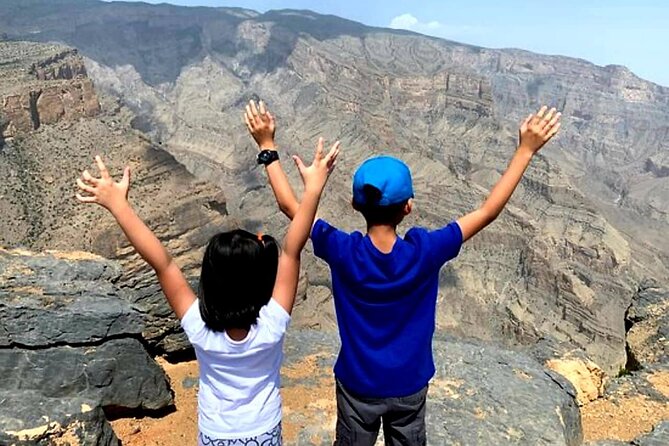
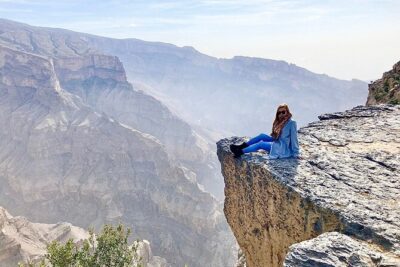
The final major stop is Jebel Shams, Oman’s highest mountain and the highest point in the Hajar range. The name means Mountain of the Sun, and the stop lasts about an hour. The high position gives you broad mountain views, though the provided details do not promise a particular hiking route or canyon walk.
Jebel Shams is a fitting finish because it brings together the route’s main themes: high mountains, old settlements, dry valleys, and long views. You then return for drop-off in the Muscat area, with hotel, port, and airport service offered.
What the $1,400 price includes
At $1,400 per person, this is a premium-priced tour. The value depends heavily on your group size and on how much you would otherwise spend arranging a private vehicle, a guide, three nights of lodging, meals, desert transport, and entry fees separately.
The package includes:
- Private four-wheel-drive transport
- An English-speaking Omani guide
- Pickup and drop-off from a Muscat hotel, port, or airport
- Three nights of accommodation
- Three breakfasts and three dinners
- Bottled water
- Turtle watching entry
- Dhow factory entry
- Wadi Shab boat entry
- Nizwa Fort entry
Lunch is not included. You should budget for it each day, along with souvenirs and any optional desert activities not specifically covered.
The private vehicle and guide are the biggest convenience benefits. On a route with wadis, sand, mountain roads, and several cultural stops, having one person coordinate the journey is worth more than it would be on a simple city tour. Guides named in past departures include Ahmed, Said, Hamood, and Mohammed. Their roles have included explaining local culture and history, keeping the car supplied with water, and making long drives more pleasant.
The tour also offers group discounts, though the exact discount is not provided. For two or more people, ask for the current group price before booking so you can compare the per-person cost.
Who will get the most from this tour
I would choose this tour if you want to see Oman’s main natural regions in one trip and prefer not to drive yourself. It suits couples, families, and small private groups that value a local guide and a fixed plan.
It is particularly good for you if your priorities include:
- Wadi swimming and canyon scenery
- Turtle watching
- Desert sunset and sunrise
- Forts, souqs, villages, and old tombs
- Comfortable private transport
- A mix of active and cultural sightseeing
You should think twice if you want long free periods, nightlife, or a relaxed resort schedule. Wadi Shab requires physical effort, desert and mountain roads can be tiring, and the itinerary leaves little room to linger.
Most travelers can participate, and service animals are allowed. The tour begins at 8:30 am, so your arrival plans should fit that start time if you are being collected from the airport or port.
Booking and cancellation details worth noting
Confirmation is provided at booking. The tour is private, meaning only your own group takes part, and pickup is available within the Muscat area from a hotel, port, or airport.
Cancellation terms are strict close to departure. You receive a full refund if you cancel at least six full days before the start time. Cancellation two to six days ahead brings a 50 percent refund, while cancellation less than two days ahead is not refunded. Poor weather or failure to reach the minimum number of participants can lead to a different date or a full refund.
Should you book the four-day Jamila tour?
Book it if you want a broad, guided introduction to Oman and are happy to trade slow travel for variety. The route links sea, canyon, desert, mountain, village, and fort in a logical four-day sweep, while accommodation, transport, breakfast, dinner, water, and key entry fees simplify the planning.
I would ask two questions before paying: what exact accommodation will be used on each night, and which desert activities are included beyond the camp stay? If the answers suit your comfort level, the private vehicle and Omani guide make the high price easier to justify.
For a first visit with limited time, this is a strong choice. For a slower trip focused on Muscat, one mountain area, or a single desert camp, it is simply too packed.
FAQ
Where does the tour start?
The tour starts at 8:30 am and offers pickup from a hotel, port, or airport in the Muscat area.
How long is the experience?
The tour lasts approximately four days and includes three nights of accommodation.
Is this a private tour?
Yes. Only your own group participates in the activity.
What type of vehicle is used?
Transportation is provided in a comfortable four-wheel-drive vehicle.
Is a guide included?
Yes. An English-speaking Omani tour guide is included. Guides named on different departures include Ahmed, Said, Hamood, and Mohammed.
Are meals included?
Three breakfasts and three dinners are included. Lunch is not included.
Is accommodation included?
Yes. Three nights are included. Room arrangements are listed as a standard double room for two people, a standard double room with an extra bed for three, or two standard double rooms for four.
Which entry fees are included?
Turtle watching, the dhow factory, the Wadi Shab boat, and Nizwa Fort entry fees are included.
Can most people participate?
The tour information says most travelers can participate. Service animals are allowed.
What happens if bad weather cancels the tour?
If poor weather causes cancellation, you are offered a different date or a full refund. A different date, another experience, or a full refund may also be offered if the minimum number of travelers is not met.
Just added around Muscat
- Wadi Shab &Bimmah Sinkhole &Heart shaped Cave &Pebble Beach★ 5.0 · 5 reviews
- Wahiba Sands and Wadi Bani Khalid Full-Day Tour from Muscat★ 4.6 · 3 reviews
- Try scuba Diving Tours To Daymaniyat Islands.★ 5.0 · 12 reviews
- From Muscat Wadi Shab and Bimmah Sinkhole Tour★ 5.0 · 6 reviews
- Watching Sunrise in Wahiba Sand Desert – Early Morning Tour★ 5.0 · 7 reviews
- Wahiba Sands&Wadi Bani Khalid desert Safari(Muscat tours)★ 4.5 · 6 reviews
- Wahiba Sands and Desert Safari from Muscat★ 5.0 · 3 reviews
- Wahiba Sands&Wadi Bani Khalid desert Safari(Muscat tours) : Private tours★ 4.5 · 6 reviews
Private, compared.

Full-Day Private Wahiba Sands Desert and Wadi Bani Khalid Tour
Read our review →
Half-Day Private Muscat City Tour – Top Landmarks in Just 4 Hours
Read our review →
Nizwa Fort-Nizwa Souq-Misfah Al Arbyeen-Jebel Shams – Private Full Day Tour
Read our review →